
Commercial Iron Ore Crushing Plant Sample: Design, Process, and Operational Considerations
Introduction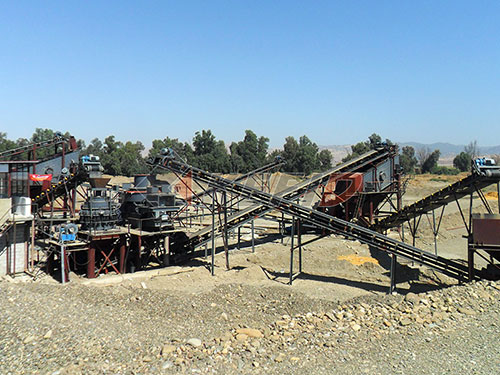
The development of a commercial iron ore crushing plant represents a critical stage in the mining value chain, bridging the gap between run-of-mine (ROM) extraction and downstream beneficiation or direct shipping. A well-designed crushing circuit must balance throughput capacity, product size distribution, equipment wear, energy consumption, and capital intensity. This article presents a detailed sample configuration for a commercial iron ore crushing plant, examining design criteria, process flowsheets, equipment selection, and operational parameters. The sample is based on a hypothetical but realistic project: a 10 million tonne per annum (Mtpa) magnetite-hematite blended orebody with a Bond work index (BWi) of 14–16 kWh/t and a feed top size of 1,200 mm. The objective is to produce a crushed product of 80% passing (P80) 12 mm for downstream grinding or lump ore recovery.
1. Geological and Ore Characteristics
The sample plant is designed for a deposit containing both hematite (Fe₂O₃) and magnetite (Fe₃O₄) mineralization. Key parameters include:
These characteristics dictate a multi-stage crushing approach with intermediate screening to avoid over-crushing and to manage wear.
2. Plant Capacity and Availability
The commercial plant is rated at 10 Mtpa, equivalent to approximately 1,250 t/h at 85% availability (7,200 operating hours per year). Design surge capacity is 1,400 t/h to accommodate feed fluctuations. The plant operates 24/7 with scheduled maintenance shutdowns every 6–8 weeks.
3. Process Flowsheet Design
The selected flowsheet is a three-stage crushing circuit with closed-circuit screening on the secondary and tertiary stages. This configuration is standard for hard, abrasive iron ores and achieves a reduction ratio of approximately 100:1 (from 1,200 mm to 12 mm).
3.1 Primary Crushing
3.2 Secondary Crushing
3.3 Tertiary Crushing
3.4 Screening
4. Material Handling and Stockpiling
5. Equipment Selection Rationale
| Stage | Equipment | Key Criteria |
|---|---|---|
| Primary | Gyratory crusher | High capacity, low wear cost, handles sticky ore |
| Secondary | Cone crusher (standard) | High reduction ratio, hydraulic setting adjustment |
| Tertiary | Cone crusher (short head) | Fine crushing, closed-circuit capability |
| Screens | Banana screens | High efficiency, low blinding, abrasion-resistant decks |
| Conveyors | Overland and plant conveyors | High tonnage, low maintenance, variable speed drives |
6. Power and Energy Consumption
Total installed power for the crushing plant is approximately 4.5 MW, distributed as follows:
Specific energy consumption is estimated at 0.45–0.55 kWh/t for crushing (from 1,200 mm to 12 mm), which is typical for hard iron ore. This excludes grinding energy, which would be significantly higher (10–15 kWh/t).
7. Wear and Maintenance
Wear parts are a major operating cost. For this sample plant:
Predictive maintenance includes vibration monitoring on crushers, oil analysis for lubrication systems, and thermal imaging on motors and gearboxes.
8. Automation and Control
The plant uses a distributed control system (DCS) with programmable logic controllers (PLCs). Key control loops:
9. Environmental and Safety Considerations
10. Economic Summary
Capital cost (CAPEX) for a 10 Mtpa crushing plant is estimated at USD 80–120 million (2024 basis), depending on location and infrastructure. Operating cost (OPEX) is USD 0.8–1.2 per tonne crushed, excluding mining and grinding. Major cost drivers are power (40%), wear parts (25%), labor (15%), and maintenance (20%).
11. Sample Variations and Flexibility
The described plant can be adapted for:
Conclusion
This commercial iron ore crushing plant sample demonstrates a robust, industry-standard design for a 10 Mtpa operation producing a 12 mm product. The three-stage crushing circuit with closed-circuit tertiary screening is well-suited to hard, abrasive hematite-magnetite ores. Key success factors include proper equipment sizing, wear management, automation, and dust control. While each orebody requires tailored design, this sample provides a realistic template for engineers, investors, and operators evaluating iron ore crushing projects. Future trends include high-pressure grinding rolls (HPGR) as an alternative to tertiary cone crushers for energy savings, and digital twins for real-time optimization.
If you have any questions about our products, please feel free to contact us. We take all inquiries and suggestions very seriously.