
Commercial 250–300 TPH Stone Crushing Plant Design Service: A Comprehensive Engineering Perspective
Introduction
In the modern aggregate and mining industry, the difference between a profitable operation and a costly failure often lies not in the quality of the rock itself, but in the design of the processing plant. For mid-to-large scale commercial projects, a crushing plant with a nominal capacity of 250 to 300 tons per hour (TPH) represents a critical threshold. This capacity range is substantial enough to serve major infrastructure projects—highways, dams, commercial concrete batching plants, and large-scale ready-mix operations—yet flexible enough to be configured for multiple end-product specifications. However, achieving consistent 250–300 TPH output with high-quality cubical aggregates, minimal downtime, and low operating cost per ton is not a matter of simply connecting a few crushers. It requires a dedicated, professional design service that integrates geology, process flow, equipment selection, structural engineering, electrical control, and environmental compliance.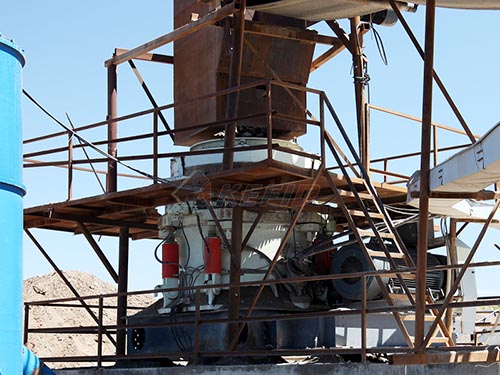
This article provides a detailed, objective examination of what a commercial 250–300 TPH stone crushing plant design service entails, the key engineering parameters, the typical process flow, equipment selection criteria, and the value of professional design in mitigating operational risks.
1. The Role of a Design Service: Beyond Equipment Sourcing
A professional design service for a 250–300 TPH plant is a multidisciplinary engineering consultancy. It does not merely supply a list of machines; it delivers a complete, site-specific solution. The service typically begins with a thorough analysis of the raw material. This includes geological surveys, rock hardness testing (e.g., compressive strength, abrasion index, and silica content), and moisture content analysis. For instance, a limestone with a compressive strength of 80 MPa will require a different crushing chamber configuration than a basalt with 250 MPa. The design service must also account for feed size distribution—whether the quarry delivers 600 mm blasted rock or 300 mm pre-screened material—as this directly impacts the primary crusher selection and the required feeder capacity.
The design service also defines the plant’s layout. This is not a trivial task. The layout must optimize material flow to minimize conveyor lengths (reducing capital cost and power consumption), provide adequate access for maintenance, and ensure safe operation. For a 250–300 TPH plant, the footprint is typically significant, often exceeding 2,500 square meters. The design must consider the topography of the site—whether it is flat, sloping, or on a hillside—to utilize gravity flow where possible, thereby reducing the number of transfer points and the associated dust and maintenance issues.
2. Process Flow Design: The Core of the Service
The heart of any design service is the process flow diagram (PFD) and the mass balance calculation. For a 250–300 TPH plant, the flow is almost always a multi-stage crushing and screening circuit. A typical configuration for hard rock (e.g., granite, basalt) would be:
Stage 1 – Primary Crushing: A jaw crusher (e.g., 900×1200 mm or equivalent) or an impact crusher (for softer, less abrasive rock) receives the run-of-mine feed. The primary crusher reduces the material to a top size of 150–200 mm. The design service calculates the required closed-side setting (CSS) to achieve the desired throughput while maintaining a consistent feed for the secondary stage.
Stage 2 – Secondary Crushing: The secondary crusher is typically a cone crusher (e.g., 2200 series or equivalent) or a secondary impact crusher. Its role is to reduce the 150–200 mm material down to 40–60 mm. The design service must ensure that the secondary crusher is not overloaded by surge from the primary, which often requires the inclusion of a surge hopper and a variable-speed feeder.
Stage 3 – Tertiary Crushing and Screening: For high-quality aggregates (e.g., 0–5 mm, 5–10 mm, 10–20 mm, 20–40 mm), a tertiary cone crusher or a vertical shaft impact (VSI) crusher is used. The VSI is particularly important for improving the cubical shape of the final product, which is a critical specification for asphalt and concrete aggregates. The screening circuit typically consists of two or three inclined vibrating screens (e.g., 2YK2460 or 3YK2470) arranged in a closed circuit with the tertiary crusher. Oversized material is returned to the tertiary crusher via a return conveyor.
The mass balance calculation is crucial. The design service must calculate the circulating load—the amount of material that returns to the crusher from the screen. For a 250–300 TPH plant, the circulating load can be 30–50% of the total feed, meaning the tertiary crusher and conveyors must be sized to handle 325–450 TPH of actual material flow, even though the final product output is only 250–300 TPH. Under-sizing this equipment is a common and costly design error.
3. Equipment Selection: Matching Machine to Duty
Professional design services do not rely on a single brand; they select equipment based on duty, availability, and total cost of ownership. For a 250–300 TPH plant, the key equipment includes:
Feeders: A vibrating grizzly feeder (e.g., ZSW 490×130) is standard. It removes fines (<100 mm) before the primary crusher, preventing unnecessary wear and increasing capacity. The design service specifies the feeder’s amplitude, frequency, and grizzly bar spacing.
Crushers: The selection between a jaw, cone, or impact crusher is dictated by the abrasiveness of the rock. For abrasive rock, a jaw/cone combination is preferred due to lower wear costs. For limestone, an impact crusher (primary and secondary) offers higher reduction ratios and lower capital cost, but with higher wear. The design service provides a wear cost analysis (USD per ton of product) to guide the client.
Screens: The design service specifies the screen type (circular motion inclined screens are most common), the number of decks, the screen area (typically 6–8 m² per deck for 250 TPH), and the mesh size. The screen’s stroke and speed are tuned to the specific material to maximize efficiency and prevent blinding.
Conveyors: Belt conveyors are the arteries of the plant. The design service calculates belt width (typically 800–1200 mm), belt speed (1.5–2.5 m/s), and motor power based on the tonnage, lift height, and length. Idler spacing and troughing angles are also specified to prevent spillage and belt misalignment.
Dust Suppression and Collection: Modern design services integrate dust control from the outset. This includes water spray systems at transfer points, dust collection hoods at crushers, and fully enclosed conveyor transfer towers. For a 250–300 TPH plant, the dust collection system may require a baghouse filter with an air volume of 20,000–30,000 m³/h.
4. Structural and Civil Engineering Integration
A 250–300 TPH plant is a heavy structure. The design service must provide detailed structural drawings for the steel frames, crusher foundations, screen platforms, and conveyor trestles. The dynamic loads from a cone crusher are significant—often 2–3 times the static weight of the machine. The design must account for vibration isolation, using rubber or spring mounts, to prevent resonance in the supporting structure. The civil engineering aspect includes concrete foundations, drainage systems, and access roads. The design service must also ensure that the plant’s total weight (often exceeding 300 tons of structural steel) is distributed safely on the site’s soil bearing capacity.
5. Electrical and Automation Design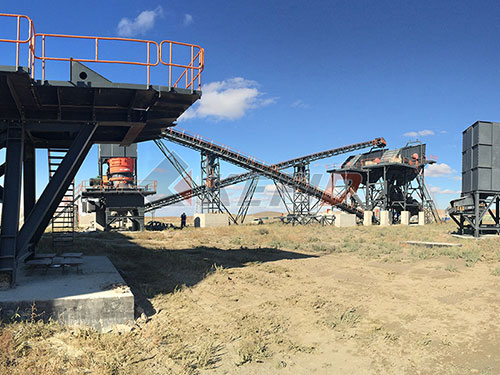
Modern 250–300 TPH plants are highly automated. The design service includes the electrical single-line diagram, motor control centers (MCCs), and a programmable logic controller (PLC) system. The PLC monitors critical parameters—crusher power draw, bearing temperatures, belt speed, and level sensors in surge bins. The design service specifies the interlocking logic: for example, if the tertiary crusher trips, the entire upstream feed must stop within seconds to prevent choke feeding. The design also includes soft starters or variable frequency drives (VFDs) for large motors (e.g., 250 kW crusher motors) to reduce inrush current and mechanical stress. Remote monitoring via SCADA systems is now standard, allowing the plant operator to adjust settings from a control room or even a mobile device.
6. Operational Efficiency and Cost Analysis
A professional design service provides a detailed operating cost model. For a 250–300 TPH plant, the typical operating cost (excluding raw material and labor) ranges from USD 1.5 to 3.0 per ton, depending on rock abrasiveness and electricity tariffs. The design service optimizes this by:
7. Environmental and Regulatory Compliance
In most jurisdictions, a 250–300 TPH plant requires environmental permits. The design service prepares the necessary documentation, including:
8. The Value of Professional Design: Case-Specific Benefits
The tangible benefits of engaging a professional design service for a 250–300 TPH plant are measurable. First, it reduces capital expenditure by avoiding over-specification. A common mistake is installing a 400 TPH primary crusher for a 250 TPH plant, which wastes capital and increases energy consumption. Second, it reduces commissioning time. A well-designed plant can be commissioned and reach full production within 2–4 weeks, whereas a poorly designed plant may take months to troubleshoot. Third, it ensures product quality. The design service specifies the correct screening efficiency (typically 90–95%) to ensure that the final products meet strict gradation specifications, which directly impacts the selling price per ton.
Conclusion
A commercial 250–300 TPH stone crushing plant is a complex industrial system that requires far more than a collection of heavy machinery. The design service is the intellectual framework that transforms raw rock into a profitable, safe, and environmentally compliant aggregate production facility. From geological analysis and process flow optimization to structural integrity, automation, and cost modeling, the design service is the single most important investment a project owner can make. Without it, the risk of underperformance, excessive wear, and regulatory non-compliance is unacceptably high. With it, the plant becomes a reliable, high-availability asset capable of delivering consistent output for decades. For any serious aggregate producer, engaging a professional design service for a 250–300 TPH plant is not an optional extra—it is the foundation of operational success.
If you have any questions about our products, please feel free to contact us. We take all inquiries and suggestions very seriously.