
Chinese Stone Crusher Plant Importers: Market Dynamics, Procurement Strategies, and Operational Considerations
Introduction
The global demand for construction aggregates, road base materials, and manufactured sand has remained robust, driven by urbanization, infrastructure renewal, and large-scale public works projects across emerging economies. At the heart of this supply chain lies the stone crushing plant—a complex assembly of feeders, jaw crushers, cone crushers, impact crushers, vibrating screens, and conveyors. While many countries possess domestic crushing equipment manufacturers, a significant and growing segment of the international market relies on imports from China. The term “Chinese stone crusher plant importers” refers to companies, contractors, government agencies, and trading houses that procure complete crushing systems or individual components from Chinese manufacturers for use in domestic projects or re-export. This article provides a professional, objective, and detailed examination of this importer ecosystem, covering market drivers, key importer categories, procurement channels, technical evaluation criteria, regulatory and logistical challenges, and future trends.
1. Market Drivers for Importing Chinese Stone Crusher Plants
The decision to import from China rather than sourcing locally or from traditional Western suppliers (e.g., Metso, Sandvik, Terex) is rarely based on a single factor. Instead, importers weigh a combination of economic, technical, and strategic considerations.
Cost Competitiveness: Chinese manufacturers, particularly those in Shandong, Henan, and Zhejiang provinces, benefit from lower labor costs, a mature supply chain for steel and castings, and economies of scale. A complete 200-ton-per-hour crushing plant from a mid-tier Chinese supplier can cost 30–50% less than an equivalent European or American system. For importers in price-sensitive markets (e.g., parts of Africa, South Asia, and Southeast Asia), this initial capital expenditure saving is decisive.
Customization and Modularity: Chinese plants are often designed with modular components that can be reconfigured for different feed materials (granite, basalt, limestone, river pebble) and output specifications. Importers frequently request modifications—such as adding a third crushing stage, adjusting screen apertures, or integrating dust suppression systems—at a fraction of the cost of bespoke Western engineering.
Financing and Payment Terms: Chinese exporters, especially those operating through state-backed trading companies, often offer flexible payment terms, including 30% down payment and 70% against Bill of Lading, or even open-account terms for repeat customers. Some suppliers provide buyer’s credit through Chinese policy banks (e.g., China Exim Bank) for large government-backed infrastructure projects.
Speed of Delivery: Standardized plant designs allow Chinese factories to ship within 45–90 days from order confirmation, compared to 6–12 months for custom-built Western plants. For importers facing tight project deadlines, this lead-time advantage is critical.
Availability of Spare Parts: Chinese crushers, particularly those based on widely copied designs (e.g., Symons cone crusher, PE jaw crusher), have a vast aftermarket network. Importers can source wear parts (jaw plates, mantle, concave, blow bars) from multiple Chinese foundries at low cost and with short lead times, reducing downtime risk.
2. Categories of Chinese Stone Crusher Plant Importers
Importers are not a monolithic group. They can be segmented by business model, end-use, and geographic focus.
Large Infrastructure Contractors (EPC Firms): These are construction companies that win turnkey contracts for highways, railways, dams, and airports. They import complete crushing plants to produce aggregates on-site. Examples include firms from the Middle East (e.g., Saudi Binladin Group), Central Asia (e.g., Kazakhstani road builders), and Africa (e.g., Nigerian and Kenyan construction giants). They typically purchase 2–5 plants per project and require comprehensive after-sales support, including installation supervision and operator training.
Commercial Aggregate Producers: These are quarry operators who sell crushed stone to third parties. They import plants to expand capacity or replace aging equipment. They are highly sensitive to operating costs (fuel, electricity, wear parts) and prefer energy-efficient designs with automation. Many are located in countries with high import tariffs on finished machinery but lower tariffs on components, leading them to import semi-knocked-down (SKD) kits and assemble locally.
Trading Houses and Distributors: These entities do not use the equipment themselves. They import Chinese plants, brand them under their own name (OEM/ODM), and resell to local end-users. They often provide local warranty, spare parts inventory, and maintenance services. Examples include distributors in Indonesia, Vietnam, Pakistan, and Russia. They are the most price-sensitive and often negotiate aggressively on volume discounts.
Government and State-Owned Enterprises (SOEs): In countries with centralized procurement (e.g., Algeria, Egypt, Uzbekistan), government agencies issue tenders for crushing plants as part of national infrastructure programs. These importers prioritize compliance with local standards, technical documentation in the local language, and long-term service agreements. They may also require technology transfer or local manufacturing partnerships.
Small-Scale and Mobile Operators: Individual entrepreneurs or small construction firms import compact, mobile crushing units (e.g., 30–80 t/h) for recycling demolition waste or producing aggregates for small rural roads. They often purchase through e-commerce platforms (e.g., Alibaba, Made-in-China) and rely on freight forwarders for logistics.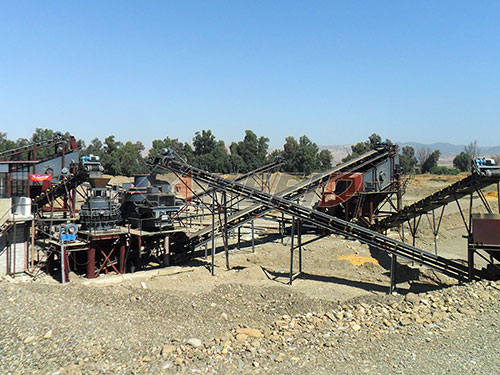
3. Procurement Channels and Sourcing Strategies
Importers use several channels to identify and vet Chinese suppliers. The choice of channel significantly affects price, quality, and risk.
Direct Factory Sourcing: Large importers with dedicated procurement teams visit Chinese trade shows (e.g., Bauma China in Shanghai, the China International Aggregates & Quarrying Expo) or conduct factory audits. They negotiate directly with manufacturers, bypassing intermediaries. This approach yields the lowest unit cost but requires significant time, language capability, and technical expertise.
Trading Companies and Agents: Many Chinese suppliers do not have international sales teams. Instead, they rely on export trading companies based in Guangzhou, Ningbo, or Qingdao. These agents handle export documentation, customs clearance, and sometimes provide translation services. Importers pay a 5–15% premium, but gain convenience and reduced administrative burden.
Online B2B Platforms: Alibaba International, Global Sources, and Made-in-China are common starting points for smaller importers. However, these platforms are rife with low-quality suppliers who may misrepresent specifications or use stock photos. Professional importers use these platforms only for initial screening and always request video walkthroughs of the factory and live testing of the crusher with a sample of their own feed material.
Government-to-Government (G2G) Channels: For large state-funded projects, importers may work through Chinese embassies, commercial counsellors, or bilateral trade agreements. This route often involves Chinese SOEs like SINOMACH, CNBM, or CITIC Heavy Industries, which offer integrated solutions including civil works and installation.
4. Technical Evaluation Criteria for Imported Plants
A professional importer does not simply compare price lists. They evaluate the following technical parameters to ensure the plant meets local conditions and production targets.
Feed Material Properties: Hardness (Mohs scale), abrasiveness (silica content), moisture content, and maximum feed size determine the crusher type and power rating. For example, granite requires a cone crusher for secondary crushing, while limestone can be processed with an impact crusher. Importers must provide accurate material samples to the Chinese supplier for testing.
Capacity and Reduction Ratio: The plant’s rated capacity (tons per hour) must match the project’s daily output requirement, with a safety margin of 10–20%. The reduction ratio (feed size to product size) affects the number of crushing stages. A typical 3-stage plant (jaw + cone + VSI) can produce 0–5 mm manufactured sand, while a 2-stage plant (jaw + impact) is sufficient for 0–40 mm road base.
Power Consumption and Efficiency: Chinese plants are often less energy-efficient than Western counterparts. Importers should request specific energy consumption data (kWh per ton) and consider installing variable frequency drives (VFDs) on motors to reduce operating costs. Some modern Chinese plants now offer hybrid electric-diesel systems for remote sites.
Automation and Control Systems: Basic Chinese plants use manual control panels. Higher-end models feature PLC-based automation with remote monitoring. Importers should specify whether they require local language interfaces and compatibility with existing site management software.
Wear Parts Life and Availability: The life of jaw plates, cone liners, and blow bars varies with material abrasiveness. Importers should ask for guaranteed wear life (in hours) and ensure that spare parts are stocked in their country or can be air-freighted within 48 hours.
Compliance with Local Standards: Importers must verify that the plant meets local safety, electrical, and environmental regulations. For example, the European CE marking is required for import into EU countries, while African nations may require specific noise and dust emission limits. Chinese suppliers often need to modify electrical panels (e.g., voltage, frequency, and plug types) to match the destination country.
5. Regulatory, Logistical, and Financial Challenges
Importing heavy machinery from China is not without obstacles. Professional importers must navigate a complex web of regulations and logistics.
Customs and Tariffs: Many countries impose import duties on complete crushing plants (often 10–25%) but lower duties on components. Some importers exploit this by importing SKD kits and assembling locally, which also creates local jobs. However, this strategy requires a local assembly facility and technical expertise. Additionally, some countries require pre-shipment inspection (e.g., by SGS or Bureau Veritas) to verify the equipment’s value and condition.
Shipping and Heavy-Lift Logistics: A complete 200 t/h plant may consist of 10–15 containers or, for larger components, breakbulk cargo on flat-rack containers or roll-on/roll-off (RoRo) vessels. Importers must arrange for heavy-lift cranes at the destination port and specialized low-bed trailers for overland transport. Port congestion, especially in developing countries, can cause delays of 2–4 weeks.
Payment and Currency Risk: Chinese suppliers often quote in USD or RMB. Importers in countries with volatile currencies (e.g., Nigeria, Argentina) face exchange rate risk. Using letters of credit (L/C) through reputable banks reduces the risk of non-delivery but adds banking fees. Some importers use escrow services or third-party inspection companies to release payment only after the equipment passes factory acceptance tests (FAT).
After-Sales Service and Warranty: Chinese suppliers typically offer a 12-month warranty on parts and labor, but the warranty is void if the equipment is misused or if non-genuine spare parts are used. Importers must negotiate the terms of on-site commissioning—whether a Chinese engineer will travel to the site, for how long, and who bears the travel and accommodation costs. For remote locations, importers often hire local third-party engineers trained by the Chinese factory.
Intellectual Property and Counterfeit Risks: Some Chinese factories produce clones of Western crushers without licensing. Importers should be cautious about purchasing such equipment, as they may face legal liability in their home country. Reputable Chinese manufacturers (e.g., Shanghai Shibang Machinery, Zhengzhou Yifan Machinery, Henan Liming Heavy Industry) hold their own patents and offer genuine designs.
6. Case Study: A Typical Import Transaction
To illustrate the process, consider a hypothetical importer in Kenya, a country with rapid infrastructure growth. The importer, a Nairobi-based aggregate producer, needs a 150 t/h plant to crush basalt for a new highway project.
Step 1 – Needs Assessment: The importer calculates that the project requires 2,000 tons of aggregate per day. With 10 working hours, the plant must produce 200 t/h. They choose a 3-stage configuration (PE-750×1060 jaw crusher, CS160 cone crusher, VSI1140 sand maker) to produce both 0–5 mm and 5–20 mm fractions.
Step 2 – Supplier Selection: After contacting five Chinese suppliers via Alibaba and receiving quotes ranging from $180,000 to $260,000, the importer shortlists two factories. They request a video call to inspect the workshop and ask for a reference list of similar plants installed in Africa. They also send a 50 kg basalt sample to each factory for a crushing test.
Step 3 – Contract Negotiation: The importer negotiates a price of $210,000 FOB Shanghai, including a 12-month warranty and free commissioning engineer for 15 days. Payment terms are 30% T/T in advance, 40% against Bill of Lading, and 30% after successful commissioning. The contract specifies a production guarantee of 200 t/h at a feed size of 500 mm.
Step 4 – Logistics: The plant is packed into 12×40-foot containers. The importer’s freight forwarder arranges shipping via Mombasa port, with a transit time of 30 days. Customs clearance in Kenya takes 5 days, with an import duty of 16% and VAT of 16%. The total landed cost is approximately $285,000.
Step 5 – Installation and Commissioning: The Chinese engineer arrives in Nairobi and supervises the assembly over 10 days. The plant is commissioned, and the importer’s operators are trained. After a 72-hour trial run, the plant achieves an average output of 205 t/h, exceeding the guarantee. The final payment is released.
7. Future Trends and Strategic Recommendations
The market for Chinese stone crusher plant imports is evolving. Importers must adapt to the following trends to remain competitive.
Shift Toward Environmental Compliance: Chinese manufacturers are increasingly producing dust-tight, water-sprayed, and noise-reduced plants to meet stricter environmental regulations in importing countries. Importers should prioritize suppliers with ISO 14001 certification and request environmental impact assessments.
Digitalization and Remote Monitoring: Newer Chinese plants come with IoT-enabled sensors that transmit operational data to a cloud platform. Importers can monitor wear rates, power consumption, and output in real time from a smartphone. This reduces the need for on-site engineers and improves predictive maintenance.
Local Assembly and Manufacturing Partnerships: To avoid high tariffs and create local value, some importers are transitioning from importing complete plants to importing core components (crushers, screens) and fabricating the structural steel (hoppers, chutes, conveyors) locally. This requires investment in local welding and fabrication capabilities.
Rise of Mobile and Semi-Mobile Plants: For projects with short lifespans or multiple sites, importers are increasingly choosing mobile crushing plants mounted on tracked or wheeled chassis. Chinese manufacturers have improved the reliability of these units, which now offer comparable performance to stationary plants at a 20–30% price premium.
Aftermarket Consolidation: Importers are forming buying cooperatives to negotiate bulk spare parts purchases directly from Chinese foundries, bypassing the original equipment manufacturer (OEM). This can reduce wear part costs by up to 40%.
Conclusion
Chinese stone crusher plant importers operate in a dynamic, high-stakes environment where cost savings must be balanced against technical reliability, regulatory compliance, and logistical complexity. Successful importers are those who conduct rigorous supplier due diligence, specify their needs precisely, negotiate clear contractual terms, and invest in local support infrastructure. As Chinese manufacturers continue to improve their quality, energy efficiency, and after-sales service, the role of importers will evolve from mere buyers to value-added partners who adapt Chinese technology to local conditions. For any company considering entering this market, the key takeaway is clear: treat the import process as a long-term engineering and business relationship, not a one-off transaction. With careful planning and professional execution, importing a Chinese stone crushing plant can deliver substantial competitive advantages in cost, speed, and flexibility—provided the importer remains vigilant and well-informed.
If you have any questions about our products, please feel free to contact us. We take all inquiries and suggestions very seriously.