
Here is a detailed, professional, and objective article on the Chinese iron ore crushing plant supply chain.
China is the world’s largest steel producer and, consequently, the largest consumer of iron ore. Despite possessing substantial domestic iron ore reserves, Chinese deposits are typically low-grade, complex, and expensive to process compared to the high-grade ores imported from Australia and Brazil. This geological reality has necessitated the development of a robust, highly specialized, and technologically advanced iron ore crushing plant supply chain within China. This supply chain encompasses everything from raw material extraction and primary crushing to the manufacturing of wear-resistant parts, automation systems, and logistical support. Understanding this supply chain is critical for stakeholders in mining, metallurgy, equipment manufacturing, and international trade. This article provides a comprehensive, objective analysis of the Chinese iron ore crushing plant supply chain, examining its structure, key segments, operational dynamics, and the challenges it faces in an evolving global market.
The supply chain for iron ore crushing plants in China is not a single linear path but a complex network of interconnected industries. At its core, it involves the extraction of raw iron ore, the design and manufacture of crushing equipment, the integration of auxiliary systems (conveying, screening, dust suppression), and the ongoing provision of maintenance, parts, and services. The ultimate customer is the iron ore mining company, which may be state-owned (e.g., Ansteel, HBIS) or private. The supply chain is heavily influenced by China’s industrial policies, environmental regulations, and the fluctuating price of imported iron ore, which sets the economic benchmark for domestic production.
The upstream segment of the crushing plant supply chain consists of the suppliers of raw materials and specialized components required to build a crushing plant.
2.1. Steel and Alloy Suppliers
The primary raw material for crushing equipment—jaw crushers, cone crushers, impact crushers, and hammer crushers—is high-strength steel. Chinese steel mills, such as Baowu, Shagang, and CITIC Pacific Special Steel, provide the wear-resistant plates, castings, and forgings. The quality of these materials directly determines the lifespan and efficiency of the crushing equipment. For high-wear parts like mantles, bowl liners, and blow bars, specialized alloys such as high-manganese steel, chromium-molybdenum steel, and martensitic steels are used. Domestic suppliers like Xuzhou Heavy Machinery and Luoyang Heavy Machinery have developed significant expertise in this area.
2.2. Component and Sub-System Suppliers
Beyond steel, a crushing plant requires a vast array of components:
2.3. Original Equipment Manufacturers (OEMs)
The OEMs are the central node of the upstream supply chain. China hosts a large number of crushing equipment manufacturers, ranging from large, state-backed conglomerates to specialized private enterprises. Key players include:
These OEMs do not merely assemble; they design, engineer, and integrate the entire crushing circuit, often working closely with mining companies to tailor solutions for specific ore characteristics.
The midstream segment involves the design and engineering of the crushing plant itself, as well as the integration of all components into a functional system. This is where the supply chain shifts from discrete parts to a cohesive industrial facility.
3.1. Engineering, Procurement, and Construction (EPC) Firms
Large-scale iron ore crushing plants are often built under EPC contracts. Chinese EPC firms like China National Machinery Industry Corporation (Sinomach), China Metallurgical Group Corporation (MCC), and CITIC Construction act as general contractors. They coordinate the procurement of equipment from OEMs, manage civil works, and oversee installation and commissioning. These firms are crucial for large, integrated projects, particularly those in remote areas like the Anshan-Benxi iron ore district or the Bayan Obo mine.
3.2. Design and Simulation
Modern crushing plant design relies heavily on computer-aided engineering (CAE). Discrete element method (DEM) simulation is used to model ore flow through crushers and chutes, optimizing chamber design and reducing wear. Chinese design institutes, such as the Changsha Engineering and Research Institute of Nonferrous Metallurgy, provide these specialized services. The integration of 3D modeling and digital twins is becoming standard practice, allowing for virtual commissioning before physical construction.
3.3. Auxiliary Systems Integration
A crushing plant is not just crushers. The midstream supply chain includes:
The downstream segment focuses on the operation of the crushing plant and the aftermarket services that keep it running. This is a continuous revenue stream for the supply chain.
4.1. Wear Parts and Consumables
The most significant downstream supply chain activity is the provision of wear parts. Crushing iron ore is highly abrasive. Mantles, bowl liners, jaw plates, and blow bars wear out regularly, creating a constant demand for replacements. This has spawned a dedicated industry of foundries and wear part specialists. Companies like Zhengzhou Hongxing and Luoyang Zhongde Heavy Industries supply these parts, often using advanced materials like ceramic-reinforced composites to extend service life.
4.2. Maintenance and Repair Services
OEMs and third-party service providers offer maintenance contracts, predictive maintenance using IoT sensors, and emergency repair services. The rise of the “service economy” in Chinese mining means that supply chain actors are increasingly offering performance guarantees (e.g., cost per ton crushed) rather than just selling equipment.
4.3. Logistics and Transportation
Transporting large crushers (e.g., a 60-110 gyratory crusher can weigh over 500 tons) requires specialized heavy-haul logistics. Companies like Sinotrans and COSCO Shipping provide these services, often involving multi-modal transport (road, rail, and sea). The supply chain also includes the logistics of moving crushed ore from the plant to the steel mill or port.
5.1. Import Dependence and Price Volatility
China imports over 80% of its iron ore, primarily from Australia and Brazil. The price of imported ore (benchmarked by the Platts IODEX) directly influences the profitability of domestic mining. When import prices are high, domestic mines increase production, driving demand for new crushing plants and wear parts. When prices are low, many domestic mines become uneconomical, leading to reduced demand for crushing equipment. This cyclicality is a defining feature of the supply chain.
5.2. Environmental Regulations
China’s “Blue Sky” initiatives and carbon neutrality goals have imposed strict environmental standards on mining and crushing operations. This has forced the supply chain to innovate:
These regulations have raised barriers to entry, favoring larger, more technologically capable OEMs.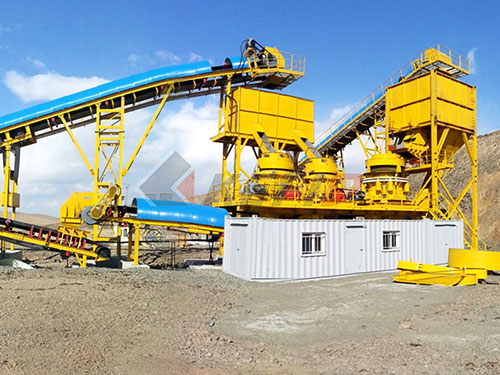
5.3. Technological Advancements
The supply chain is undergoing a digital transformation. Key trends include:
5.4. Domestic vs. International Competition
The Chinese crushing plant supply chain is largely self-sufficient in terms of manufacturing. Domestic OEMs have captured a significant share of the market, particularly for mid-range equipment. However, for very large gyratory crushers and high-end cone crushers, international players like Metso Outotec, Sandvik, and FLSmidth still dominate, often through joint ventures or local manufacturing. The supply chain is thus a mix of import substitution and global integration.
6.1. Resource Depletion and Ore Quality
Many Chinese iron ore mines are aging, with declining grades and increasing hardness. This places greater stress on crushing equipment, requiring more frequent maintenance and higher wear part consumption. The supply chain must adapt to harder, more abrasive ores, which may require different alloy compositions and crusher designs.
6.2. Overcapacity and Price Wars
The Chinese crushing equipment manufacturing sector suffers from overcapacity. Hundreds of OEMs compete fiercely, leading to price wars and thin margins. This can discourage investment in R&D and quality control, potentially compromising the reliability of the supply chain. Consolidation is expected but slow.
6.3. Trade and Geopolitical Risks
China’s reliance on imported iron ore makes the entire steel and mining supply chain vulnerable to trade disputes, tariffs, and geopolitical tensions. For example, disruptions in Australian iron ore exports can ripple through the Chinese domestic mining sector, affecting demand for crushing plants. Additionally, restrictions on technology exports (e.g., advanced automation systems) can impact the supply chain’s ability to upgrade.
6.4. Skilled Labor Shortage
Operating and maintaining modern, automated crushing plants requires skilled technicians and engineers. China faces a shortage of such talent, particularly in remote mining regions. This has led to increased investment in training programs and remote monitoring technologies that reduce the need for on-site personnel.
The Chinese iron ore crushing plant supply chain is poised for transformation. Several trends will shape its future:
For stakeholders, strategic recommendations include:
The Chinese iron ore crushing plant supply chain is a complex, dynamic, and vital component of China’s steel industry. It spans from raw material extraction and component manufacturing to plant design, operation, and aftermarket services. While it has achieved remarkable self-sufficiency and technological progress, it faces significant challenges, including resource depletion, overcapacity, environmental regulations, and geopolitical risks. The future of the supply chain lies in digitalization, sustainability, and service-oriented business models. By understanding its structure and dynamics, stakeholders can better navigate this critical industrial ecosystem. As China continues to seek security in its iron ore supply, the crushing plant supply chain will remain a cornerstone of its industrial strategy, evolving to meet the demands of a greener, smarter, and more competitive mining sector.
If you have any questions about our products, please feel free to contact us. We take all inquiries and suggestions very seriously.