
The term “China Limestone Mining Assembly Plant” refers to a sophisticated, integrated industrial model that has become a cornerstone of the country’s construction materials and heavy industries. It represents far more than a simple quarry or a standalone processing facility. Instead, it embodies a co-located, streamlined ecosystem where the extraction, primary crushing, and initial processing of limestone are seamlessly coupled with the assembly and production of downstream machinery, equipment, or even preliminary construction materials. This integrated approach is a testament to China’s scale-driven manufacturing philosophy, emphasizing supply chain efficiency, cost reduction, and strategic industrial clustering.
Limestone is a fundamental raw material for China’s monumental infrastructure development and manufacturing prowess. It is the primary feedstock for cement (accounting for over 50% of global cement production), essential for steelmaking (as a flux), crucial for flue gas desulfurization in power plants, and used in myriad applications from construction aggregates to chemicals and agriculture.
The traditional model—mining limestone at one site, transporting raw blocks to distant crushing plants, and then shipping processed material to various factories—incurs significant logistical costs and energy waste. China’s solution, particularly evident in major limestone-rich provinces like Guangxi, Guizhou, Shandong, Jiangsu, and Anhui, has been to develop integrated assembly plants. These are often situated in or near massive mining concessions and are designed to serve dual purposes: primary raw material processing and on-site industrial assembly.
A typical Chinese limestone mining assembly plant is a complex comprising several key zones: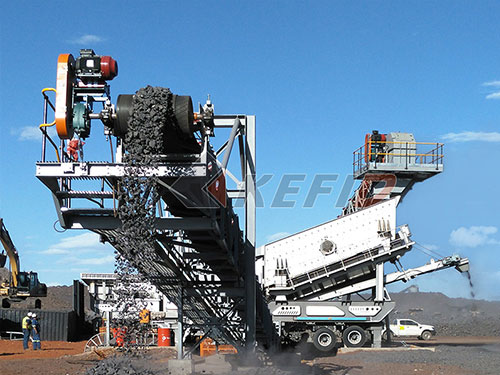
The Mining Zone: This involves modern open-pit mining operations utilizing advanced drilling rigs, GPS-guided excavators, and large-scale haul trucks. Blasting techniques are carefully controlled to yield optimally sized fragments. Environmental management plans for dust suppression, water runoff control, and phased land rehabilitation are integral parts of this zone.
Primary Processing & Crushing Assembly Line: This is the heart of the plant. Run-of-mine limestone is transported to a primary crusher (often a jaw or gyratory crusher). The crushed material is then conveyed through a series of secondary (impact or cone crushers) and tertiary crushers arranged in closed circuits with vibrating screens. This process creates precisely graded products: coarse aggregates for concrete, railway ballast, crushed stone for road base, and fine powders (limestone flour). Notably, the heavy equipment used in this process—crushers, screens, conveyors—is often assembled or even partially manufactured in an adjacent on-site assembly hall. This allows manufacturers like SANY, Zoomlion, or LiuGong to produce equipment tailored to the specific hardness and abrasiveness of the local limestone while minimizing transport costs for bulky machinery.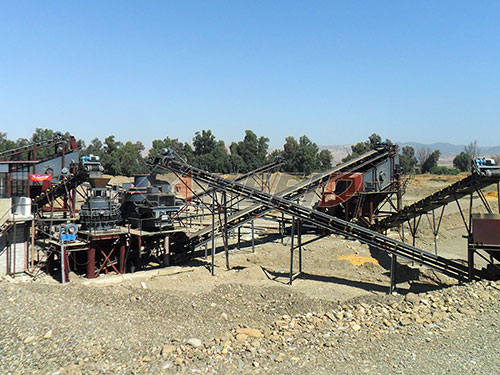
Value-Add Assembly & Production Units: This is what distinguishes an “assembly plant” from a simple processing plant. Depending on the strategic focus of the operation, this unit may involve:
Logistics & Dispatch Hub: The plant features extensive rail sidings or barge loading facilities alongside truck docks. Graded aggregates are loaded directly onto trains heading for regional construction projects; powdered products are bagged or loaded into bulk tankers; assembled heavy machinery is transported outbound.
Modern Chinese limestone assembly plants showcase significant technological adoption:
Despite its efficiencies this model faces critical challenges:
The future China’s limestone mining assembly plants lies deeper integration circular economy principles technological sophistication:
In conclusion China Limestone Mining Assembly Plant represents pinnacle industrialized raw material extraction processing It strategic response demands rapid urbanization infrastructure development By colocating multiple stages value chain these mega-plants achieve unparalleled operational efficiency economies scale However their long-term sustainability social license operate will increasingly depend ability mitigate environmental impacts embrace green technologies transition towards truly circular resource model As China continues refine this integrated approach it sets powerful precedent global mining mineral processing industry balancing colossal scale with imperative innovation responsibility
If you have any questions about our products, please feel free to contact us. We take all inquiries and suggestions very seriously.