
Certified 250–300 TPH Stone Crushing Plant: A Comprehensive Technical Overview
Introduction
A certified 250–300 tonnes-per-hour (TPH) stone crushing plant represents a mid-to-large-scale aggregate production facility engineered to deliver consistent, specification-grade crushed stone for construction, infrastructure, and industrial applications. The “certified” designation typically refers to compliance with international quality management and safety standards—most commonly ISO 9001:2015 for quality management systems, CE marking for machinery placed on the European market, or equivalent national certifications—as well as verified throughput capacity confirmed through factory acceptance testing or third-party inspection. This article provides a detailed technical examination of such a plant, covering its configuration, core equipment, process flow, certification requirements, operational considerations, and economic factors.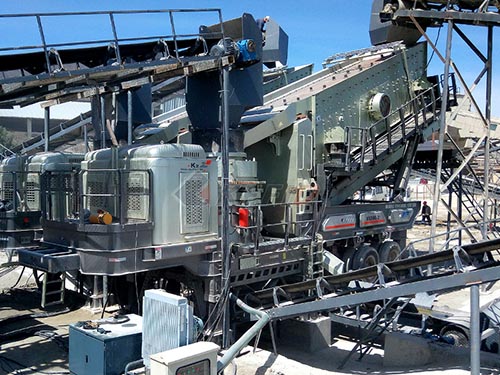
1. Defining Capacity: What 250–300 TPH Means in Practice
Rated capacity in a crushing plant is not a single fixed figure but a performance envelope dependent on several variables: feed material characteristics (hardness, abrasiveness, moisture content, and bulk density), feed size distribution, required product gradation, and the number of crushing stages. A plant certified at 250–300 TPH is typically guaranteed to achieve this output when processing medium-hard rock—such as limestone, dolomite, or moderate-strength granite—with a bulk density of approximately 1.6 t/m³ and a feed size within the design parameters.
It is important to distinguish between nominal and guaranteed capacity. Reputable manufacturers certify capacity through a guaranteed performance test, often conducted under witnessed conditions, and specify the boundary conditions under which the figure applies. Buyers should insist that certification documentation states the reference rock type, feed gradation, moisture limit, and product mix used to validate the rating.
2. Typical Plant Configuration
A 250–300 TPH plant is generally configured as a three-stage crushing and screening system to maximize product quality and shape:
3. Process Flow and Design Principles
Material flows from the feed hopper through the primary crusher, is screened for scalping, and passes to secondary and tertiary stages with closed-circuit configurations where necessary to guarantee product sizing. Key design principles for a certified plant include:
4. Certification and Compliance Requirements
Certification of a 250–300 TPH plant encompasses several dimensions:
Buyers should verify that certificates are issued by accredited bodies and that the scope of certification explicitly covers the supplied configuration, since modular plants are often assembled from certified components without system-level certification.
5. Operational and Maintenance Considerations
Achieving sustained 250–300 TPH output requires disciplined operation. Wear parts—jaw plates, cone mantles and bowl liners, blow bars, and screen media—must be inspected on a scheduled basis; worn liners reduce throughput and degrade product shape. Lubrication schedules, belt tension checks, and crusher setting calibration should follow the manufacturer’s maintenance manual. Power consumption typically ranges from 1.0 to 1.5 kWh per tonne of product for medium-hard rock, and operators should monitor specific energy consumption as a key performance indicator. A well-maintained plant with trained operators can achieve availability above 90%.
6. Economic and Project Considerations
The capital cost of a certified 250–300 TPH plant varies with configuration, automation level, and site conditions, but as a general planning figure, complete fixed installations fall in the range of several hundred thousand to over one million USD, excluding civil works and infrastructure. Mobile or semi-mobile configurations command a premium. Operating costs are dominated by wear parts, energy, and labor. Site selection should account for raw material transport distance, stockpile capacity, and access for maintenance. Permitting timelines—particularly environmental approvals—often govern project schedules more than equipment lead times.
Conclusion
A certified 250–300 TPH stone crushing plant is a sophisticated, multi-stage system whose value lies not only in its rated throughput but in the verifiable consistency of its output, the safety and environmental compliance of its design, and the reliability of its documentation. Prospective purchasers should treat certification as a starting point for due diligence: confirming the boundary conditions of the capacity guarantee, auditing the scope of certification, and planning for the operational discipline required to sustain performance over the plant’s service life. When properly specified, installed, and maintained, such a plant provides a dependable production backbone for aggregate supply in road, concrete, and infrastructure markets.
If you have any questions about our products, please feel free to contact us. We take all inquiries and suggestions very seriously.