
Certified 250–300 TPH Stone Crushing Plant Distributor: Engineering, Compliance, and Turnkey Supply Excellence
The global aggregate industry is undergoing a paradigm shift. As infrastructure megaprojects, urban expansion, and mineral processing demands escalate, the need for high-capacity, reliable, and environmentally compliant crushing systems has never been more acute. Within this landscape, the 250–300 tons per hour (TPH) stone crushing plant represents a critical sweet spot—large enough to serve commercial quarries, road construction, and dam projects, yet modular enough to be deployed in semi-fixed or fully mobile configurations. However, the true value of such a system is not merely in the machinery itself, but in the certified distributor who supplies, integrates, and supports it. This article provides a comprehensive, professional examination of what it means to be a certified 250–300 TPH stone crushing plant distributor, covering technical specifications, certification frameworks, supply chain logistics, quality assurance, and post-sale lifecycle management.
Before analyzing the distributor’s role, one must understand the equipment package. A standard 250–300 TPH plant is not a single machine but a synchronized system. Typically, it comprises the following primary stages:
The total installed power for a 250–300 TPH plant typically ranges from 450 kW to 600 kW, depending on the hardness of the rock (e.g., limestone vs. basalt). The plant’s footprint—if stationary—is approximately 2,500–3,500 m², excluding stockpiles. A certified distributor must not only supply these components but also ensure that the material flow balance is calculated correctly. This requires proprietary simulation software (e.g., Bruno, AggFlow) to predict choke points, surge loads, and screen efficiency at 95% uptime.
The term “certified” is often misused in the heavy equipment sector. For a 250–300 TPH stone crushing plant distributor, certification is a multi-layered construct:
A certified distributor holds a formal, non-exclusive or exclusive distribution agreement with an original equipment manufacturer (OEM) such as Metso Outotec, Sandvik, Terex, or a top-tier Chinese OEM like Shanghai Shibang (SBM) or Zhengzhou Yifan. This certification is not a one-time purchase; it is renewed annually based on sales volume, technical competency, and adherence to regional pricing policies. The distributor must have access to the OEM’s engineering database, spare parts catalog, and software updates.
The distributor’s own operations—warehousing, pre-delivery inspection (PDI), and installation supervision—must be ISO 9001 certified. This ensures that every crusher frame, eccentric bushing, and hydraulic hose is traceable. For a 250–300 TPH plant, which contains over 5,000 individual components, traceability is non-negotiable.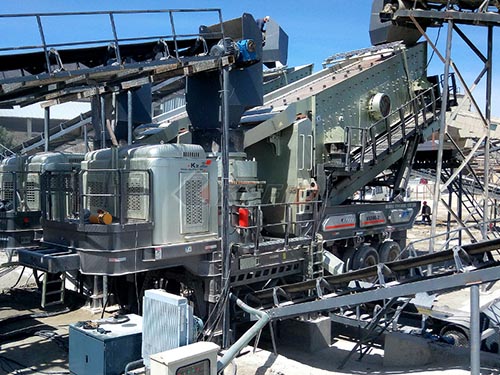
For export to the European Union or Eurasian Economic Union, the distributor must ensure that the entire plant—or its major components—carries CE marking (Machinery Directive 2006/42/EC) and, where applicable, EAC (Eurasian Conformity) certification. This involves risk assessments for noise levels (below 80 dB(A) at operator station), vibration limits, and emergency stop systems.
A certified distributor must hold local import licenses, environmental permits for storage of lubricants and diesel, and, critically, a technical service license issued by the national mining or construction authority. In many jurisdictions (e.g., India, Indonesia, Nigeria), the distributor must also register with the local content board to prove that a percentage of the plant’s value (often 30–40%) is sourced locally—such as fabricated steel structures, chutes, and platforms.
Distributing a 250–300 TPH plant is a capital-intensive, high-stakes operation. The certified distributor’s role extends far beyond “selling boxes.” The following are the non-negotiable duties:
A 250–300 TPH plant cannot be installed on arbitrary terrain. The distributor must send a senior applications engineer to the client’s site to conduct a topographic survey, geotechnical analysis (bearing capacity of soil), and rock hardness testing (e.g., Bond Work Index, Abrasion Index). Based on this data, the distributor produces a civil foundation drawing and a 3D plant layout that optimizes gravity flow, minimizes conveyor length, and ensures safe access for maintenance cranes. Without this, the plant may suffer from excessive recirculation loads or premature bearing failure.
A certified distributor does not simply ship the plant. They conduct a FAT at the OEM’s factory, where the crushers are test-run with actual rock samples (provided by the client) for 8–12 continuous hours. Key parameters measured include:
After FAT, the distributor performs a PDI at their own regional warehouse, checking for shipping damage, loose fasteners, and hydraulic oil contamination (ISO 4406 cleanliness code 18/16/13 or better).
Most certified distributors offer a turnkey package, which includes:
A plant is only as good as its operators. The certified distributor must provide a structured training program—typically 5 to 7 days—covering:
Training must be documented, and each operator should receive a signed certificate of competency. This is a legal requirement in many mining jurisdictions.
The most significant differentiator between a certified distributor and a gray-market trader is the spare parts supply chain. For a 250–300 TPH plant, the wear parts (jaw plates, cone liners, screen mesh) have a finite life—typically 200–400 hours for jaw plates on abrasive granite, and 500–800 hours for cone liners on limestone. A certified distributor maintains a strategic stock of critical spares at a regional hub, with a guaranteed dispatch time of 24–48 hours. These parts must be OEM-grade or OEM-approved aftermarket, not generic castings.
Furthermore, the distributor must provide a wear part management plan. This includes:
A single hour of downtime on a 250–300 TPH plant can cost the client between $2,000 and $5,000 in lost production, depending on aggregate price. Therefore, the distributor’s ability to guarantee parts availability is a direct economic value proposition.
Modern certified distributors must navigate a complex web of environmental and safety regulations. For a 250–300 TPH plant, the following are critical:
A certified distributor will also conduct a Hazard and Operability Study (HAZOP) during the design phase, identifying risks such as conveyor belt fire, crusher tramp iron ejection, and screen deck collapse.
A professional distributor offers transparent commercial terms. This includes:
The modern certified distributor is not a static entity. They offer remote diagnostics via IoT sensors installed on the crusher’s main shaft bearing, motor winding, and hydraulic pressure lines. Data is transmitted to a cloud platform, where the distributor’s engineers monitor for anomalies (e.g., rising oil temperature, increasing power draw) and alert the client’s maintenance team via SMS or email. This predictive maintenance approach can reduce unplanned downtime by up to 30%.
Additionally, the distributor must provide a 24/7 hotline with a guaranteed response time of 2 hours for emergency technical support. For critical failures (e.g., main frame crack), the distributor must have a rapid response team capable of flying to the site within 48 hours, with specialized tooling.
For a quarry owner or contractor, choosing a certified distributor for a 250–300 TPH plant requires rigorous vetting. The following checklist is recommended:
In the high-stakes world of aggregate production, a certified 250–300 TPH stone crushing plant distributor is far more than a middleman. They are the guarantor of engineering performance, the custodian of safety compliance, the logistics master of wear parts, and the financial buffer against operational risk. The difference between a profitable quarry and a loss-making one often lies not in the brand of the crusher, but in the competence and integrity of the distributor who supplied it.
As the industry moves toward automation, electrification, and carbon-neutral operations, the certified distributor’s role will evolve further. They will need to integrate hybrid power systems (diesel-electric), AI-driven crusher optimization, and circular economy principles for recycled aggregates. However, the core values remain unchanged: technical precision, transparent commerce, and unwavering after-sales commitment. For any serious investor in a 250–300 TPH crushing operation, the first and most critical purchase is not the crusher—it is the certified distributor behind it. Choose wisely, audit thoroughly, and demand certification that is verifiable, not merely claimed.
If you have any questions about our products, please feel free to contact us. We take all inquiries and suggestions very seriously.