Title: CE Marked Gold Ore Crushing Equipment Testing: Standards, Procedures, and Compliance in Mineral Processing
Introduction
In the global mining and mineral processing industry, the crushing of gold ore is a critical initial step that determines the efficiency of downstream processes such as grinding, leaching, and recovery. The equipment used for this purpose—ranging from jaw crushers and cone crushers to impact crushers and high-pressure grinding rolls (HPGRs)—must not only deliver mechanical performance but also meet stringent safety, environmental, and quality standards. Among these, the CE marking (Conformité Européenne) is a mandatory conformity indicator for equipment sold within the European Economic Area (EEA). For gold ore crushing equipment, CE marking signifies compliance with essential health, safety, and environmental protection requirements. This article provides a comprehensive, objective, and professional examination of CE marked gold ore crushing equipment testing, covering regulatory frameworks, testing methodologies, key performance parameters, and the implications for mining operations.
1. Understanding CE Marking in the Context of Mining Equipment
CE marking is not a quality mark per se, but a declaration by the manufacturer that the product meets all applicable European Union (EU) directives and regulations. For gold ore crushing equipment, the relevant directives typically include:
- Machinery Directive (2006/42/EC): This is the primary directive for mechanical equipment. It mandates that machinery must be designed and constructed to prevent risks to persons, property, and the environment. For crushers, this includes guarding against moving parts, noise reduction, dust control, and structural integrity.
- Low Voltage Directive (2014/35/EU): Applicable to electrical components within the crusher, such as motors, control panels, and sensors.
- Electromagnetic Compatibility (EMC) Directive (2014/30/EU): Ensures that the equipment does not emit excessive electromagnetic interference and is immune to external disturbances.
- ATEX Directive (2014/34/EU): If the crushing equipment is intended for use in potentially explosive atmospheres (e.g., in underground mines with methane or combustible dust), it must comply with ATEX requirements.
The CE marking process involves a series of conformity assessment procedures, which may include internal production control, type examination by a notified body, or full quality assurance, depending on the risk category of the machinery. For gold ore crushers, which are often classified as high-risk due to their power and potential for injury, third-party testing by a notified body is common.
2. The Importance of Testing for Gold Ore Crushing Equipment
Testing is the backbone of CE certification. It verifies that the equipment meets the essential health and safety requirements (EHSRs) outlined in the directives. For gold ore crushing, testing must account for the unique characteristics of the material being processed:
- Abrasive Nature: Gold ore often contains quartz, silicates, and other hard minerals that cause rapid wear on crushing surfaces. Testing must evaluate wear resistance and the effectiveness of wear liners.
- Variable Feed Size and Moisture Content: Gold ore can range from fine particles to large boulders, and moisture content can affect clogging and power consumption. Testing under diverse conditions is essential.
- Dust and Noise Generation: Crushing generates fine silica dust, which is a health hazard, and high noise levels. CE testing includes measurement of dust emissions and noise levels to ensure compliance with occupational exposure limits.
3. Key Testing Parameters for CE Marked Gold Ore Crushers
The testing of CE marked gold ore crushing equipment can be categorized into mechanical, electrical, environmental, and performance tests. Below is a detailed breakdown:
3.1 Mechanical Safety Testing
- Guarding and Interlocks: Crushers must have fixed or movable guards that prevent access to moving parts (e.g., flywheels, belts, crushing chambers). Interlocks must ensure that the machine cannot operate when guards are open. Testing involves force measurements, impact resistance tests, and functional verification of interlock circuits.
- Structural Integrity: The frame, base, and crushing chamber must withstand dynamic loads from ore impact. Finite element analysis (FEA) is often used in design, but physical testing includes static load tests (e.g., applying 1.5 times the maximum working load) and fatigue tests over millions of cycles.
- Emergency Stop Systems: Crushers must have clearly marked, easily accessible emergency stop buttons that immediately cut power to all hazardous motion. Testing includes response time measurement (typically < 0.5 seconds) and fail-safe verification.
- Braking and Holdback Devices: For crushers with rotating masses (e.g., cone crushers), braking systems must stop the rotor within a specified time after power loss. Testing involves coast-down time measurements and brake torque verification.
3.2 Electrical and Control System Testing
- Insulation Resistance and Dielectric Strength: Electrical components must be tested for insulation resistance (typically > 1 MΩ) and dielectric withstand voltage (e.g., 2 kV for 400 V systems) to prevent electric shock.
- Protection Against Overcurrent and Short Circuit: Circuit breakers, fuses, and overload relays must be tested to ensure they trip within safe limits. This includes coordination studies for motor starters.
- EMC Testing: Crushers generate electromagnetic noise from motors, inverters, and control circuits. Testing is performed in anechoic chambers to measure radiated and conducted emissions per EN 55011. Immunity tests (e.g., electrostatic discharge, radiated RF) ensure the crusher does not malfunction in industrial environments.
3.3 Environmental and Health Testing
- Noise Emission Testing: Gold ore crushers are among the noisiest machines in a processing plant. CE testing requires measurement of sound pressure levels at operator positions and at a distance of 1 meter from the machine surface, per ISO 3744 or ISO 11201. Typical noise levels for large jaw crushers can exceed 100 dB(A), and CE marking requires that the manufacturer provide noise data and recommend hearing protection.
- Dust and Particulate Emission Testing: Crushing generates respirable crystalline silica (RCS) and other particulates. Testing involves sampling airborne dust using gravimetric methods (e.g., NIOSH 0600) or real-time monitors. CE compliance may require that the crusher be equipped with dust suppression systems (e.g., water sprays, enclosures) and that emission levels are below regulatory limits (e.g., 0.05 mg/m³ for RCS in the EU).
- Vibration Testing: Excessive vibration can indicate imbalance, misalignment, or structural weakness. Testing uses accelerometers mounted on bearing housings and the frame. Acceptable vibration levels are defined by ISO 10816-3 for industrial machinery.
3.4 Performance and Functional Testing
- Throughput and Capacity: The crusher must achieve its rated throughput (e.g., 200 tons per hour) under specified feed conditions. Testing involves feeding ore of known size distribution and measuring the mass of crushed product over time.
- Product Size Distribution: The crusher must produce a product with a specified P80 (80% passing size) or top size. Sieve analysis is performed on samples collected during testing. For gold ore, a finer product is often required for efficient leaching, so testing may include closed-circuit operation with a screen.
- Power Consumption: Specific energy consumption (kWh per ton) is measured to ensure the crusher operates efficiently. This is critical for both operational cost and environmental impact.
- Wear Life Testing: While not always part of initial CE certification, wear life testing (e.g., using a standard abrasive ore) is often conducted to provide data for maintenance planning. This can involve measuring the thickness of liners before and after a defined number of crushing cycles.
4. Testing Procedures and Standards
CE testing follows harmonized European standards (EN) that provide detailed test methods. Key standards for gold ore crushing equipment include:
- EN 1009-1:2020 – Machines for mechanical processing of minerals and similar solid materials – Safety – Part 1: Common requirements.
- EN 1009-2:2020 – Part 2: Specific requirements for feeding machinery.
- EN 1009-3:2020 – Part 3: Specific requirements for crushing machinery.
- EN 60204-1 – Safety of machinery – Electrical equipment of machines – Part 1: General requirements.
- EN ISO 12100 – Safety of machinery – General principles for design – Risk assessment and risk reduction.
Testing is typically performed by the manufacturer in their own facilities or by independent notified bodies such as TÜV, SGS, or Bureau Veritas. The test report must document all procedures, results, and any deviations. For complex equipment, a technical file is compiled, which includes design drawings, risk assessments, test reports, and the CE declaration of conformity.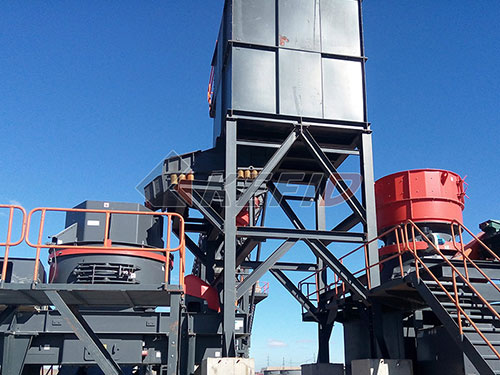
5. Challenges in Testing Gold Ore Crushing Equipment
Testing CE marked gold ore crushers presents several unique challenges:
- Variability of Ore: Gold ore is not a homogeneous material. Its hardness, abrasiveness, and moisture content can vary significantly between mines and even within a single deposit. Testing under a single set of conditions may not represent real-world performance. Manufacturers often conduct testing with multiple ore types or use synthetic abrasives (e.g., corundum) to simulate worst-case conditions.
- Scale and Cost: Large crushers (e.g., gyratory crushers weighing hundreds of tons) require massive test rigs and significant energy. Full-scale testing is expensive and time-consuming. In some cases, scaled-down models or computer simulations (e.g., discrete element method, DEM) are used to supplement physical testing.
- Dust and Noise Control: Meeting CE limits for dust and noise often requires retrofitting enclosures, silencers, or dust collection systems. Testing must verify that these systems do not compromise safety (e.g., by creating confined spaces or fire hazards).
- ATEX Compliance: If the crusher is used in underground gold mines where methane or combustible dust may be present, testing must include verification of explosion-proof enclosures, temperature limits, and spark prevention. This adds significant complexity and cost.
6. Implications for Mining Operations
For mining companies, purchasing CE marked gold ore crushing equipment offers several advantages:
- Legal Compliance: CE marking is a legal requirement for equipment used in the EEA. Non-compliance can result in fines, product recalls, or shutdowns.
- Worker Safety: CE testing ensures that crushers are designed with safety features such as emergency stops, guards, and dust control, reducing the risk of accidents and occupational diseases.
- Operational Reliability: The rigorous testing process helps identify design flaws early, leading to more reliable equipment with fewer unplanned downtime events.
- Market Access: CE marking facilitates export to European markets and is often recognized in other regions (e.g., through mutual recognition agreements).
However, mining operators must also be aware that CE marking does not guarantee performance for all ore types. It is essential to verify that the crusher has been tested with ore similar to that from the specific mine. Additionally, CE certification is not a one-time event; the manufacturer must maintain quality assurance and update the technical file if design changes are made.
7. Future Trends in CE Testing for Gold Ore Crushers
The field of CE testing is evolving, driven by technological advancements and regulatory updates:
- Digitalization and IoT: Smart crushers equipped with sensors for real-time monitoring of vibration, temperature, and power consumption are becoming common. CE testing now includes verification of data integrity and cybersecurity for control systems.
- Sustainability: New EU regulations, such as the Ecodesign Directive, are pushing for energy efficiency and recyclability. Testing may soon include life cycle assessment (LCA) and measurement of carbon footprint.
- Harmonization with Global Standards: Efforts are underway to align CE standards with ISO and other international standards, simplifying testing for multinational manufacturers.
- Use of AI in Testing: Artificial intelligence is being used to analyze test data, predict wear patterns, and optimize crushing parameters. CE testing may need to validate AI-based control algorithms.
Conclusion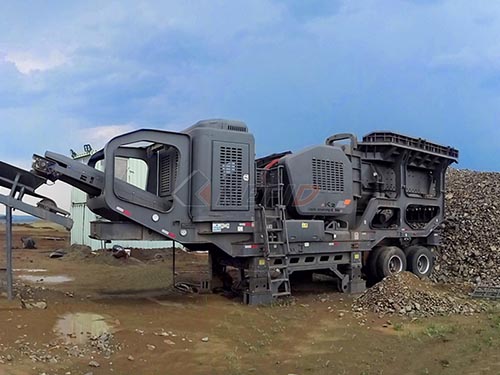
CE marked gold ore crushing equipment testing is a multifaceted process that ensures machinery meets rigorous safety, environmental, and performance standards. From mechanical integrity and electrical safety to dust control and noise reduction, each test is designed to protect workers, the environment, and the investment of mining companies. While challenges such as ore variability and testing costs persist, the benefits of CE certification—legal compliance, enhanced safety, and market access—make it an indispensable requirement for modern gold ore processing. As technology and regulations continue to evolve, testing methodologies will become more sophisticated, further improving the reliability and sustainability of crushing equipment in the gold mining industry.
