
Bespoke Stone Crusher Plant: Engineering Tailored Solutions for Modern Aggregate Production
Introduction
In the realm of heavy industry and infrastructure development, the stone crusher plant stands as a fundamental pillar. From highway construction to urban high-rise projects, the demand for high-quality aggregates—crushed stone, sand, and gravel—is insatiable. However, the one-size-fits-all approach to crushing equipment is rapidly becoming obsolete. Modern quarry operators, mining companies, and construction contractors face a complex matrix of variables: raw material hardness, moisture content, feed size distribution, required output gradation, environmental regulations, and site-specific logistical constraints. This is where the concept of a bespoke stone crusher plant emerges as a critical engineering solution.
A bespoke stone crusher plant is not merely a collection of machinery; it is a fully integrated, custom-engineered system designed to meet the precise operational parameters of a given project. Unlike standardized, off-the-shelf plants, a bespoke design considers every stage of the crushing process—from primary reduction to final screening—as a cohesive, optimized workflow. This article provides a professional, objective, and in-depth examination of bespoke stone crusher plants, covering their design philosophy, core components, engineering considerations, economic advantages, and future trends.
1. The Rationale for Customization: Why Standard Plants Fall Short
To appreciate the value of a bespoke plant, one must first understand the limitations of standardized systems. A typical standard plant is designed for a “median” material—often medium-hard limestone or river gravel—with a feed size of up to 600mm and a target output of 0-5mm, 5-10mm, and 10-20mm. While functional, this generic configuration suffers from several critical inefficiencies:
A bespoke plant addresses these issues head-on. The design process begins with a comprehensive audit of the client’s raw material (via geological testing and crushability analysis) and ends with a fully commissioned system that is guaranteed to meet specific performance metrics.
2. Core Engineering Design Process
The development of a bespoke stone crusher plant follows a rigorous, multi-stage engineering methodology:
Stage 1: Material Characterization and Test Work
Before any equipment is selected, representative samples of the feed material are subjected to laboratory analysis. Key parameters include:
Stage 2: Process Flow Simulation
Using advanced simulation software (e.g., Bruno, AggFlow, or JKSimMet), engineers model the entire circuit. This simulation predicts the output tonnage, particle size distribution at each stage, recirculating loads, and power draw. The simulation allows for “what-if” scenarios, such as changing the closed-side setting (CSS) on a cone crusher or adjusting the screen aperture, to optimize the final product yield.
Stage 3: Equipment Selection and Sizing
Based on simulation results, each component is selected: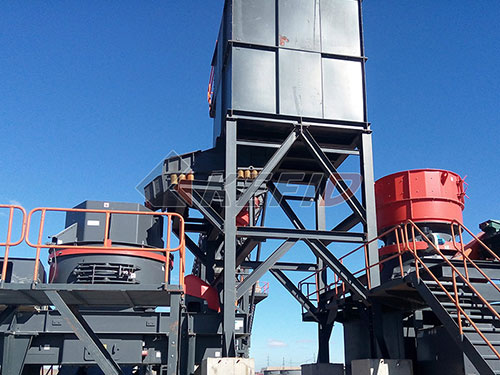
Stage 4: Structural and Civil Engineering
A bespoke plant is not just about the machinery. The structural steel frame, foundation loads, and access platforms are engineered to local seismic codes and wind loads. The layout is optimized for maintenance access—critical for reducing downtime. For example, a mobile or semi-mobile bespoke plant may be designed with hydraulic lifting systems to allow rapid relocation, while a stationary plant may be built on reinforced concrete plinths to dampen vibration.
3. Key Components of a Bespoke Plant
While every plant is unique, a comprehensive bespoke system typically integrates the following modules:
4. Economic and Operational Advantages
The initial capital expenditure (CAPEX) for a bespoke plant is typically 15–30% higher than a standard plant of similar nominal capacity. However, the total cost of ownership (TCO) over a 10-year lifecycle is often significantly lower. The objective advantages include:
5. Case Study: A Bespoke Solution for High-Abrasive Basalt
To illustrate the practical application, consider a hypothetical project in a volcanic region requiring 200 TPH of 0-5mm, 5-10mm, and 10-20mm aggregates from basalt (compressive strength 300 MPa, AI > 0.5). A standard plant would fail within weeks due to severe liner wear. A bespoke solution would involve:
The result: a plant that operates at 95% availability, with a wear cost of $0.12 per ton (versus $0.25 for a standard plant), and a final product that meets the strictest European aggregate standards.
6. Environmental and Sustainability Considerations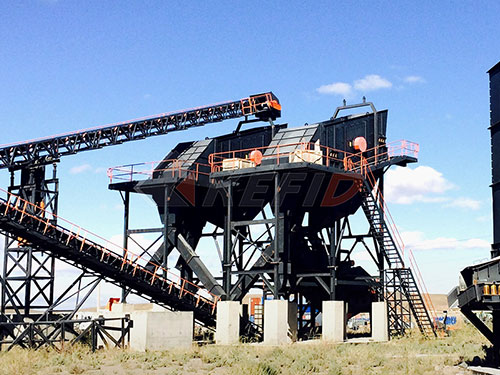
Modern bespoke plants are increasingly designed with a “green” philosophy. This includes:
7. Future Trends in Bespoke Plant Design
The industry is moving towards digital twin technology. A bespoke plant is now designed with a virtual replica that mirrors the physical system. Sensors feed real-time data into the twin, allowing operators to simulate changes (e.g., altering crusher speed) without risking production. Additionally, AI-driven predictive maintenance uses machine learning algorithms to forecast liner wear based on historical tonnage and power draw, automatically ordering spare parts before failure occurs.
Another trend is hybrid mobile-stationary systems. A bespoke plant may feature a mobile primary crusher that moves with the quarry face, feeding a stationary secondary and tertiary plant via a long overland conveyor. This reduces haulage costs and carbon emissions.
Conclusion
A bespoke stone crusher plant is not a luxury; it is a strategic investment for any operation that demands maximum efficiency, product quality, and regulatory compliance. By moving beyond generic equipment selection and embracing a holistic, data-driven engineering approach, operators can achieve a competitive edge in a crowded market. The higher upfront cost is justified by lower operating expenses, higher product value, and reduced environmental liability. As raw material sources become more challenging and construction specifications become stricter, the bespoke plant will not just be an option—it will be the industry standard for serious aggregate producers. For any project where the margin between profit and loss lies in the details of particle shape and wear life, the bespoke approach is the only professional choice.
If you have any questions about our products, please feel free to contact us. We take all inquiries and suggestions very seriously.