White Label Stone Quarry Crushing Plant Assembly Plant: A Comprehensive Technical and Commercial Overview
Introduction
The global demand for construction aggregates—crushed stone, sand, and gravel—continues to grow, driven by urbanization, infrastructure development, and industrial expansion. At the heart of this supply chain lies the stone quarry crushing plant, a complex assembly of machinery designed to reduce large rocks into specified sizes for use in concrete, asphalt, road base, and other construction materials. In recent years, a distinct business model has emerged within this sector: the White Label Stone Quarry Crushing Plant Assembly Plant. This concept refers to a manufacturing or assembly facility that produces complete crushing plants or major plant components that are then branded and sold by another company (the “white label” partner) under its own name.
This article provides a detailed, professional, and objective examination of the white label stone quarry crushing plant assembly plant. It covers the technical architecture of such plants, the operational and commercial rationale behind the white label model, key engineering considerations, quality control protocols, market dynamics, and future trends. The objective is to offer a comprehensive resource for industry professionals, investors, and procurement specialists seeking to understand this specialized segment of the mineral processing equipment market.
1. Technical Architecture of a Stone Quarry Crushing Plant
Before delving into the assembly plant itself, it is essential to understand the core components of a typical stone quarry crushing plant. A modern plant is not a single machine but an integrated system of several stages, each designed to perform a specific function:
- Primary Crushing: This is the first stage, where run-of-quarry (ROM) material, often up to 1 meter in diameter, is reduced to a manageable size (typically 150–300 mm). Jaw crushers or gyratory crushers are the standard choice due to their high capacity and ability to handle hard, abrasive rock.
- Secondary Crushing: The primary product is further reduced, usually to 40–100 mm. Cone crushers or impact crushers (horizontal shaft impactors, HSI) are common here. Cone crushers are preferred for hard, abrasive stone, while impactors are more efficient for softer, less abrasive materials.
- Tertiary and Quaternary Crushing: For fine aggregates and manufactured sand, additional crushing stages are employed. Vertical shaft impactors (VSI) are widely used for shaping and sand production. Cone crushers in closed circuit with screens are also common.
- Screening and Classification: Vibrating screens separate crushed material into different size fractions (e.g., 0–5 mm, 5–10 mm, 10–20 mm, 20–40 mm). Multiple decks and screen types (e.g., inclined, horizontal, banana screens) are used to achieve precise separation.
- Conveying and Material Handling: Belt conveyors transport material between stages. Transfer points, chutes, and stockpile conveyors are critical for continuous flow and minimizing spillage.
- Control Systems: Modern plants are equipped with Programmable Logic Controllers (PLCs) and Supervisory Control and Data Acquisition (SCADA) systems that monitor and automate crusher settings, feed rates, and safety interlocks.
2. The White Label Assembly Plant Concept
A white label assembly plant in this context is a facility that designs, engineers, and assembles complete crushing plants or modular plant components—such as skid-mounted crusher units, portable chassis, or complete stationary plants—but does not sell them under its own brand. Instead, it produces these systems for a client (often a regional equipment distributor, a mining contractor, or a construction conglomerate) who then markets and sells the plant under their own brand name.
This model is distinct from Original Equipment Manufacturing (OEM) in that the white label producer often retains significant design and engineering IP, while the branding partner provides market access, local service networks, and customer relationships. The assembly plant may also offer customization options, allowing the brand partner to specify certain components (e.g., crusher type, screen size, power configuration) to meet local market demands.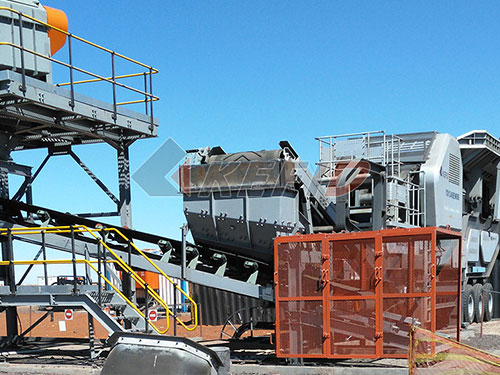
3. Key Components and Assembly Processes
A white label assembly plant must be capable of producing a wide range of plant configurations. The typical assembly process involves several distinct workstations:
- Structural Steel Fabrication: The plant’s frame, support structures, walkways, and platforms are fabricated from heavy steel sections. This requires plasma cutting, welding (MIG, TIG, submerged arc), and shot blasting for surface preparation.
- Chassis and Skid Assembly: For mobile or semi-mobile plants, the chassis (often a heavy-duty trailer frame) is assembled. This includes axle groups, suspension systems, hydraulic leveling jacks, and towing hitches. Skid-mounted units are built on robust steel bases for easy transport and installation.
- Crusher and Screen Mounting: The core equipment—jaw crushers, cone crushers, impactors, and vibrating screens—are mounted onto the chassis or skid. This involves precise alignment, bolting, and welding. For cone crushers, the main shaft, eccentric assembly, and bowl liner must be installed with extreme accuracy.
- Conveyor System Assembly: Belt conveyors are assembled from head and tail pulleys, idler rollers, belt tracking systems, and drive units. The conveyor frames are welded and bolted, and the belts are spliced (often using vulcanized or mechanical fasteners).
- Electrical and Control System Integration: All motors, sensors, and actuators are wired to a central control panel. PLCs are programmed for automated start-up sequences, load monitoring, and emergency shutdown. Variable Frequency Drives (VFDs) are installed for crusher and conveyor speed control.
- Hydraulic and Lubrication Systems: Crushers and screens require hydraulic power for adjustment (e.g., cone crusher setting) and lubrication for bearings. Hydraulic power units, oil coolers, and piping are assembled and tested.
- Final Assembly and Pre-Delivery Inspection (PDI): The complete plant is assembled in the factory, often in a large bay. A full functional test is conducted, including dry runs (no load) and, where possible, wet runs (with material). Key parameters—crusher gap, screen amplitude, conveyor belt tension, and electrical continuity—are verified.
4. Quality Control and Testing Protocols
Given the harsh operating conditions in a quarry, quality control is paramount. A reputable white label assembly plant implements rigorous protocols:
- Material Certification: All steel plates, structural beams, and wear parts (e.g., crusher liners, screen media) must come with mill certificates and material test reports.
- Welding Inspection: Non-destructive testing (NDT) methods such as ultrasonic testing (UT), magnetic particle inspection (MPI), and dye penetrant testing are used on critical welds, especially on crusher frames and chassis.
- Dimensional Verification: Every component is checked against engineering drawings using laser measurement tools and coordinate measuring machines (CMMs) for precision parts.
- Load Testing: Crushers and screens are subjected to simulated load conditions. For example, a jaw crusher may be run with a hydraulic load cell to verify its crushing force and toggle plate integrity.
- Electrical Safety Testing: Insulation resistance, ground continuity, and high-potential (hipot) tests are performed on all electrical panels and motors.
- Run-In and Burn-In: New crushers and screens are run for a specified period (e.g., 4–8 hours) to allow bearings and seals to seat properly. Vibration and temperature readings are logged.
5. Commercial and Operational Advantages of the White Label Model
The white label assembly plant model offers distinct benefits to both the producer and the brand partner:
For the Brand Partner (Reseller/Contractor):
- Reduced Capital Expenditure: No need to invest in heavy engineering, R&D, or manufacturing facilities. The partner can focus on sales, marketing, and after-sales service.
- Rapid Market Entry: White label plants can be delivered faster than developing an in-house design, allowing the partner to capture market share quickly.
- Brand Control: The partner can offer a complete product line under its own brand, building customer loyalty and brand equity.
- Customization: The assembly plant can tailor the plant to the partner’s specific market needs (e.g., mobile vs. stationary, specific crusher types, local safety standards).
For the White Label Producer (Assembly Plant):
- Economies of Scale: By producing multiple units for different brands, the plant can optimize production runs, reduce per-unit costs, and negotiate better pricing from component suppliers.
- Focus on Core Competencies: The producer can concentrate on engineering, manufacturing, and quality control without the overhead of a global sales and service network.
- Risk Mitigation: Diversification across multiple brand partners reduces dependency on a single market or customer.
6. Challenges and Critical Considerations
Despite its advantages, the white label model is not without challenges:
- Intellectual Property (IP) Protection: The producer must carefully manage IP sharing. Non-disclosure agreements (NDAs) and clear contractual terms regarding design ownership are essential.
- Quality Consistency: The brand partner’s reputation is directly tied to the assembly plant’s quality. Any defect or failure reflects poorly on the brand, not the producer. This requires a strong quality assurance culture.
- Supply Chain Complexity: The assembly plant must manage a global supply chain for crushers, screens, motors, bearings, and electrical components. Lead times, currency fluctuations, and logistics disruptions can impact delivery schedules.
- After-Sales Support: The brand partner must provide local service, spare parts, and technical support. The white label producer may need to offer training, documentation, and remote diagnostics to enable this.
- Regulatory Compliance: Crushing plants must meet local safety, environmental, and electrical codes. The assembly plant must design for compliance in multiple jurisdictions (e.g., CE marking in Europe, OSHA in the US, BIS in India).
7. Market Dynamics and Key Players
The market for white label stone quarry crushing plants is fragmented but growing. Key regions include:
- Asia-Pacific: China and India are major manufacturing hubs, with numerous small-to-medium assembly plants offering white label services. Low labor costs and a mature supply chain make this region competitive.
- Europe: High-quality, precision-engineered plants are produced in Germany, Italy, and Turkey. White label arrangements often involve specialized components (e.g., cone crushers from Sandvik or Metso) assembled into complete systems.
- North America: The market is dominated by established OEMs, but white label assembly plants exist for niche applications (e.g., portable recycling plants, small-scale quarries).
- Middle East and Africa: Growing infrastructure investment drives demand for locally assembled plants. White label partnerships with international engineering firms are common.
Notable white label producers often operate under the radar, supplying to regional brands. Some are divisions of larger industrial groups that also produce their own branded equipment. The trend toward modular, containerized, and mobile plants is accelerating, as these designs reduce installation time and site preparation costs.
8. Future Trends and Innovations
The white label assembly plant sector is evolving in response to broader industry trends:
- Digitalization and IoT: Smart plants equipped with sensors for real-time monitoring of crusher wear, bearing temperature, and vibration are becoming standard. White label producers must integrate these capabilities into their designs.
- Sustainability: Energy-efficient crushers (e.g., high-pressure grinding rolls, HPGRs), electric drives (replacing diesel), and closed-loop water systems are increasingly specified. Assembly plants must offer green options.
- Modular and Mobile Designs: The shift toward smaller, more flexible plants that can be relocated easily is driving demand for skid-mounted and wheeled chassis. White label producers are investing in standardized modular platforms.
- Automation and AI: Autonomous crushing plants that adjust settings based on feed material characteristics are on the horizon. White label producers must collaborate with automation specialists to offer these advanced systems.
- Local Content Requirements: Many countries now mandate a percentage of local manufacturing for mining and construction equipment. White label assembly plants can partner with local fabricators to meet these requirements while maintaining quality.
Conclusion
The white label stone quarry crushing plant assembly plant represents a sophisticated, symbiotic business model within the mineral processing equipment industry. It enables rapid market entry, brand building, and cost efficiency for resellers, while allowing specialized manufacturers to focus on engineering and production excellence. However, success depends on rigorous quality control, robust IP management, and a deep understanding of both technical and commercial requirements.
As the global demand for aggregates continues to rise, and as quarries seek more efficient, sustainable, and automated solutions, the role of the white label assembly plant will only grow. For industry professionals, understanding this model is essential for making informed procurement decisions, evaluating potential partners, and navigating the complex landscape of crushing plant supply. Whether you are a quarry operator, a distributor, or an investor, the white label assembly plant offers a compelling pathway to acquiring world-class crushing technology without the burden of in-house manufacturing.
