
White Label Quarry Ballast Crushing Equipment Datasheet: A Comprehensive Technical & Commercial Analysis
1.0 Executive Summary
White label quarry ballast crushing equipment represents a strategic solution for aggregate producers, equipment distributors, and large contracting firms seeking to optimize capital expenditure (CapEx) and operational branding. Unlike branded OEM (Original Equipment Manufacturer) machinery, white label equipment is manufactured by a specialized industrial contractor and sold unbranded or under the purchaser’s private label. This datasheet provides a detailed, objective analysis of such equipment specifically engineered for the production of railway ballast—a high-specification aggregate critical for track bed foundation. The focus is on the technical specifications, plant configuration, quality control mechanisms, and the total cost of ownership (TCO) paradigm that defines this market segment.
2.0 Introduction & Market Context
Railway ballast must meet stringent geometric (particle size distribution, shape), mechanical (strength, abrasion resistance), and durability (weathering, freeze-thaw) standards (e.g., EN 13450, AREMA #24, #25, #3-4A). Producing this premium product demands robust, precisely calibrated crushing circuits. White label equipment fills a niche by offering performance-comparable systems at a typically lower initial cost, as they bypass the premium associated with global brand marketing, extensive dealer networks, and standardized manufacturing lines. The value proposition is not merely cost-saving but customization flexibility and supply chain control for the buyer.
3.0 Technical Specifications & Plant Configuration
A white label ballast crushing plant is not a single machine but an integrated system. Key components are sourced or manufactured based on rigorous design criteria.
3.1 Primary Crushing Station:
3.2 Secondary & Tertiary Crushing Station:
3.3 Screening & Classification Deck:
3.4 Ancillary Systems:
4.0 Performance & Quality Assurance Metrics
The efficacy of white label equipment is measured against international ballast standards.
4.1 Product Shape Analysis:
4.2 Gradation Control:
The entire circuit must consistently produce within tight tolerances (e.g., ±5% on any given sieve). Screen efficiency >95% is required.
4.3 Durability & Soundness Test Compliance:
The aggregate’s resistance to fragmentation (Los Angeles Abrasion – LAA <20% typical) and weathering is inherent in feed rock quality but can be influenced by crushing technique that avoids micro-fractures.
4.4 Production Capacity:
Standardized white label plants are typically offered in modules:
5.0 Commercial & Operational Analysis
5.1 Cost Structure Advantages:
Initial purchase price can be 15-30% lower than equivalent tier-one OEM equipment due to leaner overheads and direct-to-client sales models.
5.2 Total Cost of Ownership (TCO):
A critical evaluation must include: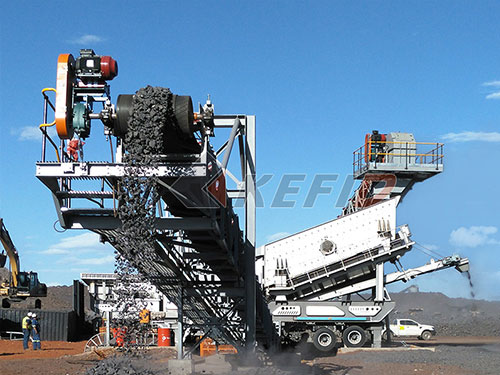
5 .3 Customization Flexibility :
This is a primary strength . Clients can specify :
6 .0 Risk Mitigation & Considerations
Choosing white label entails managing certain risks :
1 . Engineering Provenance : Due diligence on the manufacturer’s design team experience , reference projects ,and R&D capability is essential .
2 . Warranty & Support : Warranty terms may differ from OEMs .Clarity on scope(parts,labor),duration,and response time commitments is crucial.Spare parts availability guarantees should be contractual .
3 . Technology Integration : While mechanically robust ,some white label solutions may lag in latest digital automation features unless specifically requested .
4 . Resale Value : Equipment likely has lower residual value compared to major branded machinery,a factor in CapEx calculations .
7 .0 Conclusion
White label quarry ballast crushing equipment presents a compelling ,performance-driven alternative for knowledgeable buyers prioritizing cost efficiency ,customization ,and direct supply chain relationships.It is not merely”cheap kit”but engineered industrial machinery focused on delivering the precise product specifications required by rail authorities.Successful procurement hinges on thorough technical evaluation of the proposed plant design ,rigorous vetting of the manufacturer’s credentials,and a comprehensive commercial agreement that aligns incentives toward long-term reliability and productivity.For entities with strong in-house maintenance capabilities seeking to maximize value from their crushing operations,the white label model offers significant strategic advantages.Ultimately,the datasheet underscores that in this segment,the merit lies not in the badge on the machine,but in the engineering integrity within it,the quality control during its fabrication,and the partnership model supporting its operation
Lorem ipsum dolor sit amet, consectetur adipisicing elit. Consectetur sequi saepe ut sunt eveniet perferendis excepturi, iste obcaecati. Qui tempore hic sed quia soluta obcaecati vel.