
White Label Gyratory Crusher Factories: An In-Depth Analysis of the OEM/ODM Ecosystem in Heavy Machinery
Introduction
In the global mining and aggregate processing industries, the gyratory crusher stands as a cornerstone of primary crushing operations. These massive machines, capable of processing thousands of tons of ore per hour, are essential for reducing run-of-mine material to a manageable size for downstream processing. However, the market for these crushers is not monolithic. A significant, yet often opaque, segment of this industry is the “white label” manufacturing ecosystem. White label gyratory crusher factories are facilities that design and produce crushers that are then rebranded and sold by other companies under their own trademarks. This article provides a professional, objective, and comprehensive examination of white label gyratory crusher factories, exploring their operational models, technical capabilities, quality control challenges, market dynamics, and the strategic implications for buyers and sellers.
1. Defining the White Label Model in Heavy Machinery
The term “white label” originates from the consumer goods sector, where a generic product is manufactured by one company and sold under another company’s brand. In the context of gyratory crushers, this model is more nuanced. Unlike simple consumer products, gyratory crushers are complex, capital-intensive pieces of equipment that require significant engineering expertise, metallurgical knowledge, and manufacturing precision.
White label factories in this space typically fall into two categories:
Original Design Manufacturers (ODMs): These factories possess their own research and development (R&D) teams. They design the crusher’s geometry, chamber profile, eccentric throw, and structural components. They own the intellectual property (IP) for the design, even if it is a “clone” or an improved version of a legacy design (e.g., based on patents that have expired). The buyer (the brand) provides specifications, performance targets, and branding requirements, but the factory handles the core engineering.
Original Equipment Manufacturers (OEMs) with White Label Divisions: Some large, established OEMs also operate white label divisions. They may produce a “generic” version of their own crusher, stripped of proprietary features or using alternative supply chains, to be sold by a regional distributor or a competing brand. This is often done to utilize excess manufacturing capacity without diluting the primary brand’s premium positioning.
The key distinction is that the white label factory does not market the crusher under its own name. Instead, it acts as an invisible partner, allowing the brand owner to focus on sales, distribution, aftermarket service, and customer relationships.
2. The Technical Landscape: What White Label Factories Produce
White label gyratory crusher factories are not limited to simple, low-quality machines. Many are highly sophisticated operations that produce crushers meeting or exceeding international standards. Their product range typically includes:
Primary Gyratory Crushers (PGs): These are the largest machines, with feed openings exceeding 1,500 mm (60 inches). They are used in the first stage of crushing in high-tonnage mines. White label factories often produce designs compatible with major OEMs like Metso (Superior MK-II, MK-III), Sandvik (CG series), and FLSmidth (Fuller-Traylor). These are “drop-in” replacements or upgrades.
Secondary and Tertiary Gyratory Crushers (e.g., Cone Crushers): While technically cone crushers are a subtype of gyratory crushers, the term “gyratory” in white label contexts often refers to the primary machines. However, many factories also produce large cone crushers (e.g., Symons 7-foot, HP series clones) under white label agreements.
Hydraulic and Hydroset Systems: Modern white label factories integrate advanced hydraulic systems for adjusting the crusher setting (CSS), clearing the chamber, and providing tramp iron protection. These systems are often sourced from specialized hydraulic component suppliers but are integrated into the factory’s own control logic.
Customized Wear Parts: A critical value-add for white label factories is the production of manganese steel liners (concaves and mantles). They can optimize the chamber profile for specific ore types (e.g., hard, abrasive copper ore vs. softer, sticky limestone) and offer different alloy compositions (e.g., 14% Mn, 18% Mn, or high-chrome iron for certain applications).
3. Quality Control and Engineering Challenges
The reputation of a white label factory hinges on its ability to deliver consistent quality. Unlike branded OEMs, which have decades of accumulated field data and rigorous testing protocols, white label factories must build their own quality assurance systems. Key challenges include:
Metallurgical Consistency: The main frame, top shell, and spider of a gyratory crusher are massive steel castings (often weighing 50-150 tons). Defects such as porosity, cracks, or improper heat treatment can lead to catastrophic failure. Reputable white label factories invest in advanced foundry techniques (e.g., vacuum degassing, computer-controlled heat treatment) and non-destructive testing (NDT) methods like ultrasonic testing (UT), magnetic particle inspection (MPI), and radiography (X-ray).
Machining Tolerances: The eccentric assembly, pinion shaft, and main shaft require extremely tight tolerances (often measured in microns). Poor machining leads to premature bearing failure, excessive vibration, and reduced throughput. White label factories must use large-scale CNC boring mills, gear hobbing machines, and coordinate measuring machines (CMMs) to ensure geometric accuracy.
Assembly and Testing: A white label factory should perform a “dry run” or “no-load test” of the complete crusher before shipment. This involves checking oil flow, hydraulic pressure, bearing temperatures, and vibration levels. However, full-load testing (running the crusher with rock) is rarely feasible in a factory setting, making design validation and material selection even more critical.
Reverse Engineering vs. Original Design: Many white label factories start by reverse-engineering a successful OEM design. This can be risky if the reverse engineering is incomplete. For example, a factory might copy the external dimensions but miss the subtle internal geometry of the crushing chamber that optimizes particle shape and liner life. The best white label factories go beyond reverse engineering, using computational fluid dynamics (CFD) and discrete element method (DEM) simulations to improve upon the original design.
4. The Supply Chain and Sourcing Strategy
White label factories are often located in regions with a strong industrial base and access to raw materials. Key geographic hubs include:
China (e.g., Shanghai, Zhejiang, Henan, Liaoning): China is the dominant player in white label heavy machinery. Factories here benefit from a mature supply chain for steel castings, bearings (e.g., from SKF, FAG, or domestic equivalents), hydraulic components, and electric motors. The cost advantage is significant, but quality varies widely. Factories in Liaoning (the traditional heavy industry base) often have experience with large castings, while those in Zhejiang may focus on precision machining.
India (e.g., Gujarat, Maharashtra, Tamil Nadu): India has a growing white label crusher industry, particularly for smaller to medium-sized gyratory and cone crushers. Indian factories often emphasize cost-effectiveness and are increasingly adopting international quality standards (e.g., ISO 9001, CE marking).
Eastern Europe (e.g., Czech Republic, Poland, Turkey): These regions offer a middle ground between Asian cost and Western quality. Turkish factories, in particular, have become notable for producing robust crushers for the aggregate and mining sectors, often under white label agreements with European distributors.
South Korea and Japan: While less common for full white label production, some factories in these countries produce high-precision components (e.g., gears, shafts) that are used by white label assemblers elsewhere.
5. Market Dynamics and Strategic Considerations for Buyers
For a company considering sourcing from a white label gyratory crusher factory, several strategic factors must be evaluated: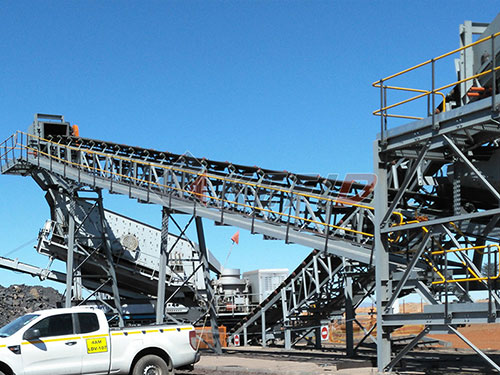
Cost vs. Total Cost of Ownership (TCO): The initial purchase price from a white label factory can be 30-50% lower than a branded OEM. However, the TCO must account for:
Intellectual Property and Liability: The buyer (brand) assumes liability for the machine’s performance and safety. It is crucial to have a clear contract that specifies:
Customization and Minimum Order Quantities (MOQs): White label factories typically require MOQs, especially for large primary gyratory crushers (e.g., 1-2 units per order). Customization, such as a unique chamber profile or a specific paint color, is usually possible but may incur additional engineering fees.
Auditing and Factory Visits: A prudent buyer will conduct a technical audit of the factory. This includes reviewing:
6. Risks and Mitigation Strategies
White label sourcing is not without risks. The most common pitfalls include:
Inconsistent Quality: A factory may deliver a perfect first unit but a flawed second unit due to a change in casting supplier or a lapse in inspection. Mitigation: Implement a third-party inspection agency (e.g., SGS, Bureau Veritas) for every unit.
Design Infringement: Some white label factories produce direct copies of patented designs still under protection. This can lead to legal action against the buyer. Mitigation: Conduct a freedom-to-operate (FTO) patent search before finalizing the design.
Supply Chain Disruption: If the factory relies on a single source for critical components (e.g., large bearings from a specific European supplier), any disruption can delay delivery. Mitigation: Require the factory to identify alternative suppliers and maintain a safety stock of critical parts.
Lack of After-Sales Service: Once the crusher is shipped, the factory may be slow to respond to technical queries or spare parts requests. Mitigation: Negotiate a spare parts consignment agreement or establish a local warehouse for high-wear items.
7. The Future of White Label Gyratory Crusher Factories
The white label model is likely to grow, driven by several trends:
Digitalization: Factories are beginning to offer “smart” crushers with integrated sensors for monitoring oil temperature, pressure, vibration, and power draw. White label factories can now embed their own IoT (Internet of Things) platforms, allowing the brand owner to offer predictive maintenance services.
Sustainability: There is increasing pressure to reduce the carbon footprint of mining equipment. White label factories are exploring the use of recycled steel in castings and more energy-efficient hydraulic systems. Some are also offering retrofit kits to upgrade older crushers, extending their life.
Modularization: To reduce lead times and simplify shipping, some white label factories are designing modular gyratory crushers that can be assembled on-site from pre-fabricated sub-assemblies. This is particularly attractive for remote mine sites.
Consolidation: The white label sector is fragmented, with hundreds of small to medium factories. Over time, the most technically competent and financially stable factories will likely be acquired by larger OEMs or private equity firms, leading to a more structured market.
Conclusion
White label gyratory crusher factories represent a vital, albeit complex, component of the global mining and aggregate supply chain. They offer a compelling value proposition for companies that want to enter the crusher market without the immense R&D and manufacturing investment required to build a brand from scratch. However, success in this model demands rigorous technical due diligence, a clear contractual framework, and a long-term partnership approach. For the buyer, the choice is not simply between “cheap white label” and “expensive OEM.” Rather, it is about finding a factory that combines engineering competence, metallurgical expertise, and a commitment to quality—a factory that can deliver a machine that performs reliably under the harshest conditions, regardless of the nameplate on the side. As the industry evolves, the line between white label and OEM will continue to blur, with the best factories becoming true innovation partners rather than mere manufacturers.
If you have any questions about our products, please feel free to contact us. We take all inquiries and suggestions very seriously.