
In the competitive and capital-intensive mining industry, optimizing operational costs without compromising on efficiency and reliability is paramount. For mining companies, equipment procurement represents a significant portion of the initial capital expenditure (CAPEX). This has led to the growing prominence of White Label Gold Ore Crushing Equipment offered at competitive factory prices. This model provides a strategic alternative to premium-branded machinery, balancing performance, cost-effectiveness, and customization. This article delves into the intricacies of this equipment, analyzing its components, advantages, procurement considerations, and the true meaning of “factory price” in this specialized sector.
White labeling refers to a practice where a manufacturer produces equipment that is then sold by other companies under their own brand name. In the context of gold ore crushing, specialized heavy machinery factories design, engineer, and manufacture complete crushing circuits or individual components (like jaw crushers, cone crushers, impact crushers) without final branding. These “generic” or OEM (Original Equipment Manufacturer) products are then sold to distributors, large mining contractors, or directly to end-user mining companies who may brand them as their own or simply integrate them as cost-effective core assets.
This contrasts with buying directly from globally recognized brands (e.g., Metso, Sandvik), where a premium is paid for the brand name, extensive global service networks, and standardized R&D. White label equipment focuses on the core engineering and manufacturing value.
Gold ore processing begins with comminution—the liberation of gold-bearing minerals from waste rock. The crushing stage is critical for downstream processes like milling and leaching. A typical primary-secondary-tertiary crushing circuit can be sourced through white label channels:
Primary Crushers (Jaw Crushers & Gyratory Crushers): White label manufacturers produce robust jaw crushers with high reduction ratios for the initial break-down of run-of-mine (ROM) ore. Key factory-price features include fabricated steel frames, durable toggle plates, and locally sourced but internationally standard bearings.
Secondary & Tertiary Crushers (Cone Crushers & Impact Crushers): For further size reduction. White label cone crushers often adopt proven designs with modern updates (e.g., hydraulic adjustment and clearing systems). The focus is on wear component quality (mantles, concaves made from high-manganese steel or alloys) rather than proprietary liner shapes.
Supporting Equipment: Vibrating grizzlies, feeders (apron, vibrating), and conveyor systems are integral. White label factories offer these as part of a packaged solution, ensuring compatibility at a lower integrated cost.
Mobile & Semi-Mobile Crushing Plants: A rapidly growing segment in white label manufacturing. These modular plants offer flexibility for satellite deposits or mines with moving faces. Factory-direct pricing makes these highly attractive for mid-tier miners.
The term “factory price” implies purchasing directly from the manufacturer’s gate, eliminating margins added by multiple layers of distributors and agents. The cost benefits are substantial:
However,”factory price” must be evaluated holistically: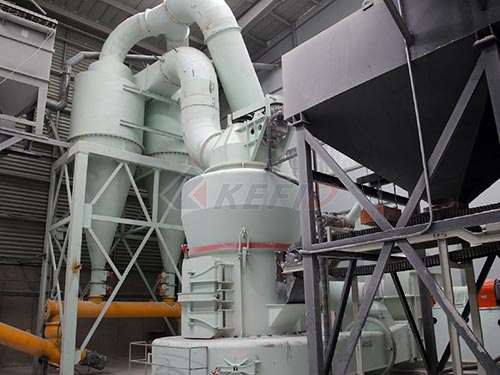
The lower upfront cost carries inherent risks that must be professionally managed:
White label gold ore crushing equipment offered at factory prices represents a sophisticated,solution-oriented procurement strategy rather than merely a “cheap alternative.” It empowers mining companies,g particularly juniors,midsize operators,and those in cost-sensitive jurisdictions.to gain greater control over their most critical physical assets.It shifts value from brand premium to direct engineering quality,customization,and supply chain relationship management.The model’s success hinges entirely on rigorous due diligence,a comprehensive understanding of total cost ownership,and proactive management of after-sales support.For informed buyers willing to invest effort in vendor selection and contract negotiation,the rewards are substantial:high-performance,custom-fit crushing circuits that preserve capital,maximize project economics,and deliver the robust reliability required to sustainably unlock value from gold deposits.In an industry where margin compression is constant,the strategic adoption of white-label solutions is a testament to operational intelligence and financial acumen
Lorem ipsum dolor sit amet, consectetur adipisicing elit. Consectetur sequi saepe ut sunt eveniet perferendis excepturi, iste obcaecati. Qui tempore hic sed quia soluta obcaecati vel.