An In-Depth Analysis of the Telsmith 4246 Impact Crusher: Capacity, Design, and Application
In the competitive world of aggregate processing, the choice of crushing equipment is paramount to the profitability and efficiency of any operation. The Telsmith 4246 Impact Crusher stands as a prominent model in the mid-to-large-size range, renowned for its robust construction and versatile performance. A discussion about this machine, however, invariably centers on one critical metric: its capacity. It is crucial to understand that stating a single tonnage figure for the 4246 is an oversimplification. The actual capacity is not a fixed number but a variable outcome dictated by a complex interplay of machine configuration, material characteristics, and operational parameters. This article provides a comprehensive examination of the Telsmith 4246 impact crusher, with a focused analysis on the factors that truly define its productive potential.
Overview and Core Design Philosophy
The Telsmith 4246 is a primary horizontal shaft impactor (HSI) designed for high-volume production of aggregate, concrete, and asphalt recycling. The numerical designation “4246” refers to its rotor dimensions—42 inches in diameter and 46 inches in width. This substantial physical size is the foundational element of its capacity potential. A larger rotor can gather more kinetic energy and present a greater impact surface to the feed material.
The crusher’s design incorporates several key features that contribute directly to its performance:
- Massive Solid Rotor: The core of any HSI is its rotor. The 4246 typically features a solid, welded rotor designed for maximum inertia. This high inertia allows the rotor to maintain rotational speed upon impact, ensuring consistent crushing force even with irregular feed. This design is particularly advantageous for processing tougher materials like limestone and concrete.
- Three-Bar Configuration (Standard): The crusher is configured with three curtains (or stages) of breaker bars (aprons). The combination of a primary curtain, secondary curtain, and tertiary curtain allows for multi-stage reduction within a single machine. Each stage progressively refines the material, enabling precise control over the final product’s gradation.
- Hydraulic Adjustment System: A critical feature for controlling capacity and product size is the hydraulic adjustment of the aprons. Operators can quickly and safely adjust the clearance between the rotor blow bars and the apron plates without entering the crusher. This allows for fine-tuning in response to changes in feed material or desired product specification.
- Large Feed Opening: The crusher boasts a sizable feed opening (approximately 34″ x 46″) that can accommodate large slab-like material, reducing the need for excessive primary breaking or pre-screening in many applications.
Deconstructing “Capacity”: The Key Variables
Telsmith literature may provide estimated capacity ranges—often in the broad spectrum of 150 to over 500 tons per hour (TPH). To move from this wide range to a predictable output, one must analyze the variables in detail.
1. Material Characteristics:
This is arguably the most significant factor influencing capacity.
- Hardness & Abrasiveness: Crushing soft limestone is fundamentally different from processing hard, abrasive trap rock or granite. Softer materials fracture more easily and generate less wear on components, allowing for higher throughputs—potentially reaching or exceeding 400-500 TPH under optimal conditions with an open-circuit setup.
- Feed Size Distribution: The famous adage “the crusher doesn’t know how big it is” holds true here. A well-graded feed with a mix of sizes packs more efficiently into the crushing chamber than one consisting solely of large, slabby rock (“slabby” feed creates voids). Consistent, well-sized feed from a well-matched primary screen leads to higher efficiency and capacity.
- Moisture & Clay Content: Wet, sticky material can cause plugging in the aprons and discharge areas, drastically reducing throughput and increasing downtime for cleaning.
- Bulk Density: A cubic yard of lightweight recycled concrete has less mass than a cubic yard of dense granite. Therefore, while volumetric capacity might be similar, tonnage capacity will be lower for lighter materials.
2.Crusher Configuration & Settings:
How the crusher itself is set up directly dictates its output.
- Rotor Speed: The rotor can often be run at different speeds (e.g., ~500 RPM for standard applications, ~600 RPM for high-production). Higher speed increases tip velocity (feet per minute), imparting more kinetic energy to each blow bar strike. This results in greater fragmentation but also increases wear and may produce more fines.
- Apron Settings (Gap): This setting controls product size but also has a profound effect on capacity.
- Open Settings: Wider gaps between blow bars and aprons allow material to pass through more quickly but with less reduction per pass.This generally yields higher throughput but coarser product.
- Closed Settings: Tighter gaps increase inter-particle collisions and attrition within the chamber.This produces finer product but restricts material flow,capping maximum tonnage.For instance,a closed-circuit setup aiming for a specific #57 stone specification will have lower instantaneous capacity than an open-circuit setup producing rip-rap.
- Blow Bar Design: The choice between high-chrome martensitic iron or other alloys affects wear life but not directly capacity.The profile ofthe blow bar(e.g., low-profile vs.high-lift),however,influences how aggressively it throws material againstthe aprons.A more aggressive profile can improve reductionbut may also increase power drawand wear under certain conditions.
3.Circuit Design: Open vs Closed
This operational context fundamentally redefines what “capacity” means.
- Open Circuit: Material passes throughcrusher onceandis senttoa product pile.In this scenario,thecrusheroperatesatitsmaximumvolumetricthroughput.Thecapacityfigurehereisrawtonnageofallmaterialprocessed,butitmaycontaina significantproportionofoversizeorundersizematerialthatdoesnotmeetspecification.Thisisoftenseeninprimarycrushingapplicationswherethegoalissimplysizereductionforconveyance.
- Closed Circuit: Materialpassesthroughthecrusherandisthensenttoascreen.Oversizematerialisrecirculatedbacktothecrusherfeed(knownasthe”circulatingload”).Here,thesystem’snetcapacityisthetonnageoffinishedproductmeeting spec.Thecrusher’sinstantaneousloadisoftenhigherthanthenetcapacitybecauseitisconstantlyprocessingbothnewfeedandrecirculatedmaterial.Anetcapacityof250TPHforaspecproductmightrequirethecrushertoactuallyprocess350-400TPHinstantlyduetothe30-40%circulatingload.Managingthisloadiscriticaltopreventingcrusheroverloadandachievingconsistentproducts.
Practical Application Scenarios
To illustrate these variables in action:
ScenarioC:AggregatePlantProducingSpecificationAggregate
MaterialHardgraniteortraprock
SetupClosedcircuitwithatripledeck screenaimingfor#8,#57,andcoursematerials
ConfigurationTightapronsettingsfortertiarycurtain;highrotorspeedformaximumattrition
*ExpectedNetCapacityRange**150-220TPH.**Thedemandforpreciseproductgradation,thehardnessofthematerial,andthehighcirculatingloadsignificantlyconstrainthenetsalabletonnage
Conclusion:TheTrueMeasureofaCrushersCapacity
TheTelsmith4246ImpactCrusherisacapableanddurablemachineengineeredforsustainedhigh-volume crushingItsphysicalattributes—the42x46rotormassiveframeandthree-curtaindesign—provideitwithafoundationalcapacitythatfewmachinesinitsclasscanmatchHoweveritspracticaloutputisahighlymalleablefigure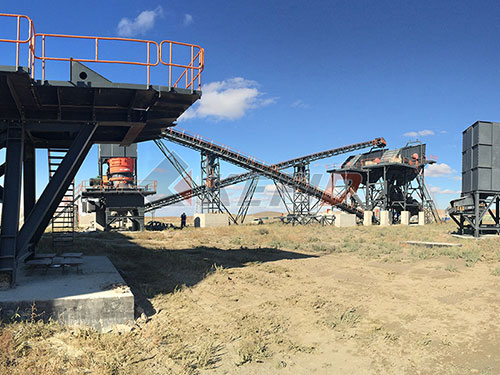
ThereforeaprospectiveoperatorshouldnotaskWhatisthecapacityofaTelsmith4246?butratherWhatcapacitycanIachievewithmymaterialmydesiredproductsandmyplantsconfiguration?BycarefullyanalyzingthematerialspecificgravityabrasivenessandfeedsizeandbyoptimizingtherotorspeedaprongapsandcircuitflowanoperatorcanunlockthefullpotentialoftheTelsmith4246transformingitfromapowerfulhammerintoaprecisiontoolforprofitability
