Sustainable Stone Crusher Plant Testing: A Critical Pathway to Eco-Efficient Aggregate Production
The global construction industry is a cornerstone of modern civilization, yet it faces an unprecedented challenge: reconciling its massive demand for raw materials, primarily aggregates, with the urgent imperative of environmental stewardship. The stone crusher plant, the industrial heart of aggregate production, has traditionally been associated with dust, noise, high energy consumption, and landscape degradation. In this context, Sustainable Stone Crusher Plant Testing emerges not as a mere regulatory hurdle, but as a comprehensive, multi-disciplinary engineering philosophy and a critical operational phase. It is the rigorous process of verifying that a crushing plant’s design, technology, and operational protocols meet stringent performance benchmarks for environmental protection, resource efficiency, economic viability, and social responsibility throughout its lifecycle.
1. The Pillars of Sustainability in Crushing Operations
A sustainable crusher plant transcends the simple metric of tons-per-hour. Its testing regime is built upon four interconnected pillars:
- Environmental Integrity: This is the most visible aspect. Testing focuses on quantifying and mitigating emissions—primarily particulate matter (PM10 & PM2.5). It involves verifying the efficiency of dust suppression systems (water sprays) and containment solutions (baghouse filters, encapsulation). Noise emission mapping ensures compliance with limits at the property boundary and for nearby communities. Water management testing assesses recycling rates within wet processing systems and prevents contamination of local water bodies.
- Resource Efficiency & Circularity: Sustainability demands maximizing output from every ton of feedstock. Testing here evaluates the plant’s ability to produce optimally graded aggregates with minimal waste. This includes assessing the performance of sorting technologies (e.g., air classifiers, screens) to minimize surplus fines. Crucially, it tests the plant’s flexibility to process recycled concrete aggregate (RCA), asphalt millings, and other construction demolition waste—closing the material loop.
- Energy & Climate Impact: Crushers are energy-intensive. Sustainable testing involves detailed energy audits across each component: primary jaw crusher, secondary cone crusher, tertiary impact crushers/vsi’s , screens, and conveyors. The goal is to identify inefficiencies and validate the benefits of technologies like variable frequency drives (VFDs), high-efficiency motors, and automated control systems that optimize load and reduce idle time.
- Operational & Social Viability: A plant that is unsafe or a nuisance cannot be sustainable. Testing includes safety system validation (emergency stops, guard interlocks), ergonomic assessments for maintenance access ,and traffic management plans for haul trucks . Community-centric testing involves monitoring vibration ,visual impact ,and implementing continuous environmental monitoring systems for transparency.
2. Phases of Sustainable Plant Testing
The journey toward a verified sustainable operation is phased and iterative.
Phase 1: Pre-Fabrication & Design Validation (Virtual Testing)
Before steel is cut ,advanced software tools are employed.
- Discrete Element Modeling (DEM): Software like EDEM simulates rock flow ,breakage ,and wear on liners in virtual crushers .This optimizes chamber design for maximum reduction efficiency with minimal energy .
- Computational Fluid Dynamics (CFD): Used to model dust generation paths and design optimal ventilation ,extraction ,and filtration systems .
- Plant Simulation Software: Tools like Bruno or Arena simulate entire process flows to balance circuits ,prevent bottlenecks ,and calculate theoretical energy use per product type .
Phase 2: Component & Subsystem Factory Acceptance Testing (FAT)
Each major component is tested at the manufacturer’s facility against specifications.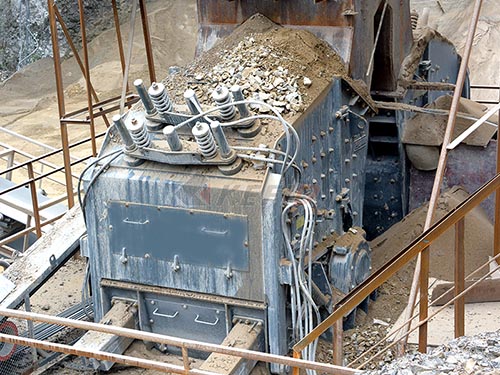
- Crusher Performance Curves: Verifying throughput capacity power draw,and product gradation under controlled feed conditions .
- Dust Collector Efficiency Tests: Measuring pressure drop airflow,and filtration efficiency using standardized test dust .
- Control System Logic Checks: Ensuring all automation sequences for start-up shutdown,and emergency procedures function correctly .
Phase 3: On-Site Commissioning & Initial Performance Testing
This is the first real-world integration .Key activities include:
- Mechanical Run & Alignment Checks: Ensuring all conveyors are aligned,screens are correctly tensioned,and transfer points are sealed .
- Baseline Emission & Noise Survey: Establishing initial environmental performance levels before fine-tuning .
- Calibration of Monitoring Instrumentation: Weighbelt feeders level sensors,dust monitors,and energy meters must be accurately calibrated .
Phase 4: Full-Scale Integrated Performance & Endurance Testing
The most critical phase often spanning several weeks .It involves:
- Gradation & Yield Optimization Tests: Running different feed materials blends including virgin rock and recycled content to adjust crusher settings screen decks,and classifier speeds for optimal yield meeting market specifications .
- Dust Emission Compliance Runs: Conducting prolonged operation under varying wind conditions while measuring particulate matter at key emission points boundary locations using ISO-standard methods .
- Noise Acoustic Mapping: Using sound level meters at multiple points around the site perimeter over different times day/night to create noise contours validate mitigation measures acoustic enclosures barriers .
- Energy Consumption Benchmarking: Measuring precise kWh per ton for each product size fraction identifying highest-consumption processes .
- Water Recycling System Stress Test: Evaluating closed-loop water system capacity under peak production rates measuring make-up water requirements .
Phase 5: Continuous Monitoring & Predictive Analysis
Post-commissioning sustainability relies on constant data collection.
- Installing permanent online monitors dust opacity noise vibration .
- Using IoT sensors on equipment predict maintenance needs preventing catastrophic failures reducing downtime resource waste spare parts .
- Regularly analyzing production data against sustainability KPIs generating reports for management regulatory bodies .
3.Key Technologies Enabling Sustainable Performance
Testing validates these advanced technologies:
- Electric/Hybrid Drives : Moving from diesel generators grid connection with renewable energy sources potential significantly reduces carbon footprint tested for reliability power quality .
- Automation AI Control Systems : Systems like Metso Metrics Sandvik My Fleet use real-time data automatically adjust crusher settings feed rates maximize product quality while minimizing energy wear parts consumption their algorithms require extensive field testing .
- Advanced Wear Materials : Longer-lasting liners mantles reduce frequency replacement thus lowering material waste transportation emissions their performance rigorously tested in different geological conditions .
- Mobile Hybrid Plants : Track-mounted plants can be positioned minimize haul distances source reduce overall site disturbance their mobility fuel efficiency key test parameters .
Challenges Future Directions
Sustainable testing faces challenges higher capital cost sophisticated monitoring equipment need highly skilled personnel interpret data .There also inherent conflict between ultra-fine crushing needed certain products resulting higher energy dust generation requiring careful optimization trade-offs during testing .
The future lies “Plant Digital Twin” – a live virtual replica fed by hundreds sensors enabling continuous virtual testing scenarios process adjustments predictive sustainability analytics before implementing changes real world .Furthermore lifecycle assessment LCA integrated into test protocols evaluating not just operational impacts but also embodied carbon manufacturing decommissioning equipment .
Conclusion
Sustainable Stone Crusher Plant Testing represents fundamental paradigm shift aggregate industry moving from compliance-driven reactive activity core proactive engineering business function .It systematic journey begins virtual design continues through rigorous on-site validation extends into intelligent operation via continuous monitoring By proving environmental social economic performance through meticulous data-driven testing crushing operations transform from perceived ecological liabilities into responsible partners built environment They demonstrate that essential resources can be produced meeting needs present without compromising ability future generations meet their own thereby laying literal metaphorical foundation truly sustainable construction industry
