Sustainable Stone Crusher Plant: A Comprehensive Analysis of Factory Pricing and Long-Term Value

The global construction and infrastructure sectors are under increasing pressure to adopt environmentally responsible practices without compromising economic viability. Within this context, the concept of a Sustainable Stone Crusher Plant has evolved from a niche ideal to a critical operational and financial imperative. While the term “factory price” often triggers a search for the lowest initial capital expenditure (CAPEX), a truly sustainable plant requires a broader analysis of total lifecycle cost, environmental compliance, and social license to operate. This detailed exploration delves into the multifaceted components, cost drivers, and long-term value proposition of investing in a sustainably engineered stone crusher plant.

1. Deconstructing “Sustainability” in Crushing Operations

A sustainable stone crusher plant is designed to minimize its environmental footprint, optimize resource efficiency, and ensure economic longevity. It transcends mere pollution control to encompass:

  • Environmental Stewardship: Dust suppression systems (like mist cannons, enclosed conveyors, baghouse filters), noise abatement measures (acoustic enclosures, strategic berms), water recycling circuits for washing plants, and responsible site water management.
  • Resource Efficiency: High-efficiency crushers (e.g., cone crushers with advanced chamber designs), variable frequency drives (VFDs) on motors to match power consumption with load, and optimized process layouts to reduce idle running and material re-handling.
  • Circular Economy Integration: Capability to process recycled concrete aggregate (RCA) and construction & demolition (C&D) waste alongside virgin rock, contributing to landfill diversion and reduced quarrying demand.
  • Social Responsibility: Proactive community engagement, visual screening, monitoring of noise and dust impacts on nearby populations, and ensuring worker health and safety through automated controls and remote monitoring.

2. The Anatomy of Factory Price: Core Cost Components

The quoted “factory price” for a stationary or semi-mobile crushing plant typically includes the ex-works cost of major equipment. Key components influencing this price are:

  • Primary Crusher: Jaw crushers (for high abrasion), gyratory crushers (for high capacity), or impact crushers (for softer rock). Choice depends on feed size, abrasiveness index (Ai), and desired reduction ratio.
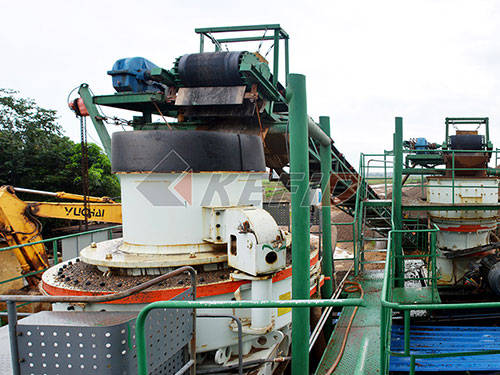
  • Secondary & Tertiary Crushers: Cone crushers are standard for secondary/tertiary stages due to precise particle shape control. Vertical Shaft Impactors (VSIs) are used for premium shaped aggregates or manufactured sand.
  • Screening System: Multi-deck vibrating screens (linear or circular motion) are critical for product classification. The number of decks, screen area, and mesh type significantly affect cost.
  • Material Handling: Conveyor belts (width, length, incline), feeders (apron, grizzly, vibrating), and transfer points with dust containment.
  • Power System: Integral electric motors vs. diesel-hydraulic drives for mobile units. Electric drives in fixed plants offer lower operating costs but require grid connection.
  • Steel Structure & Platforms: The support framework for all equipment, ensuring stability, safety access, and maintenance ease.
  • Basic Control System: A PLC-based control panel for starting/stopping sequences and basic monitoring.

However, this baseline factory price rarely includes the sustainability features that define a modern operation.

3. The Premium for Sustainability: Adding Essential Systems

Transforming a standard crushing plant into a sustainable one involves additional investments that elevate the total project cost:

  1. Advanced Dust Suppression ($50k – $200k+): Beyond simple water sprays, this includes fully enclosed loading/unloading points, baghouse filter systems with high-efficiency fans (>99% efficiency), and automated fogging systems linked to weather stations.
  2. Noise Control Engineering ($30k – $150k): Acoustic encapsulation of crushers and screens use sound-dampening panels; lined chutes reduce material-on-steel noise; designing conveyor hoods as acoustic barriers.
  3. Water Management & Recycling Plant ($100k – $500k+): A zero-discharge system requires settling ponds thickeners filter presses This is crucial for sand washing plants in water scarce regions
  4. Energy Optimization Systems ($20k – $100k): VFDs on all major motors can reduce energy consumption by 15-30%. Smart control systems that optimize feeder rates based on crusher amp draw also contribute significantly
  5. Automation & Advanced Process Control ($80k – $300k): Systems like ASRi™(Automatic Setting Regulation) for cone crushers adjust CSS in real-time optimizing yield Automated product blending load-out systems minimize waste
  6. Foundations & Civil Works: A sustainable plant requires robust permanent foundations proper drainage silt fences sediment basins which are site-specific costs not in factory price

4. Total Lifecycle Cost Analysis: Why “Factory Price” is Misleading

The true value of a sustainable plant is revealed over its 20-25 year lifespan through Total Cost Ownership TCO

Cost Category Standard Plant Sustainable Plant Notes
Initial CAPEX Lower Base Price Higher (+20-40%) Includes sustainability tech
Operational OPEX Higher Energy Water Maintenance Fines Risk Lower Productivity Moderate High Risk Stable predictable Lower risk due to compliance Higher uptime better product consistency
VFDs recycling cut utility bills Predictive maintenance reduces downtime
Non-compliance can lead to shutdowns lawsuits
Automation ensures optimal output quality

Key Financial Benefits Realized:

  • Regulatory Future-Proofing: Stringent environmental laws are inevitable A compliant plant avoids costly retrofits or penalties
  • Reduced Resource Costs: Water recycling cuts consumption by over 90% Energy savings directly improve profit margins
  • Enhanced Market Access & Premium Products: Many large contractors government tenders require green certified aggregates Sustainable operations enable access to these markets Furthermore superior particle shape from controlled crushing yields higher-value concrete sand asphalt chips
  • Asset Residual Value: A well-maintained automated plant holds higher resale value

**

5 Strategic Procurement Navigating Factory Price Negotiations**

When engaging with manufacturers like Metso Sandvik Terex , or reputable Chinese suppliers like SBM Shanghai Joyal consider these steps

1 Request Detailed Quotations with Sustainability Line Items Insist on separate costing for dust control noise mitigation water recycling systems This allows for informed value engineeringSustainable Stone Crusher Plant Factory Price

2 Prioritize Total Efficiency Over Unit Machinery Cost Evaluate the entire flow sheet A slightly more expensive high-efficiency cone crusher may allow skipping a crushing stage saving on downstream equipment energy

3 Consider Modular Pre-Assembled Designs Modular plants reduce onsite construction time environmental disruption from assembly They offer flexibility for future reconfiguration

4 Scrutinize After-Sales Support & Parts Availability Sustainability depends on reliability Ensure guaranteed spare parts availability local technical support Service contracts can ensure optimal performance

5 Evaluate Digital Offerings Remote monitoring IoT platforms enable predictive maintenance fine-tuning of processes from anywhere reducing downtime optimizing sustainability metrics in real-timeSustainable Stone Crusher Plant Factory Price
**

6 Conclusion Investing in Long-Term Viability**

The pursuit of a Sustainable Stone Crusher Plant at an attractive factory price is not about finding the cheapest sticker but about securing the most intelligent long-term investment The initial premium paid for integrated sustainability features acts as insurance against regulatory risks resource scarcity volatile energy prices while enhancing productivity community relations market positioning

Ultimately the most competitive factory price is one that delivers not just machinery but a holistic profitable compliant production system In an era where ESG Environmental Social Governance criteria increasingly dictate investment lending decisions choosing a sustainably engineered crushing plant is no longer optional—it is the cornerstone of resilient forward-thinking aggregate production The wise operator calculates cost per ton over decades not just the invoice amount at the factory gate

Lorem ipsum dolor sit amet, consectetur adipisicing elit. Consectetur sequi saepe ut sunt eveniet perferendis excepturi, iste obcaecati. Qui tempore hic sed quia soluta obcaecati vel.