
The global construction industry, with its insatiable demand for aggregates, faces a critical juncture. The traditional image of a stone crusher plant—a dusty, noisy site synonymous with environmental degradation—is being fundamentally redefined. At the forefront of this transformation are Sustainable Stone Crusher Plant Companies, entities that have integrated ecological responsibility, social equity, and economic viability into the very core of their operations. These pioneers are not merely complying with regulations; they are leveraging innovation to create a new paradigm for mineral extraction and processing.
The drive toward sustainability is fueled by a powerful convergence of factors. Environmentally, the sector grapples with significant challenges: massive resource consumption (water, energy, land), dust and noise pollution, biodiversity loss at quarry sites, and substantial carbon emissions from diesel-powered equipment and transportation. Socially, companies face increasing scrutiny regarding community health impacts, noise disturbance, and the visual blight of operations. Economically, resource inefficiency translates to higher operational costs, while regulatory risks and shifting market preferences toward “green” construction materials pose existential threats.
Sustainable stone crusher plant companies address these challenges through a holistic framework that aligns with the United Nations Sustainable Development Goals (SDGs), particularly those concerning responsible consumption and production (SDG 12), climate action (SDG 13), and life on land (SDG 15).
Leading companies build their operations on several interconnected pillars:
1. Energy Efficiency and Decarbonization:
The shift from diesel to electric power is paramount. Modern sustainable plants are investing in electrically driven crushers, screens, and conveyors, often powered by on-site renewable energy sources like solar arrays or supplemented by green grid power. This eliminates direct exhaust emissions at the point of use. Hybrid and fully electric mobile crushers are emerging for remote sites. Furthermore, advanced process control systems optimize crushing sequences (e.g., using variable frequency drives) to reduce energy consumption per ton of output by up to 20-30%. The ultimate goal is a net-zero carbon footprint for plant operations.
2. Water Management and Dust Suppression:
Water is a precious resource, and its conservation is non-negotiable. Sustainable companies employ closed-loop water recycling systems for dust control and equipment cooling. Instead of traditional water spraying—which is wasteful and can lead to runoff—they utilize high-pressure misting systems with atomized nozzles that use minimal water effectively. For conveyor transfer points and stockpiles, foam suppression systems and chemical dust binders are deployed. The most advanced facilities implement dry fog systems that agglomerate dust particles without wetting the material, preserving product quality and eliminating wastewater.
3. Circular Economy Integration:
This is a cornerstone of sustainability. Instead of treating demolition concrete, asphalt millings, and construction waste as landfill burden, sustainable plants retrofit their circuits to become urban mining hubs. They employ specialized crushers like jaw crushers for primary reduction and impact crushers for excellent grain shape in recycled aggregates. Through meticulous sorting (often with AI-powered optical sorters) and crushing processes, they produce high-quality recycled concrete aggregate (RCA) and reclaimed asphalt pavement (RAP). This not only diverts waste but drastically reduces the need for virgin material extraction and associated transportation emissions.
4. Noise Abatement and Biodiversity Protection:
Noise pollution is mitigated through engineering controls: encapsulating crushers in sound-dampening enclosures, using rubber-lined chutes and screens to reduce impact noise, strategic placement of acoustic barriers around the plant perimeter.
Biodiversity management begins even before extraction through comprehensive baseline studies.
During operation,progressive rehabilitation—restoring quarried sections in phases—is standard practice.
Post-closure,quarry transformation projects create wetlands,
recreational parks,
or conservation areas,
ensuring a positive land-use legacy.
Sustainability is powered by cutting-edge technology:
True sustainability extends beyond the factory gate:
The transition is not without hurdles.
The capital expenditure for electrification
and advanced control systems is substantial.
The regulatory landscape can be fragmented,
sometimes lagging behind technological possibilities.
Furthermore,
market acceptance of higher-cost sustainable aggregates requires continued education
of engineers,
architects,
and contractors.
However,
the trajectory is clear.
Forward-thinking companies like Switzerland’s Holcim (with its global “Plants of Tomorrow” initiative),
the UK’s Tarmac (a leader in low-carbon asphalt
and recycling),
Scandinavia’s Heidelberg Materials (pioneering carbon capture in cement,
with spillover benefits to aggregate operations),
and numerous innovative mid-sized firms across Europe
North America are demonstrating that sustainability drives resilience
innovation.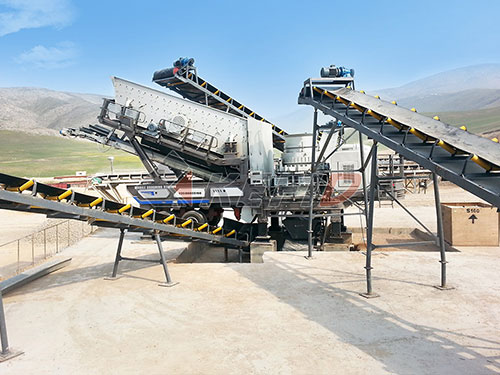
They are proving that the most durable stone—metaphorically speaking—is not just the hardest rock,
but the business model built on regenerating the environment it operates within.
The sustainable stone crusher plant is no longer a niche concept;
it is becoming the blueprint for an industry essential to our built environment,
showing that even the most foundational materials can be part of a responsible
Lorem ipsum dolor sit amet, consectetur adipisicing elit. Consectetur sequi saepe ut sunt eveniet perferendis excepturi, iste obcaecati. Qui tempore hic sed quia soluta obcaecati vel.