Sustainable Stone Crusher Machine Fabricators: Engineering the Future of Aggregate Production
The global construction industry, a cornerstone of modern civilization, stands at a critical juncture. As the demand for aggregates—crushed stone, sand, and gravel—continues to rise with urbanization and infrastructure development, so does the scrutiny on its environmental footprint. In this context, the role of Sustainable Stone Crusher Machine Fabricators has evolved from being a niche preference to an imperative for the industry’s future. These forward-thinking engineering firms are no longer just manufacturers of crushing equipment; they are innovators and system integrators dedicated to redefining mineral processing through the lens of ecological responsibility, economic efficiency, and social license to operate.
The Imperative for Sustainability in Crushing Operations
Traditional stone crushing is inherently resource-intensive and impactful. It is characterized by high energy consumption (often from non-renewable sources), significant dust and noise emissions, substantial water usage for dust suppression, and the generation of waste materials. Furthermore, the transportation of both raw materials and finished aggregates contributes heavily to carbon emissions. Sustainable fabricators address these challenges holistically by re-engineering every stage of the crusher’s lifecycle—from design and manufacturing to operation and end-of-life recycling.
Core Pillars of Sustainable Fabrication
1. Energy Efficiency and Electrification:
The heart of sustainability lies in reducing specific energy consumption (kWh per ton of processed material). Leading fabricators achieve this through:
- Advanced Crushing Chamber Designs: Utilizing computer-aided simulation (like DEM – Discrete Element Modeling) to optimize chamber geometry, liner profiles, and crusher kinematics (e.g., eccentric throw and speed) ensures maximum size reduction with minimum wasted energy.
- High-Efficiency Drive Systems: Incorporating variable frequency drives (VFDs) allows motors to run only at the required speed and torque, reducing energy draw during start-up and under partial load conditions.
- Electrification & Hybrid Systems: Moving away from diesel-powered mobile units towards fully electric track-mounted plants powered by grid or on-site renewable sources (solar, wind). Hybrid systems use diesel for mobility but switch to electric power for crushing, slashing fuel use and emissions.
2. Emission Control and Dust Suppression:
Dust is a primary concern for air quality and worker health. Sustainable fabricators integrate suppression and collection at the design stage:
- Closed-Loop Dust Suppression Systems: These systems use minimal water by employing fine mist sprays or foam at key transfer points, capturing dust particles effectively. The water is often recycled within the system.
- Integrated Baghouse Filters & Cyclones: For dry processing applications, high-efficiency fabric filter baghouses are seamlessly incorporated into plant design, achieving dust collection rates exceeding 99.9%.
- Encapsulation of Transfer Points: Designing fully enclosed conveyor transfers, feeders, and screens significantly contains dust at its source.
3. Noise Abatement:
Noise pollution affects both operators and surrounding communities. Mitigation strategies include: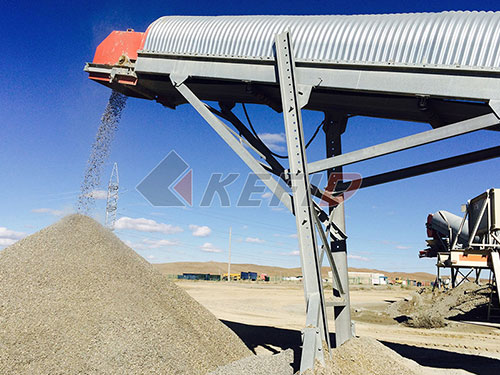
- Acoustic Enclosures: Designing sound-dampening enclosures around crushers, screens, and motors.
- Vibration Isolation: Mounting machinery on rubber or spring isolators to prevent structure-borne noise.
- Use of Noise-Absorbing Materials: Lining hoppers, chutes, and enclosures with specialized composite materials.
4. Circular Economy Integration:
A truly sustainable crusher facilitates a circular economy for materials.
- Design for Recycling/Refurbishment: Machines are built with modular components that can be easily replaced or refurbished, extending service life. Commonality of parts across models reduces waste.
- Enabling Construction & Demolition (C&D) Waste Processing: Fabricators design robust crushers (like jaw crushers and impact crushers with hydraulic adjustment) specifically tailored to handle reinforced concrete, asphalt millings, and masonry waste. This transforms urban waste into valuable recycled aggregates (RCA), conserving natural virgin resources.
- By-Product Valorization: Systems are designed to separate fines not suitable as aggregate for use in other applications (e.g., soil amendment or industrial filler), aiming for zero-waste operations.
5. Smart Technology & Automation:
Digitalization is a powerful enabler of sustainability.
- IoT Sensors & Telematics: Real-time monitoring of power draw, liner wear, bearing temperature, and production rates allows for predictive maintenance (preventing catastrophic failures) process optimization.
- Automated Process Control Systems: AI-driven systems can automatically adjust crusher settings (like closed-side setting) feed rate based on material hardness sensor data maximizing throughput while minimizing energy use wear.
- Remote Monitoring & Operation: Reducing need personnel be physically present hazardous noisy environments improving safety allowing expert oversight multiple sites from central location reducing travel-related emissions.
Challenges Faced by Sustainable Fabricators
The path innovation is not without obstacles:
- Higher Initial Capital Cost: Sustainable technologies automation systems require greater upfront investment which can be barrier price-sensitive markets despite compelling long-term TCO (Total Cost Ownership).
- Technical Complexity & Skills Gap: Operating maintaining sophisticated automated electric plants requires higher skilled workforce necessitating fabricators invest comprehensive training support services.
- Market Variability & Regulatory Landscape: Inconsistent global environmental regulations subsidies renewable energy create uncertain market conditions planning R&D investments.
The Future Trajectory
The future sustainable stone crusher fabrication will be defined further integration:
- Green Hydrogen Powerplants could emerge ultimate mobile crushing solution producing only water vapor emission.
- Advanced material science will yield even more durable wear parts made from recycled alloys dramatically reducing resource consumption downtime
- 3D printing may enable on-site production optimized liner designs
- AI will evolve from operational assistant autonomous system manager capable self-optimizing entire circuit real-time responding changing feed material weather conditions grid carbon intensity
Conclusion
Sustainable Stone Crusher Machine Fabricators are indispensable architects green construction ecosystem They transcend traditional manufacturing role becoming strategic partners quarry aggregate producers helping them meet stringent regulatory demands reduce operating costs secure social acceptance Through relentless innovation energy efficiency emission control circularity smart technology these fabricators transforming stone crushing from perceived environmental liability model industrial sustainability By engineering machines that do more less—less energy less waste less impact—they not just selling equipment they enabling vital industry build world foundations while preserving planet future generations The transition sustainable aggregate production inevitable those leading charge defining engineering excellence 21st century
