
The global mining industry stands at a critical juncture, facing immense pressure to reconcile economic imperatives with environmental stewardship and social responsibility. Within this transformative landscape, the crushing stage—the foundational first step in liberating gold from ore—has emerged as a significant focal point for innovation. Sustainable gold ore crushing equipment manufacturers are no longer mere suppliers of machinery; they have evolved into essential partners in the mining sector’s journey toward decarbonization and circularity. These pioneers are redefining efficiency, not solely by throughput metrics but through a holistic lens that encompasses energy consumption, lifecycle environmental impact, and operational synergy.
Communition, encompassing crushing and grinding, is notoriously energy-intensive, accounting for an estimated 1-2% of global electrical power consumption and over 50% of a typical mine site’s energy use. For gold ores, which often require fine grinding for effective liberation, this impact is magnified. Traditional crushing equipment, while robust, was designed with a singular focus on capacity and reduction ratios. The sustainability shift demands a paradigm that addresses three core pillars:
Manufacturers leading this charge are embedding these principles into the DNA of their equipment design, manufacturing processes, and service models.
1. Advanced Crushing Chamber Designs and Hybrid Drives:
Modern jaw crushers, cone crushers, and impact crushers feature computationally optimized chamber geometries that enhance nip angles and material flow. This results in more efficient breakage with less wasted energy in friction and heat. Furthermore, the integration of hybrid drive systems is revolutionary. Manufacturers like Sandvik and Metso Outotec now offer options combining traditional electric motors with battery storage or even direct electric drive systems that capture and reuse regenerative energy from the crusher’s natural motion—energy previously dissipated as heat.
2. Smart Wear Parts & Predictive Maintenance:
Sustainability is intrinsically linked to longevity. Leading manufacturers employ advanced metallurgy (e.g., iso-static pressing for liners) to create wear parts that last significantly longer, reducing the frequency of replacements, the associated downtime, and the carbon footprint from manufacturing and transporting heavy components. Coupled with IoT-enabled sensors that monitor wear in real-time (like Metso Outotec’s Lindemann™ crushers with condition monitoring), predictive maintenance ensures parts are used to their full life without risking catastrophic failure, optimizing material use.
3. Automation & Process Control Integration:
Intelligent control systems (such as FLSmidth’s ECS/ProcessExpert or ABB’s Ability® System 800xA) are becoming standard offerings from premium manufacturers. These systems use algorithms to automatically adjust crusher settings (e.g., speed, closed-side setting) based on real-time feed conditions from upstream sensors or assays. This maintains optimal throughput at the target product size while preventing over-crushing—a major source of energy inefficiency—and stabilizing the entire downstream process.
4. Modular & Mobile Plant Design for Reduced Footprint:
The concept of sustainability extends to site preparation and logistics. Manufacturers like Terex MPS and Kleemann are advancing modular crushing stations that require less concrete foundation, can be relocated as pit faces advance (reducing truck haulage distances), and are pre-assembled for quicker installation with lower mobilization emissions.
The most progressive manufacturers understand that sustainability is delivered through total lifecycle support.
Despite progress significant hurdles remain:
Future trends point towards deeper integration: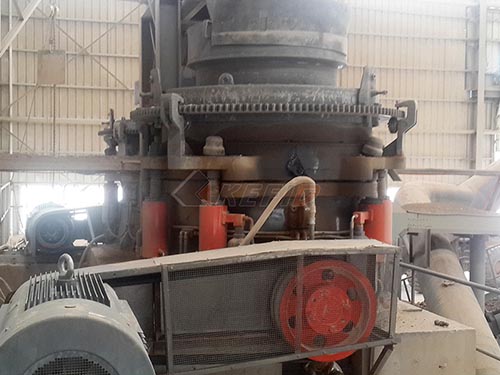
Sustainable gold ore crushing equipment manufacturers are engineering the critical tools necessary to transform one of mining’s most resource-intensive processes By innovating across hardware design drive systems digital intelligence business models these companies provide pragmatic pathways toward significantly reduced greenhouse gas emissions lower water usage minimized ecological footprints Ultimately their role transcends machinery supply they serve as vital enablers helping gold miners meet investor community demands regulatory requirements societal expectations securing not just precious metal but also social license operate future Through relentless focus efficiency longevity integration sustainable crushing stands cornerstone truly responsible resilient mining industry
Lorem ipsum dolor sit amet, consectetur adipisicing elit. Consectetur sequi saepe ut sunt eveniet perferendis excepturi, iste obcaecati. Qui tempore hic sed quia soluta obcaecati vel.