
The global construction and mining industries are foundational to modern infrastructure, yet they face unprecedented pressure to minimize their environmental footprint. At the heart of these sectors lies the process of crushing and screening—transforming raw rock, ore, and demolition waste into usable aggregates. Traditionally energy-intensive and associated with significant dust, noise, and waste, this domain is undergoing a profound transformation driven by a new generation of fabricators. Sustainable crushing and screening equipment fabricators are no longer mere metal workshops; they are innovation hubs engineering the future of responsible resource extraction. Their mission is to reconcile industrial productivity with planetary stewardship through smarter design, advanced technology, and a circular economy ethos.
Sustainable fabricators differentiate themselves by integrating core environmental principles directly into their engineering DNA. This holistic approach rests on several interconnected pillars:
1. Energy Efficiency and Electrification: The primary lever for reducing carbon emissions. Modern sustainable plants prioritize high-efficiency drive systems, including variable frequency drives (VFDs) that match motor speed to actual load, eliminating wasteful energy draw. The most significant leap is the rapid development of fully electric or hybrid-electric mobile and stationary plants. By replacing diesel engines with grid-connected electric power—increasingly sourced from renewables—fabricators can eliminate onsite exhaust emissions entirely. Innovations like regenerative drives on conveyors that capture kinetic energy further enhance this paradigm.
2. Advanced Material Science and Longevity: Sustainability begins with durability. Fabricators employ high-grade, abrasion-resistant steels (e.g., Hardox, Creusabro) for wear parts like jaws, cones, and liners. While initially more costly, these materials dramatically extend component life, reducing the frequency of manufacturing replacements, minimizing downtime, and curtailing the waste stream of worn-out parts. This philosophy extends to structural design, using finite element analysis (FEA) to optimize material use—creating lighter yet stronger frames that require less steel and lower transportation energy.
3. Dust Suppression and Noise Abatement: Beyond carbon, local environmental impact is critical. Integrated fabricators design sealed crusher housings with negative pressure systems and automated spray nozzles that inject atomized water or biodegradable suppressants at key transfer points. Advanced acoustic engineering incorporates damping materials into machine panels and designs flow paths to reduce material drop heights, significantly lowering noise pollution for workers and surrounding communities.
4. Smart Technology and Automation: Intelligence is key to optimization. Sustainable equipment is sensor-rich, equipped with IoT-enabled monitors tracking power consumption, wear levels, feed rates, and product gradation in real-time. Automated process control systems use this data to self-optimize crusher settings (e.g., CSS – Closed Side Setting) for maximum yield at minimum energy cost. Predictive maintenance algorithms forecast failures before they occur, preventing catastrophic breakdowns that waste material and energy.
5. Design for Circularity and Recycling: The ultimate expression of sustainability is closing the loop. Leading fabricators design plants explicitly for recycled aggregates (RA) and construction demolition waste (CDW). Features include robust pre-screening to remove contaminants, electromagnetic separators for rebar removal, and impact crushers optimized for liberating concrete from reinforcement. Furthermore, they design their own equipment for end-of-life disassembly, using modular components that can be refurbished or recycled.
The market is witnessing tangible innovations from pioneering fabricators: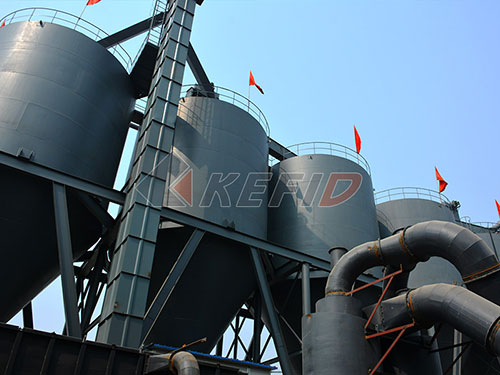
Despite clear progress significant hurdles remain:
The future belongs not just sustainable machines but integrated eco-systems leading fabricators are evolving into solution providers offering:
Sustainable crushing screening equipment fabricators are pivotal agents change within heavy industry They transcend role suppliers becoming strategic partners enabling aggregate producers meet dual imperatives economic viability environmental responsibility Through relentless innovation materials science digitalization electrification they demonstrably decouple production growth from ecological harm Their work reduces direct emissions conserves natural resources promotes circularity turns waste streams valuable commodities As global demand aggregates continues rise alongside climate urgency role these fabricators will only become more central They are quietly engineering foundation truly sustainable built environment one efficient intelligent machine time proving industrial progress planetary health not mutually exclusive but inextricably linked goals
Lorem ipsum dolor sit amet, consectetur adipisicing elit. Consectetur sequi saepe ut sunt eveniet perferendis excepturi, iste obcaecati. Qui tempore hic sed quia soluta obcaecati vel.