Sustainable 250-300 TPH Stone Crushing Plant: A Comprehensive Technical and Commercial Overview
Introduction
In the modern aggregates industry, the paradigm has decisively shifted from mere production capacity to the integration of efficiency, environmental stewardship, and long-term economic viability. A sustainable 250-300 tons per hour (TPH) stone crushing plant represents this new standard—a sophisticated industrial setup designed to deliver high-volume output while minimizing ecological impact and operational costs. This article provides a detailed technical breakdown, an analysis of sustainability features, and key considerations for formulating a professional quotation for such a plant.
1. Plant Configuration & Core Process Flow
A 250-300 TPH plant is a medium-to-large-scale operation requiring robust and precisely coordinated equipment. The typical three-stage crushing circuit is most common for achieving balanced product gradation and equipment utilization.
- Primary Crushing Station (Jaw Crusher): A heavy-duty jaw crusher (e.g., 1200×1000 mm feed opening) is employed to receive blasted rock from the quarry face. It reduces large boulders (up to 800-1000mm) to a manageable size of ~200-250mm. Key features include a vibrating grizzly feeder to bypass fines and scalp oversize material, enhancing efficiency.
- Secondary Crushing Stage (Cone Crusher): The output from the primary crusher is conveyed to one or two high-performance cone crushers for intermediate reduction. These machines, often in closed circuit with a vibrating screen, crush the material further to sizes like 40-70mm. Modern hydraulic cone crushers allow real-time adjustment of the closed-side setting (CSS) for optimal yield.
- Tertiary/Final Crushing Stage (Cone or Impact Crusher): For producing high-quality, cubical aggregates (critical for asphalt and concrete), a tertiary stage is essential. Vertical Shaft Impactors (VSIs) are often chosen here to enhance particle shape through rock-on-rock or rock-on-anvil crushing, yielding final products from dust (0-5mm) to 20-32mm.
- Screening & Material Handling: High-capacity multi-deck vibrating screens (typically 2-3 units) are the nerve center for product classification. Closed-circuit design ensures oversized material is recirculated back to the appropriate crusher. Radial stackers or fixed conveyors with dust seals handle final product stockpiling.
2. The Pillars of Sustainability in Design
Sustainability is not an add-on but a foundational design principle encompassing environmental protection, social responsibility, and economic resilience.
- Dust Suppression & Control: This is paramount. A comprehensive system includes:
- Water Spray Systems: At all transfer points, crusher inlets/outlets, and on screens.
- Dry Fog Systems: For finer dust control without wetting the product.
- Enclosures & Sealing: Full enclosure of conveyors, screens, and crushers.
- Baghouse Filters: Centralized dust extraction systems capturing micron-sized particles, with collected dust often reusable as manufactured sand or filler material.
- Noise Abatement: Utilizing sound-dampening enclosures for motors and crushers, installing acoustic barriers around the plant perimeter, and using rubber lagging on conveyor drums significantly reduce noise pollution.
- Water Management & Recycling: A zero-discharge system is achievable. Process water from dust suppression is channeled into settling ponds or clarifiers. The clarified water is recirculated back into the plant via pumps, drastically reducing freshwater consumption.
- Energy Efficiency:
- Electrifying the entire plant using grid power over diesel generators reduces carbon footprint.
- Utilizing Variable Frequency Drives (VFDs) on conveyors, feeders, and crushers allows motors to run only at required speeds, cutting energy use by up to 30%.
- Investing in high-efficiency motors (IE3/IE4 class).
- Resource Optimization & Circular Economy:
- Designing circuits to maximize yield of high-value products.
- Utilizing by-products: Crusher dust can be processed into manufactured sand; leftover fines can be used for road base or landscaping.
- Planning for site rehabilitation post-operation.
3. Key Components of a Professional Quotation
A quotation for a sustainable 250-300 TPH plant must be transparent, detailed, and structured. It typically includes: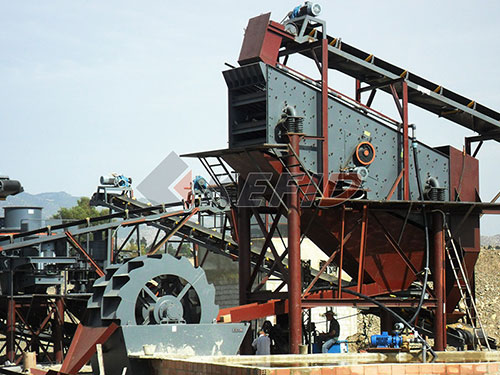
A. Commercial Offer:
- Equipment List & Ex-Works Prices: Itemized list of all machinery with model numbers, capacities, and individual prices.
- Scope of Supply: Clearly defined boundaries—what is included (e.g., steel structures, walkways, electrical control panels) and what is not (e.g., civil works, local wiring).
- Delivery Terms: Defined by Incoterms (e.g., FOB Port of Loading, CIF Destination Port).
- Payment Terms: Milestone-based schedule (e.g., 30% advance, 40% upon shipment, 30% upon commissioning).
- Validity Period: Typically 60-90 days.
B. Technical Specification Annex:
- Process Flow Diagram (PFD): Visual representation of material flow.
- Plant Layout Drawing: Showing equipment placement for optimal logistics and future expansion.
- Detailed Equipment Specifications: Power ratings, weights dimensions capacities etc
4.Performance Guarantees: Guaranteed throughput(275 TPH as design basis), product gradation curves power consumption per ton crushed
C Project Implementation Schedule:
A Gantt chart outlining timelines for design manufacturing shipping erection commissioning training
D Optional Services:
1.Civil engineering foundation drawings
2.Supervision of erection & commissioning
3 Operator & maintenance training programs
4.Spare parts package(12-24 months recommended)
4 Economic Justification & ROI Considerations
The premium for sustainable technology yields compelling returns:
*Reduced Operational Costs*: Lower energy bills(VFDs efficient motors) minimized water purchase waste disposal fees
Regulatory Compliance: Avoidance of fines shutdowns ensures uninterrupted production
Market Advantage: Ability to supply “green” certified aggregates for LEED-certified projects commanding price premiums
Enhanced Asset Longevity**: Reduced dust ingress into machinery lowers maintenance costs extends component life
*Social License to Operate: Good community relations facilitate permit renewals smooth operations
The payback period for added investments in sustainability(such as baghouses VFDs advanced water recycling) typically ranges from18to36 months depending on local utility costs regulatory environment
5 Conclusion: The Future-Ready Investment
A sustainable250300TPH stone crushing plant transcends being mere equipment it s a strategically engineered production system It represents a commitment to future-proofing operations against tightening environmental regulations rising energy costs evolving market demands
The initial capital outlay while significant must be evaluated against the total cost ownership(TCO)and the strategic value created Investing in such a facility positions an aggregate producer as an industry leader capable meeting world s infrastructure needs without compromising health planet communities it serves Ultimately professional quotation this endeavor must articulate not just price but value proposition—delivering reliability productivity sustainability single integrated package
