
In the modern aggregates and mining industry, the concept of a Sustainable 250-300 TPH Stone Crushing Plant represents a critical nexus of industrial efficiency, environmental responsibility, and strategic business modeling. For a Private Label Manufacturer, this is not merely an equipment supply opportunity but a chance to deliver a fully integrated, branded solution that embodies the client’s commitment to productivity and planetary stewardship. A plant operating at 250-300 tons per hour (TPH) is a significant investment, often serving regional infrastructure projects, large-scale construction, or mining operations. Integrating sustainability into such a high-capacity system is no longer a luxury but a fundamental requirement for regulatory compliance, social license to operate, and long-term economic viability.
This article delves into the technical architecture, sustainable components, operational philosophy, and strategic value proposition that a specialized private label manufacturer brings to this specific market segment.
A 250-300 TPH crushing plant is a mid-to-large-scale setup requiring robust engineering. The typical configuration follows a multi-stage crushing circuit:
The private label manufacturer’s role is to engineer these components into a seamless system—modular, semi-mobile, or stationary—optimized for the specific hardness (e.g., granite, basalt, limestone) and final product requirements of the client.
Sustainability in this context transcends mere compliance. It is engineered into every facet of the plant’s design and operation.
A. Energy Efficiency & Electrification:
Energy consumption is the largest operational cost and carbon footprint contributor. Sustainable solutions include:
B. Dust Suppression & Emission Control:
A 300 TPH plant generates significant dust.
C. Water Management & Recycling:
Sustainable plants aim for near-zero water discharge in washing applications.
D. Noise Abatement:
Reducing acoustic impact is crucial for community relations.
E. Circular Economy Integration:
True sustainability views waste as a resource.
This is where the business model becomes pivotal. A private label manufacturer does not sell under its own brand but designs, engineers, manufactures, commissions, and services plants that carry the client’s or distributor’s brand.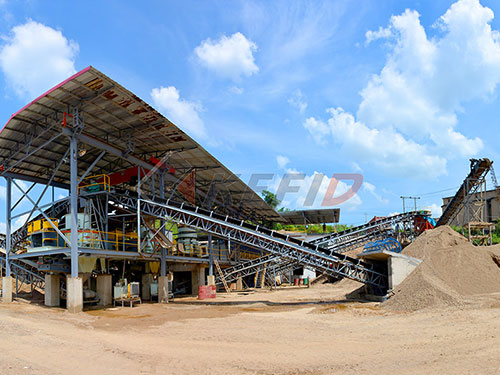
A. Customization & Integrated Solution Delivery:
The manufacturer acts as a one-stop partner providing:
B .Strategic Advantagesfor th eClient(Brand Owner):
1 .Brand Equity&Market Control : Th eclientbuildsits reputationasaproviderof cutting-edge sustainable technologyretainingall customer loyaltyand pricing power
2 .FasterTime-to-Market : Leveragingth emanufacturer’sexisting designsand production capacityaccelerates deploymentcomparedtodevelopingaplantfrom scratch
3 .FocusonCoreBusiness : Th eclientcan focuson aggregatesproductionand market developmentwhile relyingonthemanufacturer’stechnical expertise
4 .Cost-Effectiveness : It eliminatesmassive R&Dand capital expenditurein manufacturing facilitiesofferingapredictable costmodel
Deployingasustainable250-300TPH plantrequiresholistic planning:
Site Planning&Footprint Optimization : Designingcompact modular layouts minimizes land disturbance Vegetative buffersshouldbeplannedforfrom th eoutset
Telematics&Data Analytics : Integrating IoT sensorsfor remotemonitoringof production rates power consumption wear part statusand emission levels Predictive maintenancealgorithms preventfailuresandsustain efficiency
Lifecycle Assessment(LCA) : Forward-thinking manufacturersconduct LCAsfortheir plants quantifyingenvironmental impactsfrom raw material extractionfor steelto end-of-life recycling guidingcontinuous improvement
End-of-LifeRecyclability : Designingwithdisassemblyin mind using standardized steel sectionsand easily separable materialsensureshigh recyclability ratesatth eplant’sdecommissioning
The marketforlarge-scale stone crushing plantsis increasingly definedbytriple bottom line demands:profit planet,and people A Sustainable250-300TPH Stone Crushing Plantis thereforean engineered ecosystemof productivityand responsibility Forth ePrivate Label Manufacturer it representsa sophisticated partnership model requiringdeep technical prowessin sustainable engineering coupledwithflexible business-to-business service
By deliveringa fully branded turnkey solutionthat marriesrobust300TPH capacitywithverified reductionsin energy water consumption dust emissionsand noise th emanufacturer empowersits clients—the brand owners—to leadtheir markets They enablethemto meet stringent environmental regulations reduce operating costs through efficiency enhance their social license to operateand ultimately builda valuable technology brand centeredon performanceandsustainability This synergyis what will drive th efutureof th eaggregatesindustry towardsa more resilientand responsible horizon
Lorem ipsum dolor sit amet, consectetur adipisicing elit. Consectetur sequi saepe ut sunt eveniet perferendis excepturi, iste obcaecati. Qui tempore hic sed quia soluta obcaecati vel.