Stone Quarry Crushing Plant Wholesalers: A Comprehensive Specification Guide
In the global construction and infrastructure development industry, the stone quarry crushing plant stands as a critical linchpin, transforming raw blasted rock into the essential aggregates that form the foundation of our built environment. For large-scale contractors, government agencies, and material suppliers, procuring these plants not from manufacturers directly but through wholesalers presents a unique set of considerations. This detailed specification guide delves into the professional and objective criteria for evaluating wholesalers of complete stone quarry crushing plants, ensuring buyers make informed, value-driven decisions.
1. Defining the Role of the Wholesaler
A wholesaler in this context is more than a mere intermediary. The ideal wholesaler acts as a technical integrator and logistics maestro. They typically procure primary components (crushers, screens, conveyors) from specialized OEMs (Original Equipment Manufacturers) and assemble them into a functional system or full production line tailored to specific project needs. Their value proposition lies in offering competitive package pricing, single-point accountability, and deep market knowledge of compatible equipment from various brands.
Key Differentiator: Unlike an OEM representative who promotes a single brand, a reputable wholesaler provides brand-agnostic solutions, selecting the best jaw crusher from one manufacturer, the most efficient cone crusher from another, and robust conveyors from a third to optimize performance and cost.
2. Core Technical Specifications Sourced Through Wholesalers
When engaging with a wholesaler, buyers must specify requirements meticulously. The wholesaler’s proposal should transparently detail:
A. Plant Capacity and Feed Material:
- Throughput: Required tons per hour (TPH), clearly stated for finished products (e.g., 0-5mm sand, 5-20mm aggregate, 20-40mm base material).
- Feed Characteristics: Maximum feed size, hardness (abrasion index), silica content, moisture content, and geological composition (e.g., granite, basalt, limestone).
B. Crushing Circuit Configuration:
The wholesaler must design the stage sequence.
- Primary Crushing: Specification for a heavy-duty feeder and primary crusher (e.g., Jaw Crusher with specific inlet dimensions like 1200x800mm or Gyratory Crusher). Key specs include CSS (Closed Side Setting) range and drive power.
- Secondary & Tertiary Crushing: Specifications for cone or impact crushers for further reduction. Critical parameters include chamber type, number of crushing stages within the unit, hydraulic adjustment systems, and automation capabilities for liner wear compensation.
- Screening & Classification: Detailed specs on vibrating screens (type: inclined, horizontal; decks: single, double, triple; screening media). Inclusion of washing equipment (log washers, sand screws) if required to meet clay or silt specifications.
C. Mobility & Foundation Requirements:
- Stationary vs. Semi-Mobile vs. Fully Mobile/Tracked Plants: The wholesaler must advise on the optimal configuration based on quarry lifespan and pit advancement.
- Civil Works Scope: Detailed drawings for foundations for each major module if stationary.
D. Electrical & Control Systems:
- Total Connected Power: Comprehensive list of motor ratings.
- Control Philosophy: Specification for level of automation—from basic local control panels to centralized PLC/SCADA systems with touchscreen HMIs for monitoring throughputs,crusher settings,motor loads,and production data.
- Dust Suppression & Environmental Controls: Specs for water spray systems,dust encapsulation points,and baghouse filter connections.
3. Critical Evaluation Criteria for the Wholesaler Itself
Beyond hardware specs,the wholesaler’s own capabilities are paramount.
A. Technical Engineering Competence:
- In-House Design Team: They should possess certified mechanical and process engineers capable of flow sheet development,mass balance calculations,and plant layout optimization using CAD software.
- Simulation & Validation: Use of advanced software like Bruno or AggFlow to simulate crushing process performance,predict product gradation curves,and identify bottlenecks before fabrication.
B.Sourcing Network & Component Quality: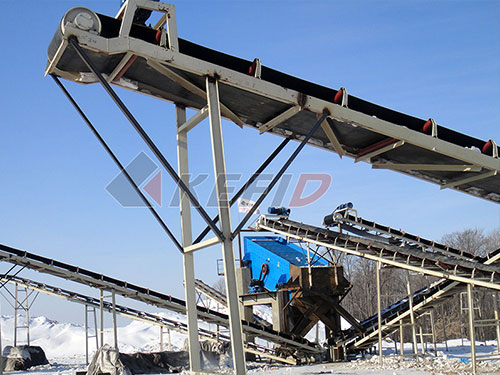
- OEM Partnerships: Disclosure of authorized partnership status with renowned crusher,screen,and conveyor manufacturers.Equipment should be supplied with full OEM warranties.
- Standardization vs.Customization: Ability to balance cost-effective standardized modules with necessary customizations like special chute liners (AR400 steel),specific walkway designs,and safety access platforms compliant with OSHA or equivalent standards.
C.Logistics,Erection,& Commissioning Services:
- Turnkey Responsibility: Clear definition of scope—from ex-works supply to delivery,FOB,CIF,DAP or full turnkey erection at site.
- Project Management: Dedicated project manager providing regular updates,Gantt charts,and handling shipping,customs clearance,and site mobilization.
- Commissioning Protocol: Provision of OEM-trained engineers to supervise installation,dry-run testing,cold alignment,lubrication system checks,and final performance acceptance tests over a sustained period (e.g.,48 hours).
D.After-Sales Support & Parts Supply:
This is often the most decisive factor.
- Parts Inventory: Maintenance of a comprehensive local warehouse stock of high-wear parts (mantles,bowls,jaw plates,screen meshes,bearings,belts).
- Technical Support: 24/7 hotline availability and rapid deployment of field service technicians.
- Training Programs: Structured on-site training for client’s operational and maintenance crews on safe operation,troubleshooting,and preventive maintenance schedules.
4.Commercial & Contractual Specifications
The wholesale agreement must be unambiguous:
- Price Basis: Fixed-price contract covering all defined scope items,inclusive of taxes,duties(where applicable),and marine insurance.
- Payment Terms: Milestone-based schedule tied to engineering approval,major component shipment,and successful commissioning.
- Performance Guarantees & Warranties:
- Throughput capacity guarantee (±5-10% tolerance).
- Final product gradation curve guarantees.
- Aggregate shape index (Flakiness Index) guarantees where relevant.
- Separate warranties for mechanical components(typically12 months) and structural fabrications.
- Liquidated Damages: Provisions for delays in delivery or failure to meet guaranteed performance metrics.
Conclusion
Selecting a stone quarry crushing plant through a wholesaler is a strategic decision that balances technical optimization,cost efficiency,and project risk.The most sophisticated technical specifications are only as good as the partner executing them.A premier wholesaler distinguishes itself not merely by catalog equipment but through demonstrable engineering prowess,a robust global supply chain,intransigent commitment to aftermarket support,and transparent contractual practices.Ultimately,the goal is to establish a long-term partnership where the crushing plant becomes a reliable,cost-effective asset,maximizing ROI through high availability,efficient operation,and low cost-per-ton production over its entire lifecycle.Investing time in rigorously specifying both the plant and the wholesaler’s services is therefore not an administrative task,but a fundamental cornerstone of quarry profitability and operational success.This comprehensive approach ensures that capital investment translates directly into competitive advantage in the aggregates market
