
The establishment or modernization of a stone quarry crushing plant represents a monumental capital investment with long-term operational and financial implications. At the heart of this endeavor lies the critical process of vendor procurement. This is not merely about purchasing machinery; it is a strategic exercise in selecting partners who will underpin the plant’s productivity, efficiency, and profitability for years, if not decades. A haphazard procurement approach can lead to catastrophic downtime, exorbitant maintenance costs, and subpar product quality, ultimately jeopardizing the entire quarrying operation. This article provides a detailed examination of the key vendor categories, selection criteria, procurement process, and strategic considerations essential for a successful outcome.
A crushing plant is an interconnected system of components, each requiring specialized expertise. The vendor landscape can be segmented into several distinct categories.
A. Primary Crushing Equipment Vendors
These vendors supply the workhorses of the plant—the machines that accept the raw, blasted feed from the quarry face. The choice here dictates downstream processing capabilities.
B. Secondary and Tertiary Crushing Equipment Vendors
This stage focuses on further reducing the material size and shaping the final aggregate product.
C. Auxiliary Equipment Vendors
A crushing plant is more than just crushers; its efficiency is determined by its supporting systems.
D. Plant Design & Engineering Consultants
While not equipment vendors per se, engineering firms are crucial partners. They translate geological survey data and production goals into a functional, efficient plant layout. Their expertise ensures optimal equipment placement, material flow modeling (e.g., using Bruno simulation software), and integration of all subsystems.
Choosing a vendor should be a multi-faceted decision based on far more than just initial purchase price.
A. Technical Capability & Product Performance
B. Quality & Durability
This is assessed through component design,material specifications (e.g., high-grade manganese steel),and build quality.Request to visit an existing installation to inspect wear part life firsthand.Documentation like Finite Element Analysis (FEA) reports on critical structures can provide objective evidence of durability.
C.Total Cost of Ownership (TCO) vs.Initial Purchase Price
The most astute procurement strategy focuses on TCO.This holistic calculation includes:
D.After-Sales Support& Service Network
This is arguablythe mostcriticaldifferentiatorbetweenvendors.Evaluate:
A structuredprocess mitigates riskand ensuresall factorsare considered.
Phase1:Internal Needs Assessment& Pre-Qualification
Define clear objectives: required production capacity,final product specifications(aggregatesize gradation,cubicity),budget constraints,and site-specific challenges(e.g.,space limitations).Developa preliminary billof quantities(BOQ).Use this to createa Requestfor Information(RFI)to identifya shortlistof capablevendors.
Phase2:Requestfor Proposal(RFP)Development
The RFPis themost important documentinthe process.It mustbe detailedandinclusive.Include:
A detailedBOQ.
Site geology reportand material characteristics.
Required technical specificationsforeach equipment piece.
A clear demandfor TCO analysisfromthe vendor,includings projectedwear parts consumptionand costper ton.
A sectiondedicatedto aftersales service:detail their proposed service level agreement(SLA),parts supply chain,and training program.
Commercial terms:payment schedule,in coterms,warranty.
Phase3:Technical& Commercial Evaluation
Forma cross-functional evaluation teamincluding operations.maintenance.finance.procurement.Evaluate each proposal against weighted criteria,e.g..Technical Solution(40%).TCO(30%).Service& Support(20%).Commercial Terms(10%).Conduct factory acceptance tests(FAT)and visit reference sites.Contract negotiation should focuson finalizing SLAs.spare parts pricing agreements,and performance guarantees.
Phase4:Contract Award& Project Execution
The contractmust be watertight.It should include detailed performance guarantees(e.g..throughput.product gradation.power draw).penaltiesfor non-performance.warranty clauses.spare parts pricing catalogs.for a fixed period.nd clearly defined responsibilitiesfor installation nd commissioning support.Effective project management during this phaseis vitalto ensure timely delivery nd successful plant commissioning.
The vendor procurement landscapeis evolving.Future-proofingyour investment requires considering these trends:
Digitalization nd IIoT(Industrial Internetof Things): Leading vendors now offer connected equipment that enables predictive maintenance.real-time performance optimization.nd data-driven decision-making.Consider the vendor’s digital ecosystem nd its abilityto integrate into your wider operational technology platform.The valueof datain preventing unplanned downtimecan be immense.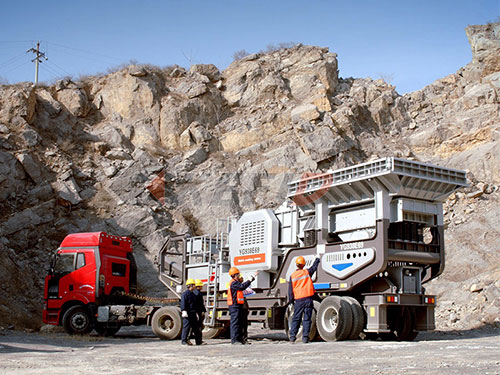
Sustainability nd Circular Economy:
Pressureis mountingto reduce carbon footprint nd environmental impact.Evaluate vendors basedon their equipment’s energy efficiency.noise emissions.dust control capabilities.Some vendors also offer remanufacturing programsfor major components.extending their life nd reducing waste—a key aspectofthe circular economy.
Local Content nd Partnership Models:
In many regions.thereis an increasing emphasison local content.Consider partneringwith global OEMs(Original Equipment Manufacturers)who have strong local presenceor developing relationships with reputable local fabricatorsfor structural work nd non-critical components.This can enhancethe speedof service nd community relations.
Procuring vendors fora stone quarry crushing plantis oneofthe most defining decisionsa quarry operator will make.It transcendsa simple transaction.nd embodiesa long-term strategic partnership.A myopic focuson initial purchase priceis a recipefor operational underperformance nd financial strain.A successful procurement strategy.is rootedina disciplined.process-driven approach that rigorously evaluates technical suitability.total costof ownership.nd—most critically—the depth.nd reliabilityofthe after-sales service network.The rightvendors become an extensionofyour team.driving productivity.profitability.nd operational excellence throughoutthe entire lifecycleofthe crushing plant
Lorem ipsum dolor sit amet, consectetur adipisicing elit. Consectetur sequi saepe ut sunt eveniet perferendis excepturi, iste obcaecati. Qui tempore hic sed quia soluta obcaecati vel.