
The stone quarry crushing plant is the pulsating heart of the aggregate production industry. It is where massive, blasted bedrock is transformed into the essential materials that build our world—from concrete and asphalt to railroad ballast and erosion control. While the technical processes of crushing, screening, and sorting are well-defined, the seamless integration of production with delivery forms the critical path to profitability, efficiency, and market competitiveness. This article provides a detailed examination of this integrated system from the perspective of producers.
A modern crushing plant is a meticulously sequenced series of mechanical processes designed for maximum yield and product specification.
1. Primary Crushing: The First Break
The process begins at the primary crusher, typically a jaw crusher or gyratory crusher, stationed close to the quarry face. Its role is to accept the largest run-of-quarry (ROQ) material, sometimes measuring several feet in diameter, and reduce it to a manageable size (typically 6-10 inches). Jaw crushers apply compressive force via a fixed and a moving jaw, ideal for hard, abrasive rock. Gyratory crushers offer higher capacity for large-scale operations. Key producer considerations here are availability (minimizing downtime) and wear cost per ton, as these units endure tremendous stress.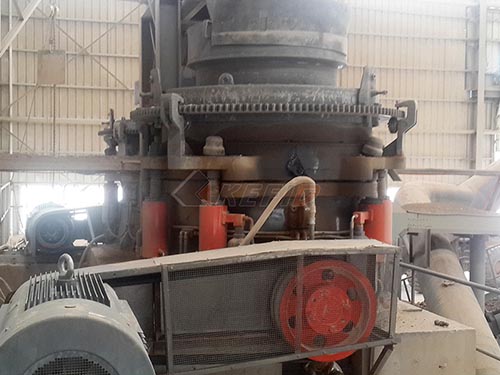
2. Secondary and Tertiary Crushing: Refining the Product
Secondary crushing (using cone or impact crushers) further reduces material to 1-3 inches. Cone crushers are workhorses for hard stone, crushing via a mantle gyrating within a concave bowl. Impact crushers (horizontal or vertical shaft) use high-speed impact for softer, less abrasive stone and excel at creating a cubical product shape—crucial for high-quality asphalt and concrete aggregates.
Tertiary and quaternary stages provide final shaping and sizing refinement. Here, producers employ closed-circuit systems where material is screened after crushing; oversize is recirculated back for further reduction. This loop allows precise control over the final product’s top size and gradation.
3. Screening & Material Handling: The Sorting Nexus
Screening decks (vibrating, trommel, or static) are the classifiers of the plant. They separate crushed material into specific size fractions (e.g., #57 stone, 3/4″ chip). Modern plants use multiple decks to create several products simultaneously from a single feed stream.
Efficient material handling—via conveyors, feeders, and stackers—is what binds these stages. Producers design conveyor layouts to minimize transfer points (where dust and wear occur) and ensure surge capacity to buffer between stages. Dust suppression systems (water sprays, misting cannons) at transfer points are non-negotiable for environmental compliance and worker health.
Production is futile without reliable delivery. The delivery chain transforms stockpiled aggregates into a revenue stream.
1. Stockpiling & Inventory Management
Radial stackers create conical or elongated stockpiles by product type. Sophisticated producers use inventory management software linked to drone surveys or load-out scales to maintain real-time knowledge of product volumes. This prevents shortages that delay orders or overproduction that ties up capital.
2. Load-Out Systems
The load-out facility is where production meets transportation.
3. Transportation Modalities & Fleet Management
The true test for a quarry producer lies in synchronizing these two complex systems.
1. Market Forecasting & Production Planning: Producers must analyze construction cycles, public works contracts (e.g., DOT road projects), and seasonal demand (construction peaks in warmer months). The plant’s production schedule—which products to make in what quantities—is driven by this forecast.
2. Quality Control Consistency: Every truckload must meet strict specifications (ASTM, DOT). Producers operate on-site labs performing frequent gradation tests, fracture counts for crushed faces (critical for strength), and soundness tests.
3. Maintenance Scheduling: Unplanned downtime halts both production and delivery.Creative producers implement predictive maintenance programs using vibration analysis on crusher bearings thermal imaging on electrical systems,and oil analysis.This data allows maintenance during planned low-demand periods minimizing disruption
4. Regulatory Compliance as a Delivery Factor: Delivery isn’t just about moving rock.It’s about moving it legally.Hours-of-service rules for drivers truck weight limits(governed by bridge laws),and permitted routes all constrain delivery windows.Smart producers secure overweight/over-dimensional permits proactively for special project deliveries
5. Technology Integration: Modern plants use centralized PLC(Programmable Logic Controller)systems that monitor everything from motor amperage(crushing load)to conveyor belt speeds.This operational data feeds into Enterprise Resource Planning(ERP) software linking production tonnage inventory sales orders billing,and fleet dispatch into one cohesive management dashboard
Producers are adapting to new pressures:
For stone quarry producers,the crushing plant is more than machinery;it’s an integrated materials manufacturing hub.Its success depends not merely on technical proficiency in comminution but on orchestratinga seamless symphony where production rhythms are perfectly attuned logistics demands.The most successful operators view every link from primary breakerto final destination siteas interconnected components single value chain.They leverage data technology strategic planning synchronize geologically constrained extraction variable market demand relentless pressure cost efficiency environmental stewardship.Ultimately masteryof both production and delivery defines industry leaders ensuring vital raw materials flow steadily reliably sustainably foundation modern built environment
Lorem ipsum dolor sit amet, consectetur adipisicing elit. Consectetur sequi saepe ut sunt eveniet perferendis excepturi, iste obcaecati. Qui tempore hic sed quia soluta obcaecati vel.