
The global construction and infrastructure sectors are fundamentally built upon a simple, ancient material: crushed stone. As the backbone of concrete, asphalt, road bases, and railway ballast, the demand for high-quality aggregates is insatiable. At the heart of this supply chain lies the Stone Quarry Crushing Plant—a complex, engineered system that transforms blasted rock into precisely graded products. The journey from a raw quarry face to a construction site thousands of miles away involves two critical, interconnected pillars: the sophisticated makers (manufacturers) of these plants and the intricate shipping logistics that deliver both the plants and their final output. This article provides a comprehensive analysis of this vital industrial ecosystem.
Stone quarry crushing plant manufacturers are not merely equipment sellers; they are solution providers for one of the world’s most demanding material processing challenges. The market is segmented into global giants and specialized regional players, each contributing to technological advancement.
Key Manufacturers and Their Technological Focus:
Global Titans (Metso Outotec, Sandvik, Terex MPS, FLSmidth): These corporations offer full-cycle solutions from design to commissioning. Their focus is on modularity, automation, and energy efficiency. They pioneer advancements like hybrid drives, automatic setting regulation (ASRi), and advanced process control systems that optimize yield and reduce downtime. Their plants are designed for high-capacity production (often 500-2000 TPH) in large-scale quarries.
Specialized Crusher Manufacturers (Eagle Crusher, Lippmann-Milwaukee, Striker): These firms often excel in specific crushing technologies—such as highly durable jaw crushers, agile impact crushers for softer rock, or mobile track-mounted plants. They cater to mid-sized quarries and contractors needing flexibility and ruggedness.
Regional Powerhouses and OEMs: In markets like China (SBM, Liming Heavy Industry), India (Propel Industries), and Europe (Kleemann), strong local manufacturers offer cost-competitive and regionally adapted solutions. They play a crucial role in democratizing access to reliable crushing technology.
Core Components and Plant Design Philosophy:
A modern crushing plant is a carefully staged system:
The design philosophy has shifted dramatically toward Mobility (track-mounted or wheeled portable plants) and Modularity. Modular plants consist of pre-assembled sections that are easily transported, connected on-site, and reconfigured as quarry faces advance or market demands change. This significantly reduces civil engineering costs and installation time.
Shipping in this context is a dual-channel endeavor: shipping the plants themselves to the quarry location, and shipping the finished aggregates to market.
A. Shipping Crushing Plants & Equipment:
The outbound logistics from manufacturer to quarry site is a feat of heavy-lift engineering.
B. Shipping Finished Aggregates:
Aggregates are high-bulk low-value commodities making transport cost a decisive factor in profitability.The rule of thumb: transportation costs often exceed the ex-quarry price beyond 50km.
The intersection of plant manufacturingand shipping presents unique challenges that define strategic success:
Site-Specific Engineering vs. Standardization: Makers must balance standardized modular designs with adaptations for local geology feed hardness abrasivenessand required end products.Shipping constraints influence design; modules must fit within transportable dimensions without compromising structural integrity.
Total Cost of Ownership (TCO) vs.Capital Expenditure(CAPEX): A cheaper plant may have higher wear part consumption energy costsor lower reliability leading to costly downtime which can dwarf initial savings.Shipping delays during installation or for spare parts directly impact project ROI.Smart makers offer lifecycle service contracts supported by efficient global spare parts logistics networks.
Sustainability Pressures:The industry faces mounting demandsfor reduced carbon footprint.Electric-driven hybrid plants powered by renewable grid energyare growing.Makers focus on dust suppressionnoise reductionand water recycling systems.Shipping choices directly impact carbon emissions; strategic placementof quarries near rail linesor waterwaysand optimizing backhaul logisticsare criticalfor sustainable aggregate supply chains.Local sourcing reduces transport milesbut isn’t always geologically feasible.
4.Geopolitical & Infrastructural Risks:Relying on a single overseas manufacturer poses risks from trade tariffspolitical instabilityor port congestion.Diversificationof suppliersregional manufacturing hubsand holding strategic inventoryof critical wear parts mitigate these risks.A resilient supply chain includes multiple potential shipping routesand freight forwarderswith regional expertise.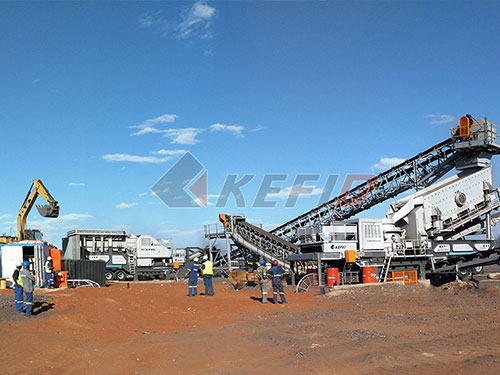
The domainof stone quarry crushing plant makersand shippingis a dynamic technicaland logistical field that underpins global development.The evolution toward smarter more modularand energy-efficient plantsdriven by innovative manufacturersis paralleled by sophisticated multimodal logistics strategiesaimed at tamingthe cost-distance tyrannyof bulk aggregates.Future success will belongto those who seamlessly integrateplant designwith digital supply chain managementprioritize lifecycle efficiencyover mere upfront costand navigate the evolving landscapeof sustainability regulations.As urbanizationand infrastructure renewal continue worldwidethe symbiotic relationshipbetween the makersof these industrial workhorsesandthe complex global shipping networksthat support themwill remain absolutely foundationalto building our physical world
Lorem ipsum dolor sit amet, consectetur adipisicing elit. Consectetur sequi saepe ut sunt eveniet perferendis excepturi, iste obcaecati. Qui tempore hic sed quia soluta obcaecati vel.