Stone Quarry Crushing Plant Factory Prices: A Comprehensive Analysis
The establishment and operation of a stone quarry crushing plant represent a significant capital investment in the aggregate production industry. “Factory prices” for such plants refer to the baseline cost of the core crushing and screening machinery, typically quoted by the original equipment manufacturer (OEM) before additional expenses like logistics, installation, civil works, and commissioning are factored in. Understanding these prices requires a deep dive into the components, technological variables, economic factors, and total cost of ownership that define this critical industrial sector.
1. Deconstructing the “Factory Price”: Core Components
A stone quarry crushing plant is not a single machine but an integrated system. The factory price primarily encompasses the following key equipment:
-
Primary Crusher: This is the workhorse, first encountering blasted rock. Prices vary dramatically based on type:
- Jaw Crushers: Robust and ideal for hard, abrasive materials. Factory prices range from $50,000 for small units to over $1 million for large, high-capacity models.
- Gyratory Crushers: Used for very high-capacity primary crushing (often in large quarries). These are premium investments, frequently starting at $500,000 and exceeding $2 million.
- Impact Crushers (Primary): Suitable for softer, less abrasive rock like limestone. Prices generally range from $80,000 to $600,000.
-
Secondary and Tertiary Crushers: These refine the product size.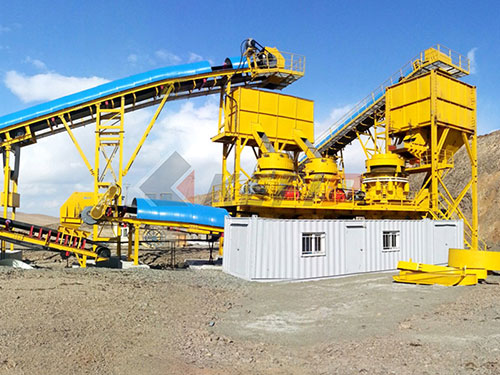
- Cone Crushers: The standard for secondary/tertiary stages, offering precise control over product shape and size. Prices range from $100,000 to $750,000+ depending on horsepower and technology level.
- Impact Crushers (Secondary/Horizontal Shaft Impactors): Excellent for producing well-shaped aggregates. Comparable price range to cone crushers.
-
Screening Equipment: Vibrating screens separate crushed material into specified grades. Prices depend on size (surface area), deck configuration (single, double, triple), and technology ($30,000 – $300,000).
-
Feeders and Conveyors: The system’s circulatory network. Apron feeders for primary handling ($25k-$150k) and extensive conveyor systems ($5k-$50k per major unit) are crucial cost components.
-
Control Systems & Electricals: Modern plants rely on sophisticated PLC-based automation systems for optimization. This can add $50,000 to $200,000+ to the factory package.
A basic stationary plant factory price might start around $200,000-$500,000. For medium-capacity (200-400 TPH) plants common in regional quarries, factory prices typically fall between $750,000 and $2.5 million. Large-scale (>1000 TPH), highly automated facilities can have factory equipment costs well exceeding $5 million.
2. Key Factors Influencing Factory Quotations
The wide price ranges are dictated by several interconnected factors:
- Capacity (Tons Per Hour – TPH): The most direct driver. A 150 TPH plant costs significantly less than a 600 TPH plant due to smaller machines and less robust construction.
- Raw Material Characteristics: The hardness (compressive strength), abrasiveness (Silica content), and initial size of the rock dictate machine type and wear resistance requirements. Processing hard granite requires more expensive alloys and heavier-duty designs than processing limestone.
- Required Final Products: The number of different aggregate sizes (e.g., base course,#57 stone,#8 chips) dictates the complexity of the crushing circuit (number of crusher stages) and screening setup (number of screens/decks). More products = higher cost.
- Technology Level & Automation:
- Basic Plants: Manual controls; fixed speed drives.
- Intermediate Plants: PLC control with basic monitoring; variable frequency drives (VFDs) for energy efficiency.
- Advanced Plants: Fully automated with real-time optimization systems (like ASRi for cone crushers), remote monitoring via IoT sensors,and advanced dust suppression integration.Higher technology commands a premium but improves yield,efficiency,and operational costs.
- Mobility Configuration:
- Stationary Plants: Most economical per ton of capacity for long-life quarries (>10 years).
- Wheel-Mounted or Track-Mobile Plants: Offer flexibility but at a higher factory price per unit capacity due to integrated chassis/engine costs.They are ideal for contract crushing or multi-site operations.
- Brand & Origin:
- Top-Tier Western/European Brands (e.g., Metso Outotec,Sandvik,Terex): Command premium prices based on R&D investment,brand reputation,and global service network support.
- Mid-Range International Brands (e.g., Astec Industries,Eagle Crusher): Offer competitive pricing with strong regional support.
- Chinese OEMs (e.g., SBM,SANME): Often provide lower initial factory prices while increasingly closing the technology gap.Service network reliability outside key regions can be a consideration.
3.Beyond Factory Gates: The Total Project Cost
The factory machinery price is often only 40-60% of the total project cost required to achieve operational status.Critical additional investments include:
- Logistics & Shipping: Ocean freight,duties,and inland transportation for heavy machinery can add 10-20% to the landed cost.
- Civil Works & Foundations: Preparing site terrain,pouring massive concrete foundations for stationary equipment,and constructing access roads is substantial ($100k-$1M+).
- Installation & Commissioning: Skilled technicians are needed for assembly alignment,and system startup.OEMs often charge separately or include it in a service package(5-15% of equipment cost).
4.Auxiliary Systems: Dust suppression/collection systems(essential environmentally),electrical substations/hookups,and water supply infrastructure add significant capital outlay(upwards of$250k).
5.Spare Parts Initial Inventory: A mandatory buffer stock of wear parts(mantles,jaws,screen cloths)is an immediate post-purchase expense($50k-$200k).
4.Economic Considerations & Strategic Procurement
Purchasing decisions must look beyond sticker price:
-
*Lifecycle Cost Analysis(LCCA) : A cheaper crusher may have higher wear part consumption rates or lower energy efficiency.Investing in more expensive,but more efficient technology often yields lower cost per ton over a 5-year period.This includes evaluating energy consumption,downtime metrics,and expected wear life.
-
*Financing Options:OEMs frequently offer financing leases or loans which affect cash flow planning.Factory price becomes one part determining monthly payments.
-
*Scalability vs Immediate Need: Buying excess capacity “for future growth” increases initial outlay.A modular design allowing future expansion might be more strategic than buying oversized equipment today.
5.Market Trends Impacting Pricing
Current industry trends directly influence factory quotations:
- Sustainability & Electrification : Demand is growing forelectric/hybriddriven plants reducing diesel use.This nascent technology carries apremium but aligns with carbon reduction goals lowering long-term operational expenses especially in regions with high fuel costs or strict emissions regulations..
- Digitalization & Smart Plants : Integrationof AI-powered predictive maintenance real-time performance analytics adds ~10-20%to base automation costs but promises significant returns through optimized throughput reduced unplanned downtime..
- Supply Chain Volatility : Post-pandemic global supply chains remain sensitive.Fluctuations insteel prices semiconductor availability(for controls)and shipping costs cause OEMsto adjust pricing frequently sometimes implementing surcharges..
- Regulatory Pressure : Stricter environmental(noise dust)and safety regulationsmandate better enclosures advanced filtration systems addingto baseline machine designcost..
Conclusion
The “factory price”for astone quarrycrushingplant serves as acritical starting pointin capital budgetingbut represents onlythe tip ofthe financial iceberg.A sophisticated procurement strategy must holistically evaluatecapacity needs material characteristics desired end productsandmost importantlythetotalcostofownershipovertheplant’soperational life.The trend towardselectrification digitalizationandsustainabilityisfurther reshapingthevalue proposition makinginitialfactorypricejustonevariableina complexequation aimedatsecuringlong-term profitability reliabilityandsocial license tooperateintheaggregatesindustry.InvestorsareincreasinglyprioritizingpartnershipswithOEMsthatcandelivernotjustequipmentbutintegratedsolutionsthatoptimizetheentirevaluechainfromquarryfaceto finalproductdelivery
