
The stone quarry crushing plant is the industrial heart of the aggregates industry, transforming raw blasted rock into the essential materials that build our world—from concrete and asphalt to railway ballast and architectural finishes. This detailed guide explores the ecosystem of companies involved, the operational intricacies of a modern factory-style plant, and the multifaceted factors that determine its price.
The market for stone quarry crushing plants is served by a diverse range of companies, each specializing in different aspects of the value chain.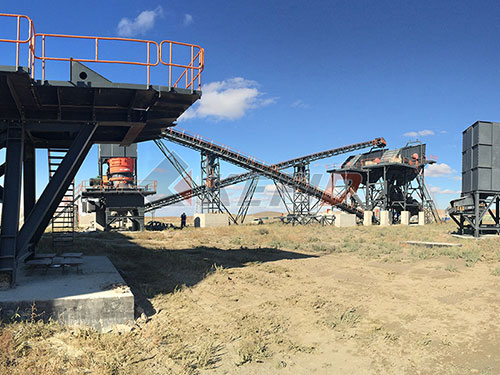
A. Global Crushing Equipment Manufacturers (The Technology Providers):
These are the engineering powerhouses that design and manufacture the core machinery. They offer standardized models or custom-engineered solutions.
B. System Integrators and Engineering Firms:
These companies may not manufacture core crushers but provide turnkey plant solutions. They design the entire material flow system—from primary dump hoppers to final product stockpiles—integrating equipment from various manufacturers with conveyors, screens, dust suppression, and electrical control systems. They are essential for creating optimized, cohesive plants.
C. Local Dealers and Distributors:
Global manufacturers rely on regional dealers for sales, local expertise, parts inventory, and on-the-ground service. The choice of a reputable dealer can be as important as the choice of manufacturer.
D. Quarry Operators (The End-Users):
These range from multinational construction materials giants (like Heidelberg Materials, Vulcan Materials, Holcim) to independent family-run quarries. Their operational scale, material specifications (e.g., aggregate shape requirements for asphalt vs. concrete), and financial models dictate their plant choices.
Today’s high-efficiency plant operates like a sophisticated factory focused on yield optimization, uptime, and product consistency.
There is no single price tag for a stone crushing plant. The term “factory price” typically refers to the FOB (Free On Board) cost of major equipment ex-works from the manufacturer before shipping,duties,and installation.It is just one component of Total Installed Cost(TIC).
A.Core Cost Drivers:
1.Capacity & Throughput: The most significant factor.A 200-tonnes-per-hour(tph) portable plant will cost exponentially less than a 1,500 tph stationary mega-plant designed to run 24/7.
2.Plant Configuration & Complexity:
3.Technology & Automation Level:
Basic manual control panels add minimal cost.Full PLC automation with touchscreen HMIs,variable frequency drives(VFDs)on all motors,and predictive maintenance sensors can add 15-30%to equipment costs but pay back through efficiency gains.
4.Material Characteristics:
Harder abrasives(eg,granite,trap rock)require more durable(and expensive)materials in wear parts(crusher liners,manganese steel)and heavier-duty machine construction than softer limestone.
5.Environmental Compliance Requirements:
Stringent dust,noise,and water runoff regulations mandate investment in superior enclosures,baghouses,sound dampening,and water treatment systems,significantly impacting price.
6.Manufacturer Origin & Brand Premium:
European/North American brands command a premium(20-40% higher than comparable Chinese models)for perceived quality,R&D,and after-sales support.Value-oriented Chinese manufacturers have captured major market share by offering capable equipment at lower FOB prices.
B.Price Ranges(Estimates – Equipment Only,FOB Basis):
| Plant Type | Approximate Capacity | Estimated “Factory Price” Range | Notes |
|---|---|---|---|
| Small Portable/Mobile Plant | 50 – 150 tph | $200,000 – $800,000 | Track-mounted jaw/impact/screen combo.Suitable for small contracts。 |
| Medium Fixed Plant | 200 – 400 tph | $1 million – $3 million | Common configuration for regional quarries.Basic to moderate automation。 |
| Large Fixed Aggregate Plant | 500 – 800 tph | $3 million – $8 million+ | Multi-stage circuits with significant automation,dust control,and high-capacity handling。 |
| Mega Quarry / Integrated Plant | 1000+ tph | $10 million – $30 million+ | Fully automated“factory”with multiple production lines,washing,sorting,and rail load-out。 |
Crucial Note: These figures are for major equipment only.The Total Installed Cost typically includes civil works(foundations),electrical infrastructure,erection/commissioning,and shipping/duties.This can often doublethe FOB equipment price。
Smart buyers evaluate total lifecycle cost:
Operational Costs: Energy consumption is massive.VFDs can optimize this.Wear part consumption varies dramatically;investing in better metallurgy often lowers cost per ton produced。
Uptime & Reliability: A cheaper plant with frequent breakdowns cripples profitability.Reliability engineering has value。
After-Sales Support: Availability of technical support,warranty terms,and local parts inventory is paramount.Minimizing Mean Time To Repair(MTTR)saves lost revenue。
Flexibility: Can the plant easily adapt to changes in feed material or final product demand?Modular designs offer future-proofing。
Selecting a stone quarry crushing plant is a strategic capital investment decision that defines an operation’s productivity for decades.The“factory price”is merely an entry point into a complex evaluation.The most“cost-effective”plant is not necessarily the cheapest but rather one whose design,capex,and opex align perfectly with specific geological conditions production targets environmental mandates available labor skills long-term business strategy Partnering with reputable companies—whether global OEMs or specialized integrators—who conduct thorough site analysis flow sheet development lifecycle costing exercises ultimately leads optimal return investment ensuring this industrial factory reliably produces building blocks modern infrastructure
Lorem ipsum dolor sit amet, consectetur adipisicing elit. Consectetur sequi saepe ut sunt eveniet perferendis excepturi, iste obcaecati. Qui tempore hic sed quia soluta obcaecati vel.