Stone Crusher Rollers: The Unsung Workhorses of Aggregate Processing
In the vast and intricate world of aggregate processing, where mountains of rock are transformed into the foundational materials for modern civilization, the spotlight often falls on the massive crushers themselves—the jaw crushers, cone crushers, and impactors. However, the relentless, efficient operation of these machines hinges on a series of critical, yet frequently overlooked components: the stone crusher rollers. These cylindrical elements are the epitome of mechanical simplicity meeting extreme industrial demand. They serve not as primary reduction units but as essential facilitators in feeding, crushing, and transporting material throughout the crushing circuit. This article provides a comprehensive examination of stone crusher rollers, delving into their types, core functions, design considerations, operational challenges, and maintenance imperatives.
1. Fundamental Types and Functional Roles
The term “stone crusher roller” is not monolithic; it refers to several distinct types of rollers deployed at different stages of the crushing process, each with a specialized purpose.
A. Feeder and Conveyor Rollers
The journey of raw rock begins here. Before any significant crushing occurs, material must be reliably and consistently transported from stockpiles into the primary crusher. This is the domain of belt conveyors and apron feeders, both reliant on heavy-duty rollers.
- Conveyor Rollers: These form the bed upon which the conveyor belt rides, supporting both the loaded (carrying) and empty (return) sections of the belt. In a stone crushing plant, these are not standard warehouse rollers; they are engineered with robust seals, precision bearings, and thick-walled tubes or solid shafts to withstand continuous abrasion from dust and misalignment stresses. Their primary function is to minimize friction and belt wear while supporting substantial loads over long distances.
- Apron Feeder Rollers: Apron feeders are used for heavier, more abrasive loads directly under a hopper. They consist of a series of overlapping metal pans dragged by chains over a series of support rollers and track rollers. These rollers must endure immense pressure and shock loads from large rocks (e.g., 1-meter diameter boulders), making their structural integrity and bearing capacity paramount to preventing catastrophic failure.
B. Crusher Rollers in Size Reduction Machinery
This category includes rollers that are integral to specific types of crushers designed for secondary or tertiary crushing stages.
- High-Pressure Grinding Rolls (HPGR): HPGRs represent the most technologically advanced application of rollers in comminution. An HPGR consists of two counter-rotating rolls—one fixed and one movable—pressed together by a hydraulically powered system exerting pressures up to 350 MPa. The feed material is drawn into the narrowing gap between the rolls and is crushed by inter-particle compression. The result is a more efficient size reduction with lower energy consumption compared to traditional methods and often produces micro-fractures within the particles, benefiting downstream grinding processes in mineral processing.
- Double Roll Crushers: A simpler cousin to the HPGR, the double roll crusher is designed for medium-hard to hard materials. It features two opposing rolls with identical rotational speeds. The crushing action is achieved by nipping the material between the rolls’ surfaces, which can be smooth for fine product or toothed/ribbed for coarse product or softer materials like coal. While less sophisticated than HPGRs in terms of pressure control, they are valued for their simplicity and effectiveness in producing a uniform product size with minimal fines.
C. Screen Rollers
Following crushing operations comes screening—the separation of material by size.
- Vibrating Screen Rollers: While most modern vibrating screens use vibrator motors or eccentric shafts, some older or specialized designs utilize roller mechanisms to generate gyratory motion.
- Trommel Screen Drums: A trommel screen is essentially a large rotating cylindrical screen (the drum). It is supported by a set of robust trunnion rollers or tyres at either end (or along its length for larger units). These support rollers bear the entire weight of the drum and its load while facilitating its smooth rotation as material tumbles through it.
2. Design Considerations: Engineering for Extreme Conditions
The design philosophy behind an effective stone crusher roller revolves around balancing strength with durability under punishing conditions.
-
Material Selection: The choice of material is foundational.
- Shell Material: The outer shell or body is typically fabricated from high-carbon steel alloys or manganese steel due to their exceptional hardness and abrasion resistance.
- Specialized Coatings & Claddings: For applications involving extreme abrasion (e.g., processing quartzite or granite), rollers may be hard-faced with tungsten carbide overlays or clad with ceramic tiles or chrome carbide plates via welding processes like PTA (Plasma Transferred Arc). This significantly extends service life.
- Shaft Material: The central shaft must possess high tensile strength to resist bending moments from uneven loading; thus, forged alloy steels are commonly used.
-
Bearing Assemblies: Bearings are arguably one component’s most critical point-of-failure.
- Type: Spherical roller bearings are predominantly chosen because they can accommodate both radial loads and significant misalignment—a common occurrence in heavy machinery subject to vibration and shock.
- Sealing: Multi-labyrinth seals combined with grease purging systems are standard. These create a complex path that prevents fine abrasive dust from infiltrating the bearing housing while allowing old grease contaminated with particles to be expelled.
-
Lubrication Systems: Consistent lubrication is non-negotiable.
- Centralized automatic lubrication systems are increasingly common in modern plants.
- These systems deliver precise amounts of high-temperature, extreme-pressure (EP) grease at regular intervals directly to each bearing point without requiring manual intervention during operation.
- This ensures optimal bearing performance while mitigating human error during maintenance routines.
3. Operational Challenges: Abrasion Wear & Fatigue Failure
Despite robust design principles inherent within these components’ construction parameters themselves; operational challenges remain inevitable due largely because they operate within inherently hostile environments characterized primarily by constant exposure towards highly abrasive materials coupled alongside significant mechanical stresses generated during normal operation cycles which include:
-
Abrasive Wear: This constitutes perhaps single greatest threat facing any component interacting directly alongside processed aggregate streams themselves where microscopic sharp edges present upon every single particle act akin unto countless miniature cutting tools gradually eroding away metallic surfaces over time leading inevitably towards dimensional loss reduced performance efficiency ultimately culminating complete failure if left unaddressed sufficiently early enough through timely intervention strategies such scheduled replacement programs proactive maintenance schedules etcetera…
-
Impact Damage & Fatigue Cracking: Beyond gradual wear processes lie sudden unpredictable events like tramp metal entering stream causing localized impact damage creating stress concentration points subsequently developing into fatigue cracks propagating deeper underlying structures eventually resulting catastrophic fracture especially concerning shafts subjected cyclical loading patterns throughout their operational lifespan necessitating rigorous inspection protocols detect early signs deterioration before reaching critical stage beyond repair…
-
Bearing Contamination & Overheating: Even most sophisticated sealing arrangements cannot guarantee perfect protection indefinitely especially under severe dust-laden atmospheres typical quarry environments where microscopic silica particles eventually find way past defenses contaminating lubricant transforming it effectively grinding paste rapidly destroying precision-ground bearing races rolling elements leading seizure overheating potentially igniting fires catastrophic secondary damage surrounding machinery…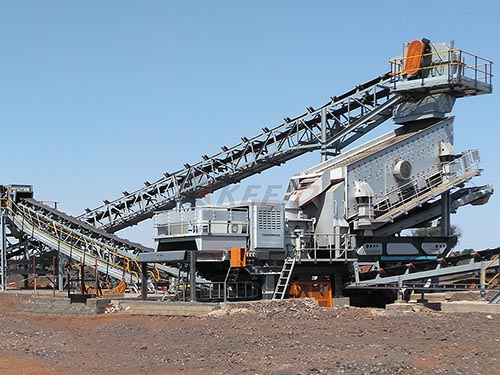
4 Maintenance Imperatives Ensuring Operational Continuity
Given aforementioned challenges proactive preventative maintenance strategy becomes absolutely essential maximizing uptime minimizing total cost ownership associated stone crusher roller systems key elements include:
- Scheduled Inspection Regime: Implementing structured visual dimensional checks regular intervals using ultrasonic thickness gauges measure shell wear checking shaft alignment runout tolerances identifying issues before escalate major problems…
- Vibration Analysis & Thermography: Advanced predictive maintenance techniques involve periodic vibration monitoring detect anomalous frequencies indicative bearing defects imbalance misalignment Similarly infrared thermography can identify hotspots signaling inadequate lubrication excessive friction impending failure…
- Systematic Lubrication Management: Adhering manufacturer recommended lubricant types intervals crucial Maintaining clean grease guns fittings preventing introduction external contaminants during manual greasing operations equally important…
- Strategic Inventory Management: Keeping critical spare rollers bearings seals readily available minimizes downtime waiting replacement parts especially considering long lead times custom manufactured components…
Conclusion
Stone crusher rollers embody principle that simplest components often bear greatest responsibility within complex industrial systems From humble conveyor support roller sophisticated high pressure grinding roll each plays indispensable role seamless efficient operation aggregate production plant Their design represents triumph materials science mechanical engineering enabling them withstand some harshest conditions imaginable Understanding their functions challenges maintenance requirements not merely technical exercise but fundamental aspect achieving reliable productive cost effective crushing operation truly unsung workhorses upon which built environment depends
