Title: Stone Crusher Plant Importers Delivery: A Comprehensive Guide to Global Procurement, Logistics, and Operational Considerations
Introduction
The global demand for crushed stone, aggregates, and construction materials continues to rise, driven by urbanization, infrastructure development, and industrial expansion. At the heart of this supply chain lies the stone crusher plant—a complex assembly of machinery designed to reduce large rocks into smaller, usable aggregates. For importers seeking to acquire such plants from international suppliers, the process extends far beyond simply selecting a model and placing an order. The term “Stone Crusher Plant Importers Delivery” encapsulates a multifaceted journey involving technical specification, supplier evaluation, international trade compliance, logistics planning, customs clearance, and post-delivery commissioning. This article provides a detailed, professional, and objective examination of the entire lifecycle of importing a stone crusher plant, from initial procurement to final delivery and installation.
1. Understanding the Stone Crusher Plant: Types and Configurations
Before delving into import logistics, it is critical to understand the product itself. Stone crusher plants vary significantly in capacity, technology, and configuration. Importers must first determine the specific type of plant that aligns with their raw material characteristics, desired output size, production volume, and local regulatory environment.
- Jaw Crushers: Typically used for primary crushing. They are robust, reliable, and suitable for hard, abrasive materials. Importers often choose jaw crushers for their simplicity and low maintenance.
- Cone Crushers: Ideal for secondary and tertiary crushing. They produce a more cubical product shape and are efficient for medium to hard materials.
- Impact Crushers: Used for softer, less abrasive materials. They offer high reduction ratios and are popular for recycling applications.
- Mobile vs. Stationary Plants: Mobile crusher plants (mounted on tracks or wheels) offer flexibility and reduced installation time, making them attractive for importers in regions with multiple project sites. Stationary plants, while requiring more civil engineering work, provide higher capacity and longer operational life.
- Modular Plants: A hybrid solution that balances mobility and capacity. These are pre-engineered and can be quickly assembled on-site.
Importers must also consider auxiliary equipment such as vibrating feeders, screens, conveyors, dust suppression systems, and control panels. The complexity of the plant directly influences shipping costs, customs classification, and delivery timelines.
2. Sourcing and Supplier Evaluation
The success of an import transaction hinges on the reliability of the supplier. Major manufacturing hubs for stone crusher plants include China, India, Turkey, South Korea, and certain European countries. Each region offers distinct advantages in terms of pricing, technology, and after-sales support.
- China: Dominates the global market with a vast range of suppliers, from small workshops to large OEMs. Chinese plants are often cost-competitive but require careful due diligence regarding quality control, spare parts availability, and compliance with international standards (e.g., CE, ISO).
- India: Known for robust engineering and competitive pricing, particularly for secondary and tertiary crushers. Indian suppliers often have strong experience in exporting to Africa, the Middle East, and Southeast Asia.
- Turkey: Offers high-quality machinery with European design influences. Turkish manufacturers are popular in the Middle East, North Africa, and Central Asia.
- Europe (e.g., Germany, Italy, Finland): Premium suppliers offering advanced technology, high durability, and superior automation. However, costs are significantly higher, and lead times may be longer.
Key Evaluation Criteria for Importers:
- Certifications: ISO 9001, CE marking (for EU markets), GOST (for CIS countries), and local safety standards.
- References and Track Record: Request case studies, client testimonials, and site visit reports.
- After-Sales Support: Availability of spare parts, remote troubleshooting, and local service engineers.
- Customization Capability: Can the supplier modify the plant to handle specific rock types (e.g., granite, basalt, limestone) or local power conditions (e.g., 50Hz vs. 60Hz, voltage variations)?
3. International Trade Terms and Contracts
Once a supplier is selected, the import process moves to contract negotiation. The Incoterms (International Commercial Terms) define the responsibilities of buyer and seller regarding delivery, risk, and cost. Common terms for stone crusher plant imports include:
- FOB (Free on Board): The seller delivers the goods to the port of origin. The buyer assumes all costs and risks from that point onward, including ocean freight, insurance, and inland transport.
- CIF (Cost, Insurance, and Freight): The seller covers the cost, insurance, and freight to the destination port. This is common for first-time importers as it simplifies logistics, but the buyer still bears risk after the goods are unloaded.
- DAP (Delivered at Place): The seller is responsible for delivering the goods to a named location (e.g., the importer’s warehouse or project site). This is less common for heavy machinery due to high logistics complexity.
Critical Contract Clauses:
- Payment Terms: Typical terms include a 30% advance payment (T/T) or a confirmed L/C (Letter of Credit), with the balance paid against shipping documents or upon delivery.
- Delivery Timeline: Clearly defined milestones, including production completion, port loading, and estimated arrival date. Penalty clauses for delays should be included.
- Warranty and Spare Parts: Minimum 12-month warranty from commissioning. A list of recommended spare parts (e.g., jaw plates, mantle liners, bearings) should be included in the contract.
- Technical Documentation: Manuals, electrical diagrams, foundation drawings, and installation guides must be provided in the importer’s local language or English.
4. Logistics and Shipping Considerations
Transporting a stone crusher plant—often weighing hundreds of tons and comprising multiple oversized components—requires specialized logistics planning.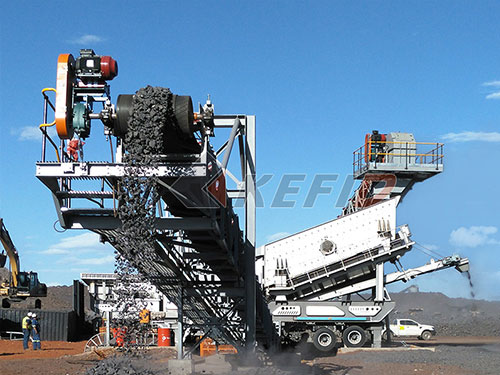
- Mode of Transport: Most plants are shipped via sea freight in breakbulk or containerized form. Smaller components (e.g., motors, control panels) can be packed in standard 20ft or 40ft containers. Larger components (e.g., crusher frames, screens, conveyors) are shipped as breakbulk cargo on flat racks or open-top containers.
- Port Selection: The importer must choose a port with adequate crane capacity (e.g., mobile harbor cranes or ship’s gear) to handle heavy lifts. Inland transport from the port to the project site may involve low-bed trailers, cranes, and escort vehicles for oversized loads.
- Insurance: All-risk marine cargo insurance is strongly recommended. The policy should cover not only loss or damage during transit but also theft, pilferage, and delays.
- Lead Time: Typical lead times from order to delivery range from 6 to 16 weeks, depending on the complexity of the plant, supplier’s production schedule, and shipping route. Importers should build in a buffer for customs clearance and unforeseen delays.
5. Customs Clearance and Regulatory Compliance
Importing heavy machinery involves navigating a web of customs regulations, tariffs, and non-tariff barriers.
- HS Code Classification: Stone crusher plants fall under HS Code 8474 (Machinery for sorting, screening, separating, washing, crushing, grinding, mixing or kneading earth, stone, ores, or other mineral substances). Accurate classification is essential to determine duty rates and any applicable trade agreements.
- Import Duties and Taxes: Duties vary widely by country. For example, in many developing nations, machinery imports may attract 5–20% customs duty plus VAT or GST. Some countries offer duty exemptions for machinery used in infrastructure projects or special economic zones.
- Documentation Requirements: Typical documents include:
- Commercial invoice
- Packing list
- Bill of lading or airway bill
- Certificate of origin (for preferential tariff treatment)
- Import license or permit (if required)
- Insurance certificate
- Technical specifications and safety compliance certificates (e.g., CE declaration)
- Pre-Shipment Inspection: Some importing countries require a pre-shipment inspection by a designated agency (e.g., SGS, Bureau Veritas) to verify the quality and quantity of the machinery.
- Local Standards and Approvals: Importers must ensure the plant meets local electrical safety standards, noise regulations, and environmental permits. For instance, dust emission limits may require the installation of additional dust suppression systems.
6. Delivery, Installation, and Commissioning
The final phase of the import process is the physical delivery and setup of the plant.
- Site Preparation: The importer must prepare the foundation, access roads, and utilities (power, water) before the plant arrives. Foundation drawings provided by the supplier must be followed precisely to avoid alignment issues.
- Unloading and Assembly: Heavy lifting equipment (e.g., cranes with 50–200 ton capacity) is required to unload and position major components. Assembly should be supervised by the supplier’s engineer or a qualified local team.
- Electrical and Control Integration: Wiring, PLC programming, and sensor calibration must be completed by experienced electricians. Many modern plants include remote monitoring capabilities.
- Test Run and Commissioning: After assembly, the plant undergoes a dry run (no material) and then a wet run (with material) to verify throughput, product quality, and safety systems. The supplier’s commissioning engineer typically stays on-site for 1–4 weeks.
- Training: Operator and maintenance training is crucial. Importers should ensure that the supplier provides comprehensive training on daily operation, routine maintenance, and troubleshooting.
7. Common Challenges and Risk Mitigation
Importing a stone crusher plant is not without risks. Common challenges include:
- Supplier Non-Performance: Delays in production, substandard materials, or missing components. Mitigation: Conduct factory audits, use L/C with inspection clauses, and maintain a buffer in the project schedule.
- Logistics Damage: Heavy machinery is vulnerable to damage during loading, sea transit, and unloading. Mitigation: Use professional freight forwarders, secure proper packaging, and purchase comprehensive insurance.
- Customs Delays: Incorrect documentation, valuation disputes, or missing permits can hold up clearance. Mitigation: Engage a licensed customs broker early, prepare all documents in advance, and ensure HS code accuracy.
- Local Infrastructure Limitations: Poor road conditions, low bridge clearances, or inadequate crane capacity can complicate delivery. Mitigation: Conduct a site survey and route planning before shipping.
- After-Sales Support Gaps: Lack of local spare parts or technical support can lead to prolonged downtime. Mitigation: Negotiate a spare parts package in the contract and identify alternative local suppliers for consumables.
8. Conclusion
The importation of a stone crusher plant is a high-stakes, capital-intensive endeavor that demands meticulous planning, technical knowledge, and cross-functional coordination. From selecting the right supplier and negotiating favorable Incoterms to managing logistics, customs, and on-site commissioning, every step carries potential pitfalls. However, for importers who approach the process with due diligence, professional support, and a clear understanding of their operational requirements, the rewards are substantial: a reliable, high-capacity crushing solution that drives profitability in the aggregates industry.
As global trade continues to evolve, importers must stay informed about changing tariffs, environmental regulations, and technological advancements (e.g., automation, IoT integration). By building strong relationships with reputable suppliers and logistics partners, and by investing in proper planning and risk management, importers can ensure that their stone crusher plant delivery is not just a transaction, but a successful foundation for long-term business growth.
