
Title: Stone Crusher Plant Exporters and Wholesale Price Dynamics: A Comprehensive Market Analysis
Introduction
The global construction and infrastructure development sectors have experienced unprecedented growth over the past two decades, driven by urbanization, industrialization, and government-led mega-projects. At the heart of this expansion lies the demand for crushed stone, sand, and gravel—essential raw materials for concrete, asphalt, and road base. The machinery that produces these materials—stone crusher plants—has therefore become a critical commodity in international trade. This article provides a detailed, objective, and professional examination of the market for stone crusher plant exporters, with a specific focus on wholesale pricing mechanisms, influencing factors, regional trends, and strategic considerations for buyers and sellers.
1. Understanding Stone Crusher Plants: Types and Configurations
Before delving into export and pricing, it is essential to understand the product itself. A stone crusher plant is a comprehensive system designed to reduce large rocks into smaller aggregates of specific sizes. These plants vary significantly in capacity, technology, and mobility.
The configuration of a plant includes primary crushers (jaw crushers), secondary crushers (cone or impact crushers), vibrating screens, conveyors, and control systems. The choice of configuration directly impacts the wholesale price.
2. The Global Landscape of Stone Crusher Plant Exporters
The export market for stone crusher plants is dominated by a few key manufacturing hubs, each with distinct competitive advantages.
3. Wholesale Price Determinants: A Multi-Factor Analysis
The wholesale price of a stone crusher plant is not a single figure but a complex function of several variables. Understanding these factors is crucial for both exporters setting prices and importers evaluating offers.
3.1. Machine Capacity and Configuration
The most direct price driver is the plant’s production capacity, measured in tons per hour (TPH). A 100 TPH stationary plant might have a wholesale price range of $80,000 to $150,000, while a 500 TPH plant can exceed $500,000. Mobile plants command a premium of 20-40% over stationary equivalents due to chassis, hydraulic systems, and mobility features.
3.2. Raw Material and Wear Parts
The type of rock to be crushed significantly influences the required crusher design and, consequently, the price. Crushing hard, abrasive materials like granite or basalt requires heavy-duty cone crushers with high manganese steel liners, which are more expensive than the impact crushers used for softer limestone. The cost of wear parts (liners, blow bars, jaw plates) is a recurring expense that buyers must consider, but it also affects the initial machine design and price.
3.3. Automation and Control Systems
Basic plants with manual controls are the cheapest. However, modern plants increasingly feature PLC (Programmable Logic Controller) systems, remote monitoring, and automatic adjustment of crusher settings. These features can add 10-25% to the wholesale price but offer long-term savings in labor and efficiency.
3.4. Brand, Origin, and Certification
As noted, European and Japanese brands command a premium due to perceived reliability, after-sales support, and compliance with stringent environmental and safety standards (e.g., CE certification for the European market). Chinese and Indian brands are generally more price-competitive, though top-tier Chinese exporters now offer machines that compete with European mid-range products. Certification costs (e.g., ISO, CE, GOST) are often passed on to the buyer.
3.5. Shipping, Logistics, and Incoterms
The wholesale price quoted by an exporter is rarely the final cost. The Incoterm (e.g., FOB, CIF, DDP) determines who pays for freight, insurance, and import duties. For a buyer in Africa or South America, shipping costs from China or India can add 15-30% to the FOB price. Port congestion, fuel surcharges, and container availability are volatile factors.
3.6. Market Conditions and Seasonality
The construction industry is cyclical. During boom periods, demand for crushers rises, and prices can increase by 5-10%. Conversely, during economic downturns, exporters may offer discounts or flexible payment terms. Additionally, the Chinese New Year and European summer holidays can affect production lead times and spot prices.
4. Typical Wholesale Price Ranges (2024-2025 Estimates)
Based on current market data from global trade platforms (e.g., Alibaba, Made-in-China, TradeIndia) and industry reports, the following are indicative wholesale price ranges for new stone crusher plants (FOB main port, excluding shipping):
5. Regional Market Dynamics and Buyer Considerations
5.1. Africa
Africa is a major destination for stone crusher plants, driven by infrastructure projects (roads, railways, ports) and mining. Buyers often prioritize low initial cost and simple maintenance. Chinese and Indian exporters dominate this market. Wholesale prices are highly negotiable, and payment terms (e.g., 30% advance, 70% against documents) are common. However, buyers must be cautious about quality and after-sales support.
5.2. Middle East
The Middle East (Saudi Arabia, UAE, Qatar) demands high-capacity, reliable plants for large-scale construction and road projects. European and Turkish brands are preferred for their durability in harsh desert conditions. Wholesale prices here are higher, but buyers expect comprehensive service contracts and spare parts availability.
5.3. Southeast Asia
Countries like Indonesia, Vietnam, and the Philippines have a mix of local and imported plants. Price sensitivity is high, but there is growing demand for mobile plants due to the region’s geography and frequent project relocations. Chinese brands are popular, but Japanese used machinery also has a strong market.
5.4. South America
Brazil, Chile, and Peru are key markets, particularly for mining-related crushing. Buyers often require plants that can handle hard, abrasive ores. European and North American brands have a strong presence, but Chinese manufacturers are gaining ground with improved quality and localized service centers.
6. Strategic Advice for Exporters and Importers
For Exporters:
For Importers: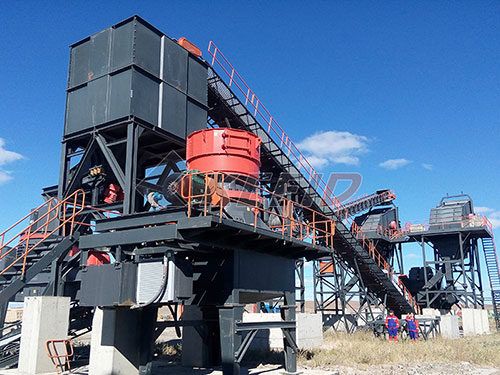
7. Future Trends and Conclusion
The stone crusher plant export market is evolving rapidly. Key trends include:
In conclusion, the wholesale price of a stone crusher plant is a reflection of its engineering, origin, capacity, and the market conditions at the time of purchase. For exporters, success lies in balancing cost competitiveness with quality and service. For importers, the key is to look beyond the initial price tag and evaluate the long-term value. As global infrastructure spending continues to rise, the demand for stone crusher plants will remain robust, making this a dynamic and lucrative sector for informed participants.
If you have any questions about our products, please feel free to contact us. We take all inquiries and suggestions very seriously.