
The Comprehensive Economics of Stone Crusher Machine Wholesale: Acquisition Costs, Operational Factors, and Strategic Procurement
In the aggregate, mining, and construction industries, the stone crusher machine serves as the foundational equipment for material reduction. For wholesalers, contractors, and quarry operators, understanding the cost structure associated with acquiring these machines is not merely a matter of reading a price tag. The wholesale cost of a stone crusher is a complex equation involving engineering specifications, throughput capacity, material hardness, and global supply chain dynamics. This article provides a detailed, professional analysis of the costs associated with stone crusher machine wholesalers, dissecting the variables that influence pricing, the categories of machinery available, and the strategic considerations for procurement.
Unlike consumer goods, the wholesale market for stone crushers operates on a business-to-business (B2B) model characterized by high capital expenditure (CAPEX) and long asset lifecycles. A “wholesale” price in this context typically refers to the cost incurred by distributors, importers, or large-scale end-users who purchase directly from manufacturers or authorized factory agents, often in bulk or as part of a fleet expansion.
The wholesale cost is distinct from the retail price, which includes dealer margins, localized service premiums, and immediate availability markups. Wholesale pricing is predicated on volume commitments, direct factory negotiations, and often, the exclusion of extended on-site commissioning services, which are billed separately.
To understand why a jaw crusher might cost $5,000 while a hydraulic cone crusher can exceed $500,000, one must examine the intrinsic cost drivers. These factors remain consistent across global wholesalers, whether the manufacturer is based in China, Europe, or the United States.
A. Type and Technology of the Crusher
The fundamental design dictates the base cost:
B. Throughput Capacity and Size
Capacity is measured in tons per hour (TPH). A machine capable of processing 50 TPH will inherently cost less than one processing 500 TPH. The cost scales non-linearly; doubling capacity often more than doubles the price due to the required structural reinforcement, larger motors, and heavier drive trains.
C. Materials and Fabrication Quality
Wholesale costs are heavily influenced by the raw materials used. Crushers manufactured with high-manganese steel (Mn13 or Mn18) for wear parts, heavy-duty rolled steel plates for the main frame, and SKF or Timken bearings for the drive system command a premium. Conversely, “budget” wholesale crushers often utilize lower-grade steel and generic bearings, reducing the initial cost but significantly increasing downtime and maintenance expenses.
D. Drive System and Automation
The transition from belt-driven to direct-drive systems, and the inclusion of PLC (Programmable Logic Controller) automation, adds substantial cost. A fully automated crusher with remote monitoring, automatic gap adjustment (CSS), and overload protection can add 20% to 40% to the wholesale base price.
Based on current global market data from major manufacturing hubs, the following wholesale price ranges (excluding shipping, duties, and local taxes) provide a benchmark for procurement professionals.
1. Mobile Crushing Plants
Mobile units, whether tracked or wheel-mounted, integrate the crusher, feeder, screen, and conveyor into a single chassis. This integration significantly increases the wholesale cost.
2. Stationary Crushers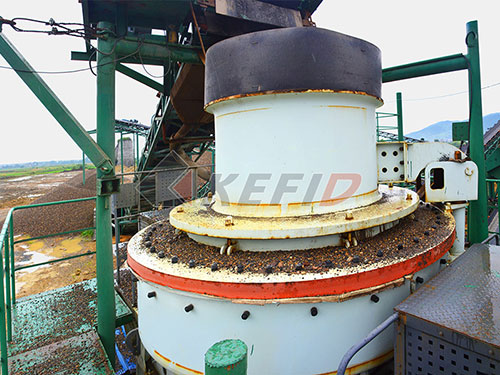
3. Auxiliary Equipment
Wholesale procurement rarely involves just the crusher. Feeders (vibrating grizzly), screens (vibrating screens), and belt conveyors are part of the package.
While the initial purchase price is the most visible cost, a professional analysis must account for the Total Cost of Ownership (TCO). Wholesalers who offer the lowest upfront price may not offer the lowest TCO.
A. Logistics and Shipping
Stone crushers are heavy and bulky. Shipping a 40-ton jaw crusher from Shanghai to Rotterdam can cost between $5,000 and $15,000 depending on container availability and freight rates. For break-bulk cargo (large mobile plants), costs can exceed $50,000. These logistics costs are often negotiated separately from the wholesale equipment price.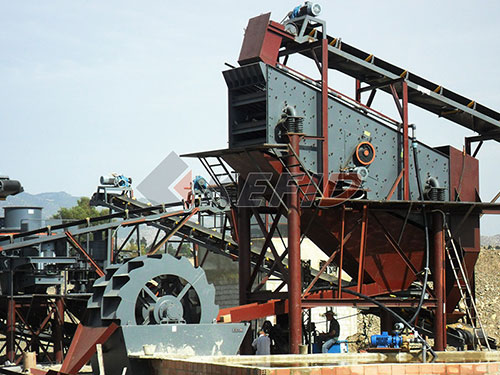
B. Spare Parts and Wear Components
Wear parts are a recurring cost. Jaw plates, cone mantles, blow bars, and screen meshes are consumables. A wholesaler’s parts pricing strategy is critical. For example, a set of high-chrome blow bars for an impact crusher can cost $2,000 to $8,000 and may last only 2-4 weeks in abrasive applications. The availability and cost of these parts directly impact the operational budget.
C. Installation and Commissioning
For stationary plants, foundation work, steel structure erection, and electrical wiring are significant costs. While the wholesaler provides the machine, the buyer must budget 10-20% of the equipment cost for installation. Mobile plants reduce this cost but require trained operators.
D. Financing and Currency Fluctuations
For international wholesalers, currency exchange rates (USD vs. CNY or EUR) can swing the effective cost by 5-10% within a single quarter. Additionally, letters of credit (L/C) fees and financing charges for capital equipment must be factored into the landed cost.
To optimize costs, procurement managers should adopt a strategic approach:
1. Direct Factory Audits: Relying solely on wholesale catalogs is insufficient. Visiting the manufacturing facility to inspect welding quality, machining tolerances, and assembly lines is essential. A factory that produces 50 units per month has different economies of scale than one producing 5.
2. Standardization of Parts: Choosing a wholesaler that utilizes standardized bearings, motors, and hydraulic components (e.g., Siemens motors, Rexroth pumps) reduces long-term maintenance costs, even if the initial price is higher.
3. Volume Leveraging: Wholesalers are more amenable to price reductions when purchasing multiple units or a complete production line (e.g., a 200 TPH crushing plant). A 10-15% discount is common for full-line orders.
4. After-Sales Support: The value of a wholesaler is not just in the sale but in the support. A wholesaler with a local warehouse for spare parts and a team of service engineers can drastically reduce downtime. This “soft cost” is often more valuable than a 5% reduction in the machine price.
The wholesale cost of a stone crusher machine is not a static figure. It is a dynamic variable influenced by steel prices, energy costs, labor rates, and technological innovation. For a wholesaler or a large-scale buyer, the objective is not to find the cheapest machine, but to find the machine that offers the lowest cost per ton of processed material over its 10- to 20-year lifespan.
A $100,000 jaw crusher that operates 20 hours a day with 95% availability is far cheaper than a $60,000 crusher that breaks down weekly. Therefore, the professional assessment of “wholesaler cost” must integrate the purchase price with the efficiency, durability, and serviceability of the machine. As the industry moves toward electrification and automation, the initial wholesale cost will rise, but the operational savings in fuel, labor, and maintenance will redefine the economic equation for decades to come. Buyers must engage with wholesalers not as mere vendors, but as long-term partners in productivity, ensuring that the capital deployed today yields a profitable aggregate tomorrow.
If you have any questions about our products, please feel free to contact us. We take all inquiries and suggestions very seriously.