
In the vast and intricate tapestry of global infrastructure development—from towering skyscrapers and sprawling highways to resilient dams and intricate urban landscapes—one indispensable mechanical hero operates, often unseen, at the foundational level: the stone crusher machine. As the primary workhorse of the aggregate production industry, these machines transform colossal, raw geological formations into precisely graded materials that form the literal bedrock of construction. The manufacturing of stone crushers is not merely a metal fabrication process; it is a sophisticated discipline blending mechanical engineering, materials science, kinematics, and advanced automation. This article delves into the detailed world of stone crusher machine manufacturing, exploring its core principles, key types, manufacturing processes, technological advancements, and critical selection criteria.
At its essence, a stone crusher applies mechanical force to reduce large rocks into smaller fragments of desired size. The fundamental principle is the application of compressive or impact forces to overcome the rock’s natural compressive strength. This is governed by a careful balance between power, chamber geometry, and eccentric motion. Modern crushers are engineered based on rigorous comminution theory, aiming for optimal size reduction efficiency (ratio of feed size to product size) while minimizing energy consumption—a key operational cost. The process involves multiple stages (primary, secondary, tertiary) to achieve specified cubicity (shape) and gradation required for high-quality concrete, asphalt, or railway ballast.
Manufacturing approaches differ significantly based on crusher type:
Jaw Crushers: The quintessential primary crusher. Manufacturing focuses on creating a robust frame of welded steel plates or cast steel to withstand immense stress. The crushing jaws themselves are critical wear parts; one is fixed while the other moves in an elliptical “chewing” motion. These are typically cast from austenitic manganese steel (12-14% Mn) for exceptional work-hardening and impact resistance. Precise machining of the pitman (eccentric shaft) assembly and toggle plate system is vital for smooth operation and overload protection.
Gyratory Crushers: Used for high-capacity primary crushing in large mining operations. Their manufacturing is a feat of heavy engineering involving massive cast steel mainframes and concaves (the stationary crushing surface). The mantle (moving crushing surface) is mounted on a rotating eccentric main shaft. Manufacturing tolerances for these components are extremely tight to ensure uniform wear and consistent product size. The intricate internal geometry of the crushing chamber is designed via CAD simulations for optimal throughput.
Cone Crushers: The workhorse for secondary and tertiary crushing stages. Manufacturing emphasizes precision in creating the concave liners and mantle from high-grade manganese or chrome steel alloys. The hydraulic adjustment system—allowing real-time setting changes under load—requires precision machining of cylinders and pistons. Advanced models feature labyrinth seal systems manufactured to prevent dust ingress into sensitive bearing assemblies.
Impact Crushers (Horizontal Shaft Impactor – HSI & Vertical Shaft Impactor – VSI): These crushers utilize kinetic energy for fragmentation, ideal for producing well-shaped aggregates.
Mobile Crushers: This represents a pinnacle of integrated manufacturing—combining a core crusher (often jaw or cone) with feeders, screens, conveyors, power units (diesel-electric), and sophisticated hydraulics onto a single tracked or wheeled chassis.
The creation of a reliable stone crusher follows a meticulous sequence:
Today’s leading manufacturers integrate cutting-edge technologies:
Choosing correct crusher involves analyzing multiple factors: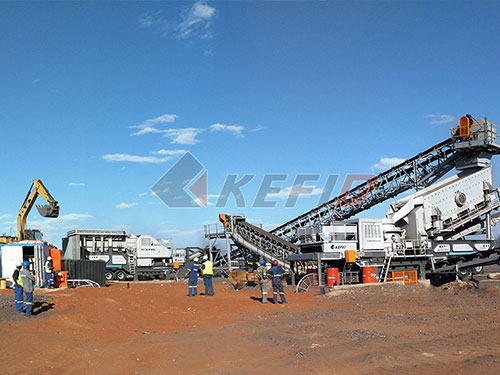
Stone crusher machine manufacturing stands as testament human ingenuity ability harness raw power nature shape built environment It continuous evolution journey marked relentless pursuit durability efficiency intelligence From brute force mechanical pioneers early industrial age today’s computer-optimized automated marvels industry has consistently refined art science rock reduction As global demand aggregates continues grow alongside imperatives sustainability circular economy manufacturers face exciting challenge producing machines not only stronger smarter but also more resource-efficient integral recycling demolition waste future lies versatile adaptable crushing solutions capable processing wide spectrum materials ensuring vital industry remains cornerstone progress long centuries come
Lorem ipsum dolor sit amet, consectetur adipisicing elit. Consectetur sequi saepe ut sunt eveniet perferendis excepturi, iste obcaecati. Qui tempore hic sed quia soluta obcaecati vel.