The Engine of Progress: A Deep Dive into Stone Crusher Machine Company R&D
The image of a stone crusher is often one of raw, unadulterated power—a monolithic machine reducing massive boulders to manageable aggregate through sheer force. While this perception of brute strength is not inaccurate, it belies the sophisticated intellectual engine that drives the modern stone crushing industry. For leading manufacturers, the Research and Development (R&D) department is not a peripheral function but the very core of their competitive strategy, sustainability mandate, and response to a rapidly evolving global construction and mining landscape. The R&D efforts of a stone crusher machine company are a complex, multi-disciplinary endeavor focused on enhancing performance, efficiency, durability, and intelligence.
1. The Foundational Pillars: Materials Science and Metallurgy
At the heart of every crusher lies its wear parts: jaws, mantles, concaves, blow bars, and liners. These components bear the immense brunt of abrasion and impact, and their lifespan directly dictates operational costs and machine availability. Consequently, a significant portion of R&D is dedicated to advanced materials science.
- Advanced Alloy Development: Beyond standard manganese steel, R&D teams experiment with complex alloys incorporating chromium, molybdenum, and vanadium to create microstructures that offer an optimal balance of hardness (for wear resistance) and toughness (to resist fracture). The development of composite materials, such as ceramic inserts embedded within a metallic matrix, represents a cutting-edge frontier.
- Heat Treatment Processes: The properties of these alloys are fully realized only through precise heat treatment. R&D rigorously tests various quenching, tempering, and austenitizing cycles to achieve the desired crystalline structure. Computer-controlled furnaces and advanced metallurgical analysis (using scanning electron microscopes) allow for unprecedented consistency and performance.
- Geometric Optimization via Simulation: Using Finite Element Analysis (FEA), engineers simulate the stress distribution across a wear part during the crushing process. This allows them to redesign geometries not just for fit, but for performance—creating profiles that maximize crushing efficiency and ensure even wear, thereby extending service life and reducing downtime.
2. Pursuing the Quintessential Goal: Crushing Efficiency and Particle Shape Control
The primary function of a crusher is to reduce rock size, but how it accomplishes this has profound implications. R&D focuses intensely on optimizing the crushing chamber dynamics to maximize efficiency and produce high-quality end products.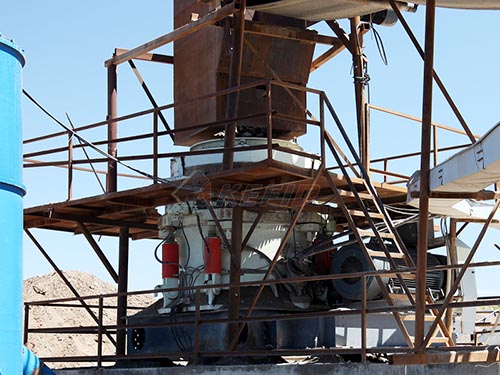
- Chamber Design and Kinematics: Through sophisticated software like Discrete Element Modeling (DEM), engineers can simulate the movement of thousands of individual rock particles within the chamber. This virtual testing ground allows for the optimization of parameters such as eccentric throw speed in cone crushers or the stroke and nip angle in jaw crushers. The goal is to create an “inter-particle” crushing effect where rocks crush each other, minimizing direct wear on the liners and improving energy efficiency.
- Particle Shape Optimization: The shape of the final aggregate is critical for applications like asphalt paving (which requires angular particles for interlock) or concrete production (which requires a well-graded mix). R&D works on chamber designs and operational settings that produce more cubical particles while minimizing undesirable elongated or flaky shapes. This adds significant value to the end product for customers.
3. The Green Imperative: Energy Efficiency and Environmental Sustainability
With global pressure mounting on industrial carbon footprints, R&D in energy efficiency has transitioned from a cost-saving measure to an ethical and regulatory necessity.
- Direct Drive Systems: Traditional designs often used V-belts which are prone to slippage and energy loss. R&D has championed direct drive systems that transmit power from the motor to the crusher more efficiently.
- Hybrid and Electric Drives: For larger mobile plants, R&D is exploring hybrid diesel-electric systems that can capture regenerative energy during certain cycles or allow connection to an external power grid in quarries, drastically reducing fuel consumption and emissions.
- Dust Suppression and Noise Abatement: Environmental R&D focuses on developing integrated dust suppression systems that use minimal water through atomized sprays. Advanced sound-dampening materials are being incorporated into machine housings,and vibration isolation technologies are refined to reduce noise pollution,supporting compliance with stringent workplaceand environmental regulations.
4. The Digital Transformation: Automation,Sensors,and Connectivity
The era ofthe “dumb”crusheris over.The modern machineis adata-generating nodein alarger connected system.This digital transformationis perhaps themost dynamicareaof contemporaryR&D.
- Automationand Control Systems: Advanced programmable logic controllers(PLCs)can automatically regulate feed ratesbasedon crusher load,track wear part utilization,and adjust settingsin real-timeto maintain optimalproduct gradation.Systemslike ASRi(Automatic Setting Regulation)in cone crushersare prime examplesof thisintelligence.
- Predictive Maintenance: Insteadof reactiveor scheduled maintenance,R&Dis enabling predictivecapabilities.Sensorsmonitor vibration patterns,temperature trends,and lubricant condition.Analyzingthis datawith machine learning algorithmscan predict impendings component failures—suchas abearing breakdownor liner wear-out—allowing maintenance tob eplanned proactively.This dramatically reduces unplanned downtime.
- Remote Monitoringand Telematics: Crushers can now transmit operational datavia cellularorsatellite connectionsto acentral monitoring station.Engineersand customerscan track performance metrics,fuel consumption,and locationfrom anywherein the world.This enables remote diagnostics,fleet optimization,and providesvaluable databacktoR&Dto informthe next generationof designs.
5.Mobilityand Application-Specific Solutions
The market demandsis diverse,rangingfrom large stationary quarriesto compact urban construction sitesand specialized recycling operations.R& Dmust caterto these varied needs.
- Mobile Crusher Innovation: For mobile crushing plants,R& Dfocuseson compactness,easeof setup,and versatility.Hydraulic folding conveyors,intelligent control systems that synchronize all plant components,and track-driven systemsfor superior mobilityare key areasof development.The goalisto createa highly productive plantthat can bemoved quicklyand easilybetween sites.
- Recyclingand Waste Processing: As naturalaggregate resourcesdwindle,the recyclingof constructionand demolitionwastebecomescrucial.R& Ddevelops specialized crusherslike jaw/impactor combination unitsor shreddersto handle reinforced concrete,bricks,and asphalt.Special featureslike overband magnetsfor metal separationand wind siftersfor lightweight material removalare integrated directlyinto themachinedesign.
Conclusion:The Strategic Nexusof Powerand Intellect
In conclusion,theR& Deffortsof astone crushermachine companyrepresenta strategic fusionof traditional mechanical engineeringwith cutting-edge disciplinesin materials science,sustainability science,and digital technology.Itis along-terminvestmentthat movesfar beyond incremental product tweaks.Itis about redefiningthe roleofthe crusherfroma simple size-reduction toolto an intelligent,efficient,and environmentally responsible solutionthat servesasthe backboneof modern infrastructure development.The companies that prioritize anda dvancetheirR& Dagendasare not merely selling machinery;theyare providingthe technological foundationupon which our built environment sustainably grows.The relentless roar ofthecrusheris now harmonizedwiththe silent humof its processing unit—apowerful testamentto how innovationcan transformeven themost foundationalof industrial tools
