The 100 Tons Per Hour Stone Crusher: A Benchmark in Aggregate Processing
In the realm of aggregate production for construction, mining, and infrastructure development, capacity is a primary determinant of operational efficiency and economic viability. A stone crusher rated at 100 tons per hour (tph) represents a critical mid-to-large-scale benchmark in this industry. This capacity range is highly sought after for medium-sized quarries, large construction projects, and stationary aggregate plants serving regional markets. Achieving a consistent output of 100 tph requires a carefully engineered system, not just a single machine, involving the harmonious integration of crusher type, feed material characteristics, and auxiliary equipment.
This article provides a comprehensive examination of a 100 tph stone crushing plant, delving into the core components, suitable crusher types, operational parameters, and economic considerations.
1. The System Concept: More Than Just a Crusher
A common misconception is that a “100 tph stone crusher” refers to a single machine. In practice, it denotes a crushing circuit or plant designed to process raw quarry rock into specified aggregate sizes at a rate of 100 tons every hour. This system is an interconnected setup comprising several key components:
- Feeding System: A vibrating feeder or apron feeder is essential to regulate the flow of raw material (run-of-quarry stone) from the hopper into the primary crusher. Consistent and controlled feeding is the first step toward achieving the target capacity and preventing crusher choke or stall.
- Primary Crushing Unit: This is the first reduction stage, responsible for breaking down large boulders (often up to 800-1000mm in size) into manageable pieces, typically around 150-200mm.
- Conveying System: A network of belt conveyors transports material between different crushing stages and to screening units. Their design must account for load, incline, and transfer points to minimize spillage and maintenance.
- Screening Unit: Vibrating screens are critical for classifying crushed material into desired product sizes (e.g., 0-5mm sand, 5-10mm chips). Oversized material is recirculated back to the appropriate crusher for further reduction—a process known as closed-circuit crushing.
- Secondary and/or Tertiary Crushing Units: To achieve specific product shapes and sizes, secondary (and sometimes tertiary) crushers are employed. These machines further refine the aggregate from the primary stage.
- Stockpiling and Loading: Finally, sorted aggregates are conveyed to stockpiles or directly loaded onto trucks for transport.
2. Crusher Selection for 100 TPH Capacity
The choice of crusher type is paramount and depends heavily on the properties of the feed material (abrasiveness, hardness, silica content) and the desired final product specifications (size distribution and shape). For a 100 tph plant, several configurations are prevalent:
Configuration A: Jaw Crusher + Cone Crusher
This is one of the most classic and reliable setups for hard and abrasive rocks like granite or basalt.
- Primary Jaw Crusher: A robust jaw crusher performs the initial heavy-duty crushing. For 100 tph duty cycle processing hard stone with high compressive strength (>250 MPa), you would typically select jaw crushers with feed openings around 600×900 mm up to 750×1060 mm depending on CSS(Closed Side Setting). Its simple design offers high reliability but produces a somewhat flaky product.
- Secondary Cone Crusher: The output from the jaw crusher is then fed to a medium-sized cone crusher operating in closed circuit with a screen. Cone crushers provide excellent reduction ratios and produce well-shaped cubicle aggregates ideal for high-quality concrete and asphalt. Modern hydro-cone crushers offer automated settings control for consistent product size.
Configuration B: Impact Crusher as Primary or Secondary
Impact crushers are highly effective for softer to medium-hardness limestone or recycled concrete.
- Primary Impact Crusher: A horizontal shaft impactor (HSI) can be used as a primary crusher for non-abrasive materials. It offers high reduction ratios in a single stage and produces an excellently shaped product directly from large feed.
- Secondary Impact Crusher: Often used after a jaw crusher for softer rocks where superior product shape is critical but wear costs must be managed compared to cone crushers.
Configuration C: Single Machine Solutions
For certain applications like processing limestone with moderate hardness requirements:
- Large Jaw Crusher: In some cases where final product requirements aren’t extremely strict regarding shape ,a single large jaw set at wider CSS can achieve close to 100tph but will have limited control over fines generation & particle shape distribution compared multi-stage setups
It’s crucial to understand that no single configuration is universally “best.” The selection process involves trade-offs between capital cost (CAPEX), operational cost (OPEX – mainly wear parts), product shape requirements,and material hardness.
3. Key Factors Influencing Actual Output
A plant’s nameplate capacity of “100 tph” represents an optimal scenario under specific conditions.In reality,daily output can fluctuate due to several variables: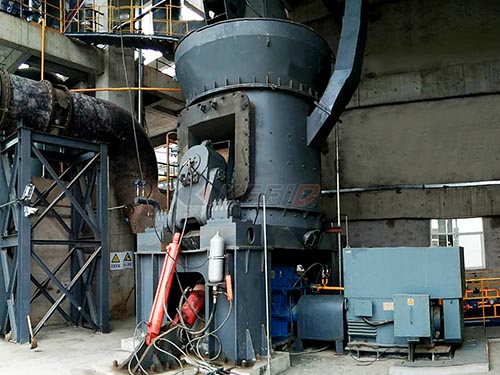
-
Material Characteristics:
- Hardness & Abrasiveness: Harder rocks like granite require more energy to crush than softer limestone.This can slow down throughput slightly & significantly increase wear on liners/ blow bars demanding more frequent maintenance stops impacting average hourly output over long run
- Feed Size Distribution: An oversupply of very large boulders can bottleneck primary stage while excess fines already present in feed might cause packing/caking issues inside secondary cone/impact chambers reducing efficiency
- Moisture Content: High moisture content in feed leads to clogging screens especially when producing smaller sized aggregates which drastically reduces effective screening/crushing rate until cleared
-
Crusher Settings & Wear:
- The Closed Side Setting (CSS) on jaw/cone directly controls maximum output size & throughput.A tighter CSS yields finer product but reduces capacity due increased resistance/time required per particle breakage
- As wear parts(jaw plates,mantles/concaves) erode over time,crushers lose their optimal geometry & efficiency causing gradual drop in both quality(product flakiness increases)& quantity(output tonnage drops unless CSS adjusted accordingly)
-
Plant Operation & Maintenance:
- Consistent feeding without surges/starvation cycles ensures stable operation at peak design capacity
- Unplanned downtime due mechanical failures(e.g., conveyor belt damage,bearing failure) or delayed replacement/resharpening worn parts will lower long-term average production far below theoretical peak
4. Economic Considerations
Investing in any industrial machinery demands thorough financial analysis beyond initial purchase price:
- Capital Expenditure(CAPEX): Cost varies significantly based on chosen configuration(Jaw/Cone vs Primary Impactor),brand reputation,and level automation/integration controls included
- Operational Expenditure(OPEX):
1.Wear Parts Consumption:Cone/Hsi blow bars/mantles/jaw plates replacement frequency forms major recurring expense heavily influenced by rock abrasiveness.For very abrasive stones,jaw-cone setup often proves more economical long term despite higher initial cost compared HSI which may wear faster under same conditions
2.Power Consumption:A fully loaded ~100tph plant draws substantial electrical power.Primary jaw itself could consume ~75-110 kW while secondary cone adds another ~90-130 kW depending models/settings.Total connected load easily exceeds ~300-400kW including feeders,screens,& conveyors making electricity significant ongoing cost factor
Conclusion
A stone crushing plant with capacity rated at Stone Crusher Kapasitas 100 Ton/Jam stands as versatile workhorse capable serving wide range medium scale aggregate production needs.Its successful implementation hinges upon meticulous system design tailored specific material properties final product goals rather than simply selecting individual machine labeled “100tph”.Understanding interplay between different crushing stages,influence variable rock characteristics,& critical importance disciplined maintenance feeding practices ultimately determines whether facility consistently meets its designed potential throughput reliably profitably over its operational lifespan.As demand high-quality construction aggregates continues grow globally especially developing nations seeking build modern infrastructure—robustly engineered efficient plants this capacity class will remain cornerstone industry’s supply chain
