The Stamp Mill: A Cornerstone of Industrial Gold Mining and Its Modern Market Dynamics
The stamp mill stands as a monumental icon in the history of gold mining, representing the critical transition from artisanal panning to industrial-scale extraction. For centuries, its rhythmic, thunderous pounding was the heartbeat of gold districts worldwide, from the California Mother Lode to the Witwatersrand. While largely superseded by modern cyanidation and flotation processes for primary ore treatment, stamp mills remain relevant in specific niches. This article provides a professional and objective analysis of stamp mill technology, its enduring applications, and the complex factors influencing wholesale pricing for companies that still utilize or supply this equipment.
Historical Significance and Technological Operation
A stamp mill is a mechanical crusher that uses heavy, vertically moving “stamps” (typically made of iron or steel) to pulverize gold-bearing quartz or hard rock ore. The basic mechanism involves a rotating cam shaft that lifts individual stamps (weighing between 500 to 2,000 pounds each) in sequence and drops them onto ore fed into a mortar box. The relentless crushing action liberates gold particles from the surrounding quartz matrix.
The process typically involved several stages:
- Primary Crushing: Ore was first broken by jaw crushers or manually with hammers.
- Stamp Milling: The crushed ore was fed into the stamp mill’s mortar box, where stamps reduced it to a fine sand or powder.
- Amalgamation: Mercury was often introduced into the mortar box or on copper plates over which the crushed pulp flowed. The mercury would form an amalgam with liberated free gold.
- Concentration: Further concentration might be achieved via shaking tables or sluices to capture finer particles before final refining.
This technology enabled the economic processing of hard rock ores at volumes impossible by manual methods, directly fueling global gold rushes and establishing large-scale mining companies.
Modern Niche Applications and Relevant Companies
Today, full-scale industrial primary processing via stamp mills is rare. However, they are not obsolete. Their modern applications create a specialized wholesale market:
- Small-Scale & Artisanal Mining (ASM): In developing regions with abundant alluvial or shallow hard-rock deposits (e.g., parts of Africa and Southeast Asia), small stamp mills or “hammer mills” are used as affordable, simple-to-operate crushing technology. Companies servicing this sector often wholesale portable, diesel-powered three-stamp or five-stamp units.
- Historic Mine Re-Processing: Companies specializing in re-processing old mine tailings (waste piles) find stamp mills useful for crushing agglomerated material or secondary rocks where minimal chemical processing is needed. Their simplicity is an advantage over more complex crushers.
- Specialty Mineral Processing: Some operations processing brittle minerals other than gold may utilize modified stamp mill designs.
- Tourism and Demonstration: Manufacturers produce smaller-scale replica mills for museums, historic sites, and tourist mines.
The “companies” involved in the wholesale price ecosystem thus fall into distinct categories:
- Specialist Manufacturers: A handful of engineering firms, often in mining equipment hubs like South Africa, China, or India, manufacture new stamp mills for niche markets.
- Used & Reconditioned Equipment Suppliers: The largest segment of the wholesale market deals in refurbished historical machinery sourced from closed mines. These suppliers are critical for cost-conscious operators.
- Parts & Casting Suppliers: Companies that produce wear parts—stamp shoes, dies, cam shafts, mortar boxes—are essential for maintaining operational mills.
- ASM Equipment Distributors: Companies that aggregate and wholesale a range of small-scale mining equipment, including simple stamp mills/ hammer mills.
Deconstructing Wholesale Price Determinants
There is no standardized price list for stamp mills at wholesale; prices are highly contingent on multiple variables.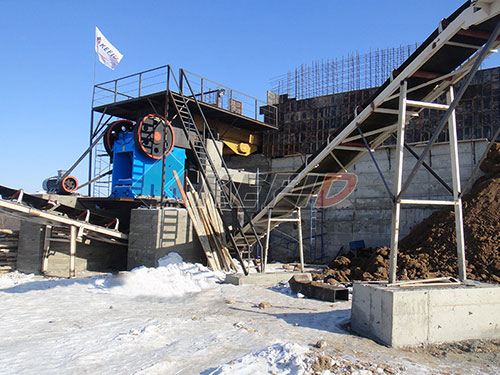
1. Scale and Capacity:
- Small ASM Units (1-5 stamps): These are often priced as standalone machinery. Wholesale prices can range from $5,000 to $30,000+ per unit**, depending on build quality, power source (electric vs. diesel), and included accessories (concentration tables).
- Industrial-Scale Units (10-100+ stamps): These are almost exclusively sold as used/reconditioned systems. Pricing shifts dramatically based on condition rather than simple per-stamp calculation. A complete but “as-is” plant may sell for scrap metal value plus a premium ($50k – $200k), while a fully refurbished operational system with all ancillary equipment (conveyors,jaw crusher,tables) can command prices from $250k to over $1 million.
2.Condition & Reconditioning Status:
This is the paramount factor for large mills.
- As-Is/For Parts: Sold where it lies; buyer assumes all dismantling and transport costs and risks.
- Reconditioned: Bearings,cams,and wear parts have been replaced; motor serviced.This adds significant value.
- Fully Refurbished: The mill is restored to like-new operational condition,warranted,and sometimes re-engineered with modern safety features.This commands top-tier pricing.
3.Completeness of System:
A standalone stamp battery is less valuable than a “turnkey” circuit including:
- Primary jaw/cone crusher
- Ore feed conveyors/hoppers
- Vibrating screens for size classification
- Amalgamation plates or modern gravity concentrators (e.g., centrifugal concentrators)
- Tailings handling system
Wholesale pricing must account for this entire package value.
4.Location & Logistics:
A mill located at an accessible mine site in Nevada costs far less to transact than one situated in a remote region of Peru.Dismantling,cranage,and international shipping costs can easily exceed the purchase price itself.Sellers often quote FOB (“Free On Board”) at a nearest port,making logistics the buyer’s expense.
5.Material Composition & Historical Value:
Mills with high-quality cast iron frames and historically significant provenance (e.g.,from a famous mine) may carry premiums from collectors or heritage projects,beyond their functional value.
6.Market Demand Dynamics:
The price is ultimately set by negotiation between motivated sellers and buyers.The volatility of the gold price indirectly influences demand from ASM sectors.Higher gold prices can stimulate small-scale mining activity,increasing demand for affordable crushing equipment like small stamp mills,pushing wholesale prices up modestly.
Cost-Benefit Analysis: Why Choose a Stamp Mill Today?
For a modern company considering this route,the decision hinges on specific advantages versus significant drawbacks:
Advantages
- Simplicity & Robustness: Minimal electronics,easy to understand,mend,and operate with semi-skilled labor.
- Low Operational Cost per Ton (for suitable ores): If powered by affordable energy sources and processing free-milling ores not requiring complex chemistry.
- Low Capital Outlay (Used Market): A significant advantage over multi-million-dollar cyanidation plants or high-pressure grinding rolls (HPGR).
- Effective for Specific Ores: Still competent for brittle minerals and free-milling gold where gravity recovery is effective.
Disadvantages
- *Low Energy Efficiency: Extremely inefficient compared to modern crushers like cone crushers or HPGRs; most energy is lost as noise,vibration,and heat.
High Maintenance Costs: Constant impact leads to rapid wear of shoes,dies,and mechanical parts,labor-intensive upkeep.
*Coarse Grinding Only: Generally produces a coarser product (~20-100 mesh) versus modern ball mills capable of ultra-fine grinding (<200 mesh) needed for refractory ores.
Environmental & Health Risks: Historical use with open mercury amalgamation presents severe contamination liabilities.Modern use must avoid mercury entirely.
Limited Recovery: For complex ores where gold is locked within sulfides,gold recovery via simple gravity/separation after stamp milling can be unacceptably low (<60%).
Conclusion
The wholesale market for stamp mill gold mining companies exists at an intersection between history,pragmatism,and niche application.It is not a market driven by mass production but by highly customized transactions centered on durable capital goods.The wholesale price is less a “price”and more a project-specific valuation encompassing equipment condition,system completeness,and formidable logistics.For certain small-scale operators,tailings reprocessors,and specialty miners,the enduring simplicity of the stamp mill offers an economically viable entry point—a testament to its robust design.Nevertheless,the technology’s inherent inefficiencies relegate it to specific contexts where its low-tech advantages outweigh its performance limitations against modern alternatives.Ultimately,purchasing a stamp mill today represents not just an equipment acquisition,but an investment in an operational philosophy prioritizing simplicity over optimal recovery,a calculation that only makes financial sense under very particular conditions
