
The thunderous, rhythmic cadence of the stamp mill was the industrial heartbeat of the gold rushes that shaped continents. From the quartz veins of California and Colorado to the deep reefs of South Africa and the outback of Australia, this robust machinery transformed gold mining from a placer-based, labor-intensive endeavor into a capital-intensive industrial enterprise. While largely obsolete in modern large-scale operations, understanding the stamp mill is crucial to grasping historical mining economics and appreciating the competitive dynamics that emerged around this foundational technology. The phrase “stamp mill gold mining companies competitive price” evokes an era where technological adoption, operational efficiency, and economies of scale began to dictate survival and profitability in a fiercely competitive industry.
At its core, a stamp mill is a mechanical crusher. Its purpose is to liberate gold from hard rock (lode or reef) ore by reducing it to a fine sand or powder, allowing for subsequent chemical extraction. A typical battery of stamps consisted of a line of heavy iron or steel pestles (stamps), each lifted by cams on a rotating horizontal shaft (the camshaft). The stamps would drop sequentially under their own weight (500 to 2,000 lbs each) onto iron dies, upon which ore was fed. The pulverized material would pass through screens in the mortar box and be washed over amalgamation plates—copper plates coated with mercury.
Gold, being “amalgamable,” would form an alloy with the mercury (creating amalgam), while the worthless rock flour (gangue) washed away. The amalgam was then collected and retorted (heated) to vaporize the mercury, leaving behind raw gold. This process, known as “free-milling,” was effective for ores where gold was physically exposed after crushing.
The scale defined competitiveness. A small “custom mill” might run 5 stamps for local prospectors. Major mining companies operated mills with hundreds of stamps housed in vast buildings, powered by water wheels, steam engines, or later, electricity. The capital investment was substantial: importing heavy castings to remote locations, building massive foundations, securing water rights for operations and tailings disposal, and maintaining complex machinery.
For a gold mining company operating stamp mills in the late 19th and early 20th centuries, achieving a “competitive price” for its bullion—meaning low production costs leading to higher profit margins—hinged on several interlinked factors:
1. Ore Grade and Geology: The fundamental determinant. Higher-grade ore yielded more gold per ton crushed, directly lowering cost per ounce. Companies with rich veins could afford less efficient operations. However, consistent grade was key; erratic ore bodies led to unpredictable costs.
2. Technological Efficiency and Scale: This was the primary battlefield for competition.
3. Operational Logistics:
4. Capital Structure & Access: Companies with strong financial backing from London or New York could build larger mills sooner and weather periods of low grade or technical setbacks. Undercapitalized companies often sold their ore at a discount to custom mills owned by competitors—a severe competitive disadvantage.
The competitive landscape evolved through distinct phases:
Phase 1: The Custom Mill Model. Early on independent mill owners processed ore for small miners for a fee (a percentage of gold or cash). Competition centered on milling rates/recovery promises and proximity.
Phase 2: Corporate Integration & Monopoly Power. Successful companies realized controlling both mine and mill was critical.
Phase 3: Technological Obsolescence & Transition. The stamp mill’s inherent flaws eventually undermined its competitiveness:
The advent of cyanidation (the MacArthur-Forrest process patented in 1887) revolutionized recovery economics but required finer grinding than stamps could achieve efficiently.This drove adoption first of ball mills working with stamps as primary crushers,and then their full replacement by jaw/cone crushers followed by ball/rod mills.Cyanidation allowed recovery rates over 90%, far surpassing amalgamation’s typical 60-70%.
A company clinging solely to stamp milling after ~1905 found itself at a severe cost disadvantage against rivals using cyanide plants.The most competitive firms were those that continuously reinvested profits into next-generation technology.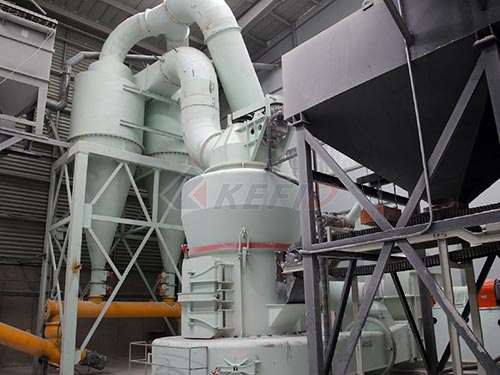
Today,the authentic stamp mill is a museum piece.Yet,the economic principles it embodied remain utterly relevant:
1.Technological Adoption as Existential Imperative: Companies that failed to upgrade from stamps were marginalized.The parallel today is adoption of automation,sensor-based sorting,and advanced metallurgical processes like bio-oxidation.
2.Scale & Integration Drive Cost Leadership: Modern gold mining is dominated by multinationals operating million-ounce-per-year open pits or ultra-deep mechanized mines feeding massive processing plants.This mirrors,but dwarfs,the scale advantages sought by large stamp mill operators.
3.Cost Per Ounce is King: Then as now,the market price of gold is exogenous.Competition happens entirely on the cost curve.The “competitive price” sought historically is today’s All-In Sustaining Cost(AISC).Low-cost producers survive downturns;high-cost producers perish—a dynamic starkly visible when placer miners gave way to hardrock companies with capital for stamps,and again when those same companies hadto transition beyond them.
In conclusion,the quest for “competitive price” among stamp mill gold mining companieswas not merely about haggling.It representedthe frontlineof industrial competitionin its era.It forced innovationsin engineeringand management,drove consolidation,and laidthe financialand operationalfoundationsfor themodern globalgold industry.The rumble ofthe stampswas more than sound;itwas themanifestationof acut-throat economicevolutionwhere efficiencyinreducing rockto dust ultimatelydeterminedwhich enterpriseswould endureand whichwould becomefootnotesinhistory,tailingswashedawaybythe relentlessflowof progress
Lorem ipsum dolor sit amet, consectetur adipisicing elit. Consectetur sequi saepe ut sunt eveniet perferendis excepturi, iste obcaecati. Qui tempore hic sed quia soluta obcaecati vel.