
In the relentless pursuit of industrial efficiency and sustainable practices, the management of industrial by-products has become a critical component of operational success. Among these by-products, slag—a non-metallic, stony residue from metal smelting and refining processes—stands out as both a challenge and an opportunity. Once considered mere waste destined for landfills, slag is now recognized as a valuable raw material for construction, road building, and cement production. The machinery at the heart of this transformation is the slag crusher plant. For any enterprise looking to invest in this technology, understanding the catalog of a slag crusher plant producer is the first and most crucial step. This article serves as a detailed guide to navigating these catalogs, breaking down the components, specifications, and key considerations that define modern slag processing solutions.
A slag crusher plant is not a single machine but a fully integrated processing system designed to reduce large chunks of raw, solidified slag into uniformly sized granules suitable for various applications. The primary goal is to liberate metallic content trapped within the slag (in cases like steel slag) and to produce specific aggregate sizes for commercial sale. A typical plant is composed of several interconnected units working in sequence: feeding systems, crushing machinery, screening decks, magnetic separators, and conveying systems.
When a producer presents their catalog, they are essentially showcasing their engineering philosophy, technological capabilities, and the range of solutions they can offer. The catalog is more than a price list; it is a technical document that reflects the producer’s expertise.
1. Company Profile and Technical Philosophy
The opening section often establishes credibility. Look for information on the company’s history, experience in material processing, and their core design principles. Do they emphasize robustness for heavy-duty applications? Do they highlight mobility or stationary setups? Their philosophy might lean towards energy efficiency, automation integration (Industry 4.0 readiness), or modularity for easy expansion. This section sets the tone for the technical specifications that follow.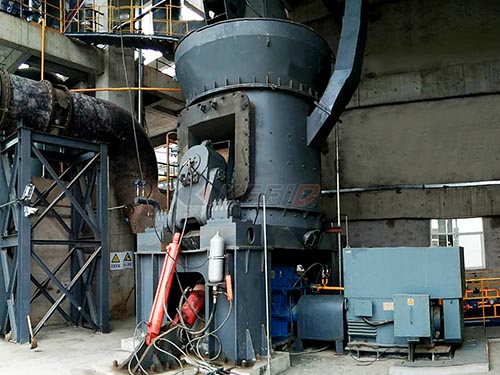
2. Product Range and Configurations
This is the heart of the catalog. Reputable producers do not offer a one-size-fits-all solution. Instead, they present a range of configurations:
The catalog should clearly differentiate these types with diagrams or photos illustrating their typical layouts.
3. Detailed Equipment Breakdown: The Anatomy of a Plant
A professional catalog will dissect each component within the plant.
4. Technical Specifications Table
This section provides objective data that allows for direct comparison between models.Every reputable producer includes comprehensive tables listing:
5.Drive Systems Options
Catalogs must specify power source options:
6.After-Sales Support & Services
A significant partof amodern catalogis dedicatedto service.This includes:
Beyond simply readingthe specifications,a discerning buyer must analyze several factors:
1.Material Analysis Compatibility: Does th eproducer requesta sampleof your specificslagfor testing?The best producers have test facilities to determineabrasiveness ,moisture content ,and compressive strengthto recommendthe optimalcrushing chamberlinersand machine settings.This serviceisoften highlightedin their catalog.
2.Automation & Control Systems:Modern plantsare governedby sophisticatedPLC(Programmable Logic Controller)systems.Lookfor featureslike automatic setting regulation(ASRi fora cone crusher),remote monitoringvia GSMmodems,and real-time performance tracking.The user interface(HMI – Human Machine Interface)should be intuitive.
3.Safety Features:The catal ogshould explicitly mention safety standards compliance(CE markingetc.).Featureslike emergency stop cordsalong all conveyors ,lock-out/tag-outsystemsfor maintenance ,and guardingaround all rotating partsare non-negotiable .
4.Sustainability Metrics:Increasingly ,producers highlightenvironmental featureslike dust suppression systems(dry fogor water spray) ,noise encapsulation ,andelectricdrive optionsto reducecarbon footprint .
5.Total Costof Ownership(TCO):Alow initial pricecan be misleading.Considerthe expectedwear lifeof parts(e.g.,manganese steel quality ),energy consumptionper tonof processed material ,and easeof maintenance .Aplant designedfor quick liner changeswill have lower downtime costs .
The catalogofa slagcrusherplant produceris amultifaceted documentthat servesas agatewayto understandingthe capabilitiesand qualityof their offerings.It movesfar beyonda simplelistof machinesintoa comprehensivepresentationof engineeringexpertise .By carefully dissectingeach section—fromthe company’s core philosophyto theminutiaeofthe technicalspecificationsand after-sales support—apotential investorgains aclear pictureofthe value proposition .
In an erawhere circulareconomy principlesare drivingindustryforward,the choiceofa slagprocessingplantisastrategicdecision.A thoroughanalysisofa producer’scatalogenablesthat decisiontobe informed ,objective,and alignedwithlong-termoperationalgoalsforsustainability,efficiency,and profitability.The rightplantdoesnot justcrushslag;ittransformsan industrialby-productintoaproven revenue streamwhile reinforcingacommitmenttoenvironmental stewardship .
Lorem ipsum dolor sit amet, consectetur adipisicing elit. Consectetur sequi saepe ut sunt eveniet perferendis excepturi, iste obcaecati. Qui tempore hic sed quia soluta obcaecati vel.