
The procurement of a slag crusher plant is a significant capital investment that directly impacts the operational efficiency, product quality, and long-term profitability of industries dealing with metallurgical by-products. Whether for steel mills, ferrous and non-ferrous smelters, or independent slag processing companies, selecting the right producer is a complex, multi-faceted decision that extends far beyond simple price comparison. This detailed guide explores the critical considerations, technical parameters, and strategic processes involved in procuring a slag crusher plant from a producer.
Before engaging with producers, the buyer must have absolute clarity on the raw material and desired outcomes. Slag is not a uniform product; its characteristics vary dramatically:
This analysis forms the Technical Specification, the foundational document for all subsequent procurement steps. It dictates the plant’s required capabilities.
Procurement teams must evaluate producers across several dimensions:
A. Technical Capability & Engineering Expertise:
B. Manufacturing & Quality Assurance:
C. Commercial & Financial Considerations:
D. After-Sales Support & Service Network:
This is often the most critical differentiator between low-cost suppliers and long-term partners.
A structured approach mitigates risk:
Phase 1: Pre-Qualification & Longlisting
Based on market research,past experience,and industry references,build a list of 8-12 potential producers.Global leaders offer turnkey sophistication;regional specialists may offer cost advantages.Send out a preliminary Request for Information(RFI)to gauge interest,basic capability,and financial health.Shortlist 4-6 serious contenders.
Phase 2: Detailed Request for Quotation(RFQ) & Technical Evaluation
Issue a comprehensive RFQ package including:
Form an interdisciplinary evaluation team(production.maintenance.procurement).Score each technical proposal against weighted criteria(e.g.,Process Design-25%,Component Quality-20%,Performance Guarantees-20%,Delivery Time-15%,Past References-10%).
Phase 3: Clarification,Negotiation,& Due Diligence
Hold detailed clarification meetings with top-ranked bidders.Request revisions to optimize design.Address all technical ambiguities.Concurrently conduct commercial negotiations focusing on TCO.Perform rigorous reference checks by visiting or speaking directly with existing clients operating similar plants.Inspect their running installations if possible.
Phase 4: Final Selection & Contract Award
Synthesize findings into a final comparative matrix.Recommend the bidder offering the best value—optimal balance of technical compliance,TCO,and risk mitigation—not necessarily the lowest price.The contract must be watertight,capturing all agreed technical specs,warranties,support terms,and penalty clauses.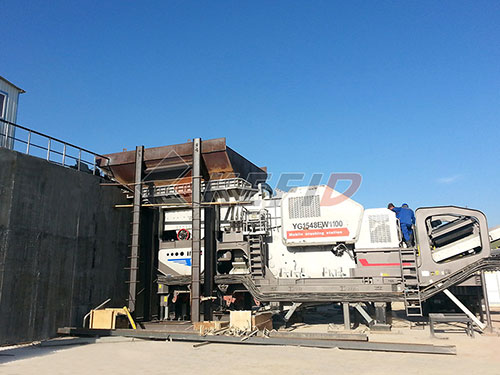
1.Oversizing/Undersizing: Incorrect capacity assumptions lead to inefficiency or bottlenecks.Consider future feedstock variations
2.Neglecting Metal Recovery: Inefficient metal separation damages downstream crushers,causes product contamination,and represents lost revenue
3.Underestimating Abrasion:Slag is highly abrasive.Failure to specify adequate wear protection(manganese steel liners,ceramic lagging)leads to catastrophic downtime
4.Ignoring Environmental Compliance: Ensure plant design includes comprehensive dust containment(hoods,dust collectors)and noise suppression measures
5.Overlooking Logistics: Confirm that major equipment dimensions are feasible for transport to your site
Procuring a slag crusher plant is a strategic endeavor that demands meticulous planning,a disciplined evaluation process,and a partnership mindset.The choice of producer determines not just the installation success but also decades of operational performance.Investing time in thorough needs analysis,supplier assessment,and contract drafting pays exponential dividends in plant uptime,final product quality,and ultimately,the profitability of transforming an industrial by-product into a valuable commodity.A prudent buyer looks beyond machinery;they select an engineering partner capable of delivering a robust,tailored processing system backed by unwavering lifecycle support
Lorem ipsum dolor sit amet, consectetur adipisicing elit. Consectetur sequi saepe ut sunt eveniet perferendis excepturi, iste obcaecati. Qui tempore hic sed quia soluta obcaecati vel.