
The global steel and metallurgical industries generate vast quantities of slag as a by-product—over 400 million tonnes annually from steelmaking alone. Once considered mere waste, slag is now recognized as a valuable secondary raw material for construction, cement production, and road building. This paradigm shift has spurred the growth of the slag crusher plant factory industry. Establishing such a facility is a significant capital-intensive undertaking, with costs influenced by a complex interplay of technical, logistical, and market factors. This article provides a detailed, objective analysis of the cost structure involved in setting up and operating a slag crusher plant factory.
A slag crusher plant is not a single machine but an integrated material processing system designed to reduce large chunks of slag (from blast furnace, steel furnace, or non-ferrous processes) into specified, marketable aggregate sizes. The core process involves: Feeding -> Crushing -> Screening -> Separation -> Stockpiling.
Key cost-driving components include:
CAPEX is the initial investment required to bring the plant into operational readiness.
A. Machinery & Equipment Costs (40-50% of Total CAPEX):
This is the most variable cost center. A basic, semi-mobile plant for small-scale processing may start at $150,000 – $500,000. A medium-capacity (50-100 TPH), fixed plant with moderate automation typically ranges from $800,000 to $2.5 million. Large-scale, fully automated facilities with advanced separation technology can easily exceed $5 million. Brand choice (European premium vs. competitive Asian suppliers) can create a 30-40% price differential for similar capacity.
B. Site Preparation & Civil Works (15-25% of Total CAPEX):
Costs depend on terrain and soil conditions. Leveling land, constructing heavy-duty foundations capable of withstanding dynamic crusher loads (~$50-$150 per cubic meter of concrete), building weatherproof shelters, and installing drainage are major expenses. Remote locations increase site development costs significantly.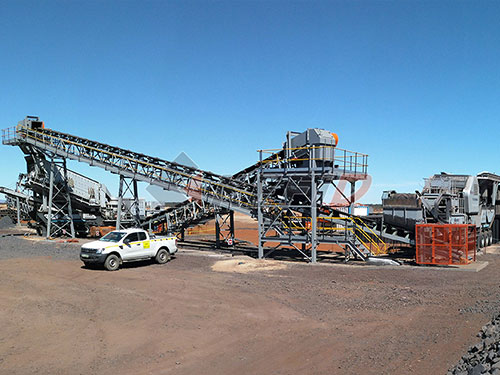
C. Auxiliary Systems & Installation (10-15% of Total CAPEX):
D. Licenses & Pre-operational Costs (5-10% of Total CAPEX):
Environmental Impact Assessment (EIA) permits, air/water discharge licenses,crusher plant factory business registration,safety certifications,and initial working capital for spare parts inventory constitute this segment.
OPEX determines daily profitability and long-term viability.
A. Raw Material & Logistics (Variable Cost):
While slag is often procured at low cost or even negative cost (tipping fee), its transportation from source (steel plant) to the crusher factory is critical.Distance defines logistics economics. On-site plants within steel mill premises have minimal inbound cost but may involve higher lease agreements.Plant location strategy—near source vs.near market—is thus a fundamental cost decision.
B.Power Consumption(20-30%of OPEX):
Crushers,screens,and conveyors are energy-intensive.A 200 TPH plant can operate on 500–800 kW.Continuous operation(6,000 hours/year)makes electricity tariff a key factor.Regions with high industrial power rates face a distinct disadvantage.
C.Wear Parts & Maintenance(15-25%of OPEX):
Slag is highly abrasive.Consumables like manganese jaw plates,cone mantles,screen meshes,and conveyor belt scrapers wear out rapidly.Maintenance costs can range from $0。50 to $2。00 per tonne processed,depending on slag hardness(HGI)and maintenance efficiency.A robust planned maintenance regime is essential to control these costs。
D.Labor Costs(10-20%of OPEX):
A modern automated plant may require only 4–6 operators per shift plus maintenance crew and supervisors.Labor costs vary drastically by region(e.g.,Southeast Asia vs.Northern Europe).Training for safety and operational efficiency is an ongoing expense。
E.Compliance&Overheads:
Regular environmental monitoring,waste disposal,insurance(premiums for heavy equipment),and general administration are fixed overheads that must be accounted for。
1.Capacity&Technology Scale:Economies of scale apply;cost per tonne processed decreases with increased plant capacity up to an optimal point。
2.Level Of Automation:High initial investment in automation(PLC,remote monitoring)reduces labor costs,improves yield consistency,and minimizes human error。
3.Feed Material Characteristics:The physical and chemical properties of slag(e.g.,moisture content,abrasiveness,metal content)directly impact crusher selection,wear rates,and final product quality。
4.Final Product Specifications:Producing high-value,precisely graded aggregates for concrete requires more crushing stages and precise screening than producing base fill material。
5.Geographical Location:Costs for labor,power,land,and regulatory compliance vary by country and region within countries.Logistics infrastructure(port,railway access)is crucial。
6.Supplier Selection&After-Sales Support:Choosing between turnkey suppliers versus self-sourcing components affects both CAPEX和long-term OPEX through parts availability和service responsiveness。
The revenue side depends on selling crushed slag as aggregates(cheaper alternative to natural stone)and recovered scrap metal.The ROI period typically ranges from 2to5 years based on:
Strategic trends impacting cost dynamics include:
Establishinga slagcrusherplantfactory representsa calculated intersectionofindustrial processingand sustainability.The capital expenditureis substantial,rangingfrom several hundred thousand tomillionsofdollars,buttheongoing operationalcosts—dominatedby wear parts,power,and logistics—arethe true determinants offinancialsuccess.A thorough feasibility study,meticulous component selection based on specific material characteristics,and strategic positioning relative toboth raw materialsourceand end-marketare paramount.In an erafocusedon resource efficiencyand waste valorization,a well-designedand efficiently runslagcrusherplantisnotmerelyacostcenterbutapivotal linkin themodern industrial ecosystem,turningan environmental liabilityinto an economic asset。
Lorem ipsum dolor sit amet, consectetur adipisicing elit. Consectetur sequi saepe ut sunt eveniet perferendis excepturi, iste obcaecati. Qui tempore hic sed quia soluta obcaecati vel.