The Skid Steer Rock Crusher: A Comprehensive Guide to On-Site Material Processing
The evolution of construction, landscaping, and mining has been significantly driven by the pursuit of efficiency and cost-effectiveness. Central to this evolution is the skid steer loader, a versatile and compact powerhouse. Its true potential, however, is unlocked through its vast array of attachments. Among the most powerful and transformative of these is the skid steer rock crusher. This attachment transcends the traditional role of a loader, transforming it into a mobile primary reduction unit capable of processing materials directly on-site. This article provides a comprehensive examination of skid steer rock crushers, exploring their working principles, types, applications, benefits, and critical considerations for operation.
Understanding the Core Principle: What is a Skid Steer Rock Crusher?
A skid steer rock crusher is a hydraulically driven attachment that connects to the auxiliary hydraulic system of a skid steer loader. Its primary function is to reduce large rocks, concrete, asphalt, and other hard materials into smaller, more manageable aggregate. Unlike traditional stationary crushers that require material to be transported to them, this attachment brings the crushing power directly to the source of the material.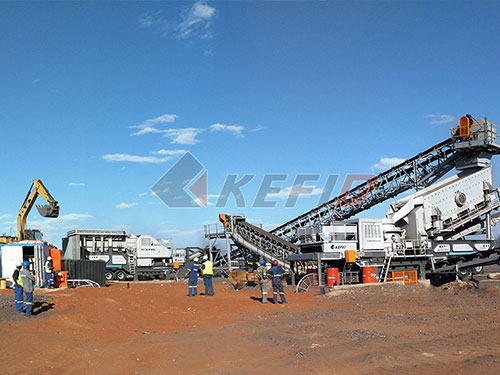
The fundamental operating principle involves applying immense mechanical force to fracture materials. The skid steer’s hydraulic system provides high-pressure fluid to a motor on the crusher, which drives a crushing mechanism—most commonly a jaw-based system or an impactor style—to compress and break down the feed material into a predetermined size.
Types of Skid Steer Rock Crushers
While various designs exist, they generally fall into two main categories:
-
Jaw Crusher Attachments: These are the most common type for skid steers and function similarly to larger stationary jaw crushers.
- Design: They feature two vertical jaws—one fixed and one movable. The movable jaw, powered by a robust hydraulic cylinder, presses against the fixed jaw in a cyclical motion.
- Crushing Action: The process is one of compression. As material enters the chamber from the top, it is crushed between the jaws until it is small enough to fall through the gap at the bottom, known as the closed-side setting (CSS). This gap is adjustable, allowing operators to control the final product size.
- Ideal For: Jaw crushers excel at processing hard, abrasive materials like granite, basalt, reinforced concrete, and asphalt. They produce a more cubical product with less dust compared to impact crushers.
-
Impact Crusher Attachments: Less common for skid steers but available for specific applications.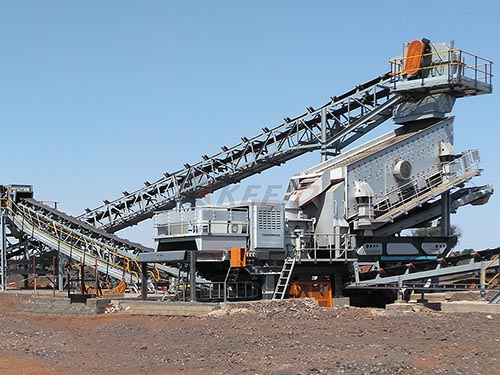
- Design: These units use a high-speed rotor with hammers or blow bars that strike the incoming material and throw it against stationary anvils or breaker plates.
- Crushing Action: The process relies on impact and kinetic energy. The rapid impacts cause the material to fracture along its natural cleavage lines.
- Ideal For: Impactors are better suited for less abrasive materials like limestone and recycled concrete with minimal rebar. They can produce a more uniform grain shape but tend to generate more dust and may wear faster on very hard rock.
Key Applications Across Industries
The ability to process material on-site makes the skid steer rock crusher invaluable across numerous sectors:
- Construction and Demolition (C&D): This is arguably its most impactful application. Instead of hauling away concrete slabs, bricks, and asphalt from demolition sites at great expense, contractors can crush this material into valuable recycled base course (RCA). This RCA can be immediately reused for new foundations, road sub-bases, or backfill, creating a closed-loop recycling system that drastically reduces disposal costs and virgin material purchases.
- Landscaping and Agriculture: For landowners and landscapers dealing with rocky terrain or field clearances; this attachment can turn problematic boulders into useful gravel for driveways; drainage layers; or decorative landscape stone; eliminating;the need;to import costly aggregate.
- Mining and Quarrying: In small-scale mining operations or quarries; it can be used for secondary crushing or processing smaller batches of ore or rock where investing in large-scale crushing equipment is not feasible.
- Road Maintenance and Utility Work: It can process excavated rock and old asphalt directly on-site during road widening or utility trenching projects; providing immediate backfill material that meets compaction specifications.
The Compelling Advantages: Why Choose an On-Site Crusher?
The adoption of skid steer rock crushers is driven by tangible economic and operational benefits:
-
Massive Cost Reduction:
- Elimination of Hauling Costs: Transporting heavy debris to disposal sites or quarries is expensive due to fuel; trucking fees;and tipping fees at landfills.;By crushing on-site; these costs are virtually eliminated.
- Elimination of Material Import Costs: The crushed product becomes a valuable resource; replacingthe needto purchaseand transport new gravel; base material;or drainage stone.
-
Unmatched Efficiency and Time Savings:
- The workflow becomes streamlined: excavate; crush;and place—all within the same confined area.;This eliminates waiting for trucksand multiple handling steps;saving significant project time.
-
Enhanced Versatility:
- It transformsa single machine—the skidsteer—into amobile processing plant.;This versatility maximizes thereturn on investmentfor themachine itself.
-
Environmental Sustainability:
- On-site recycling drastically reduces landfill waste.;It also lowersthe carbon footprint associated withthe transportationof materialsboth intoand outofthe site.;Using recycled aggregate conserves natural virgin resources.
-
Improved Site Accessibility:
- Skid steers are renownedfortheirabilityto operatein tight spaceswhere larger crushing equipment cannot go.;This makes them idealfor urban demolition sites; basement excavations;and remote rural properties.
Critical Considerations Before Implementation
Despite their advantages; integratinga rockcrusherinto your operation requires careful planning:
-
Skid Steer Specifications (The Most Critical Factor): Not all skid steers are created equal.The crusher’s performanceis directly tiedtothe host machine’s capabilities.
- Hydraulic Flow (GPM) & Pressure (PSI): Everycrusher modelhas minimum hydraulic flowand pressure requirementsthat mustbe metbytheskidsteer.Failureto meetthese requirementswill resultin poor performance;jamming,and potentialdamagetoboththeattachmentandthemachine’shydraulicsystem.High-flow systemsare often requiredfor larger crushers.
- Operating Weight & Stability: Rockcrushersare heavy attachments.Itis crucialto ensuretheskidsteerhas sufficientoperating weightandcounterweight(often inthe formof tiresfilledwithfluidorcab-ballast)to handleit safelywithouttipping over.The machine’srated operating capacity(ROC)mustnotbe exceeded.
-
Material Characteristics:
- Hardness & Abrasiveness: Jawcrushersare generallymorerobustfor hardrock.If processing primarily C&D debris;a standardjawcrusheris sufficient.Materialswith high silica contentare highly abrasiveand will acceleratewear partswear.
- Size & Contamination: Mostskidsteercrushershave maximum feed size limitations.Feeding overly large boulders will cause jamming.Materials with excessive rebar; wire;or other metalscan damageinternal componentsand requiremore frequentmaintenance.Some models comewith grizzliesorfinger decks toprescreenfinesand improve efficiency.
-
Maintenance & Operational Costs:
- Wear Parts:Crusher jaws;cheek plates;andeventuallythe main bearingsaresubjecttowear.The costand frequencyof replacingthese partsmustbe factoredintothe operating budget.Regular inspectionis key.
- Hydraulic System Health:The attachment placesa significantdemandon themachine’shydraulicsystem.Keeping hydraulic filterscleanand usingthe correct fluidis paramounttopreventing costly repairs.
4.Operator Training & Safety:
- Crushing operations are inherently dangerous.Strict safetyprotocolsmustbe followed.This includeswearing appropriate PPE(eye/hearing protection);ensuringno personnelare nearthemachineduring operation,and never reachingintothe crushing chamberwhiletheunitis energizedor pluggedin.Comprehensive trainingon clearing jams safelyis essential.
In conclusion,theskidsteerrockcrusherapproachrepresentsa paradigm shiftinsmall-to-medium-scalematerialprocessing.It democratizesthepowerofsize reduction,makingit accessibletocontractorslandownersalike.When pairedwitha correctlysizedskidthatmeetsalltechnicalrequirementsit transformsan expenseintoa profitcenteran obstacleintoa resourceanda logisticalchallengeintoa modelofonsiteefficiency.Itsroleindrivingcosteffectivenessandsustainabilityinmodernprojectswillonlycontinueto growasthetechnologyadvancesfurther
