
The Ok Tedi Mine, located in the remote Star Mountains of Papua New Guinea’s Western Province, represents one of the world’s most significant and controversial copper-gold mining operations. Its scale is monumental, its geology complex, and its environmental impact profound. At the heart of this massive industrial endeavor lies a critical, yet often overlooked, component: the Crusher Pocket. This facility is not merely a piece of machinery but a pivotal choke point in the entire mineral processing chain, where raw geological force is first tamed into manageable material. Understanding the Crusher Pocket requires an appreciation of its function within the broader context of the mine’s unique geology, mining method, and logistical challenges.
To comprehend the necessity and scale of the Crusher Pocket, one must first understand what it processes. The primary ore body mined at Ok Tedi is a porphyry copper-gold deposit, characterized by its low-grade but enormous volume. The current mining activity is focused on the Northern Pit, a vast open-cut excavation.
The material extracted from the pit is a heterogeneous mixture:
The mining process uses massive electric shovels and haul trucks, with payloads often exceeding 200 tonnes per truckload. This run-of-mine (ROM) material, consisting of boulders that can be as large as a small house mixed with finer gravels and clays, is utterly unsuitable for direct processing. It is at this juncture that the Crusher Pocket enters the narrative.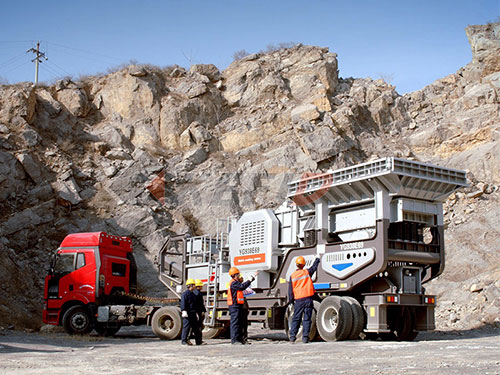
The Crusher Pocket at Ok Tedi is strategically located at or near the edge of the open pit to minimize haulage distances for the enormous trucks. Its primary function is to receive this ROM material and perform primary size reduction—the first and most brutal stage of comminution (the process of breaking solid materials into smaller fragments).
The “pocket” in its name refers to a large, reinforced hopper or bin into which the haul trucks dump their loads. This pocket serves as a surge capacity, ensuring a continuous feed to the crusher itself even during intermittent truck arrivals. From this pocket, a heavy-duty mechanical feeder (such as an apron feeder) meters the material onto a conveyor belt leading directly into the mouth of a primary crusher.
At Ok Tedi, given its immense throughput which can exceed 80,000 tonnes of ore per day, this primary crusher would almost certainly be a Gyratory Crusher. A gyratory crusher consists of a long, spindle-shaped crushing head inside a concave crushing shell. The head gyrates eccentrically within the shell, continuously compressing and breaking the rock against the concave surfaces. This machine is chosen for its high capacity, ability to handle very large feed sizes (often over 1 meter in diameter), and robustness against abrasive and hard rock.
The objective here is singular: to reduce all incoming rock to a manageable top size, typically less than 150-200 mm (6-8 inches). This first stage of crushing does not aim to liberate individual mineral grains but to create a product that can be efficiently transported by conveyor belts to downstream processing facilities—namely,the concentrator plant located approximately 10 kilometers away in Kiunga.
The engineering behind Ok Tedi’s Crusher Pocket is monumental. Every component is built on an immense scale to withstand unimaginable forces.
A unique challenge at Ok Tedi relates directlyto its location.The mine sits in one ofthe wettest places on Earthwith annual rainfall exceeding 10 meters.The ROM materialcan oftenbe soaked,turning clay-rich fractionsinto amuddy,massive substance.This can leadto significant operational issuesattheCrusherPocketincluding:
1.Hang-ups: Where wet,muddy material bridges overthepocketopeningor insidecrusheritselfrefusingto flow.
2.Chute Blockages: On transfer points between feedersand belts.
3.Reduced Throughput: As handling sticky materialis inherently slower.
Managingthis moistureis an ongoing battle requiring careful blendingof dryand wetmaterialfrom different parts ofthepitand potentiallytheuseof additivesor specialized equipmentdesign.
The product fromtheCrusherPocketis notan end product.Itisthebeginningofa longjourney.The now-crushedmaterialis conveyedtoastockpilearea.Fromthereitisfedintotheconcentratorforfurtherprocessingwhichincludes:
No discussionaboutOkTediis completewithoutacknowledgingitsenvironmentallegacy.Theminehasbeenoperatingunderunique circumstancesfollowingthecessationoftailingsdisposalintotheriverin2020afterdecadesofcontroversialpractice.ItiscrucialtonotethatwhiletheCrusherPocketitselfisapoint-sourceofdustandnoise pollutionwhichismanagedthroughstandardindustrycontrolsitsprimaryenvironmentalimpactisindirectbydirectlyenablingthemassivethroughputoftheorebodywhosesubsequentprocessinghasgeneratedsignificantwaste.
In conclusion,theCrusherPocketatOkTediMineisfar morethanjustapieceofequipment.Itisthecriticalgatewaywheregeologyfirstmeetsindustrialengineeringonagargantuanscale.ItsuncompromisingdutyistotransformthemountainousoutputoftheopenpitintoacontrollableflowoffragmentedrockinitiatingaprocessthatultimatelyyieldsvaluablemetalswhileoperatingwithinthecomplexenvironmentalandsocialcontextthatdefinestheOkTedistory.Thisfacilityepitomizestherelentlessscaleandefficiencyrequiredtomoderntrackearth’sresourceshighlightingboththeimperativeforrobustengineeringandtheneedforintegratedenvironmentalstewardshipacrossanoperation’sentirelifecycle
Lorem ipsum dolor sit amet, consectetur adipisicing elit. Consectetur sequi saepe ut sunt eveniet perferendis excepturi, iste obcaecati. Qui tempore hic sed quia soluta obcaecati vel.