
The roller mill crusher stands as a cornerstone of modern industrial processing, representing a significant evolution from the primitive mortar and pestle to highly efficient, precision-engineered machinery. Occupying a critical space between primary crushing and fine grinding, this class of equipment is renowned for its efficiency, control, and relatively low energy consumption compared to alternative comminution methods. This article provides a comprehensive examination of roller mill crushers, delving into their fundamental operating principles, various configurations, key advantages and limitations, and their diverse applications across multiple industries.
At its core, a roller mill crusher operates on the principle of compression and shear forces applied between two or more cylindrical rollers. Unlike impact crushers that utilize hammers or blow bars to shatter material through high-speed impact, roller mills apply a more gradual and controlled force. This fundamental difference is the source of their primary benefits.
The basic process can be broken down into several stages:
This controlled compression mechanism results in a well-defined product size distribution with minimal “fines” (ultra-fine particles) generation if not desired, and significantly lower energy loss in the form of heat and noise compared to impact-based systems.
Roller mill crushers are not a monolithic category; they are designed in various configurations to suit specific material characteristics and product requirements. The main types include:
A. Single Roll Crushers:
This is the simplest form, consisting of one rotating roller against a static crushing plate or jaw. The material is crushed by compression against this plate. While less common for fine reduction, they are effective for heavy-duty primary and secondary crushing of soft to medium-hard materials like coal, petroleum coke, and certain minerals.
B. Double Roll Crushers (or Twin-Roll Crushers):
This is one of the most prevalent designs. It features two parallel, horizontal rollers rotating towards each other. Both rollers can be driven at the same speed (for pure compression crushing) or at different speeds (to introduce a shearing action). Double roll crushers are highly versatile and are used for a wide range of materials from aggregates and coal to medium-hard ores. They offer excellent control over product size and are known for their simplicity and robustness.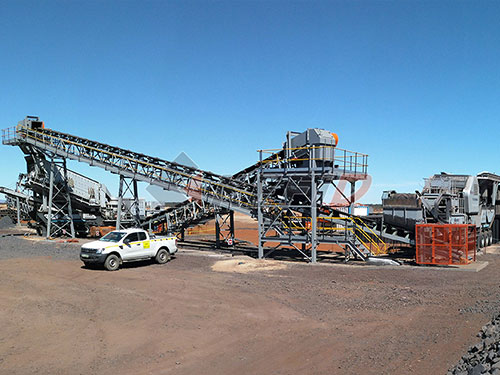
C. Triple Roll Crushers:
These incorporate three rollers in a triangular arrangement. Material is typically crushed between the primary pair of rolls before being fed to a secondary nip between one of the primary rolls and a third roll. This allows for two-stage reduction within a single machine, enabling finer product sizes without requiring an excessively small initial nip which could limit throughput.
D. Four-Roll Crushers:
Essentially two double-roll crushers stacked in one housing, four-roll crushers provide two stages of crushing in sequence. This design is highly effective for producing uniformly sized products from larger feed sizes in a single pass.
E. High-Pressure Grinding Rolls (HPGR):
Representing a technological leap in roller mill design, HPGRs operate with an extremely high inter-particle compressive force—often exceeding 50 MPa and reaching up to 300 MPa or more.
The performanceofarollermillcrusheris governedbyseveral key factors:
Like any technology,
roller millcrusherspossessdistinctstrengthsand weaknesses that must be weighed during equipment selection.
Advantages:
1.High Energy Efficiency: The direct applicationofcompressiveforcewithminimalwasteful motionmakes themsignificantlymore efficientthanmanyimpactorsorballmillsforthesame reductionratio.
2.Precise Product Control: They producea well-gradedproductwithaminimumoffines(ifdesired)andacubicalparticleshape.Thisis highlyvaluedinaggregateproductionforconcreteandasphalt.
3.Low Wear Costs: Whilewear doesoccur,
it isoftenless severethaninimpactcrushersbecause
theactionismoregradual.Wear-resistant alloysandautomatedwelding systemsfurther extendroll life.InHPGRs,theinter-particlecommutationreducesdirectcontactwiththerollsurface,therebyreducingwearratescomparedtotheforcesinvolved.
4.Quiet Operation: Theabsenceofhigh-speedimpactresultsinlowernoiselevels,makingthem more suitableforplantslocatednearurbanareas.
5.Dust Generation: Controlledcompressiontypicallygenerateslessdustthanhigh-speedimpactcrushing,aidinginplantcleanlinessandenvironmentalcompliance.
Limitations:
1.Limited Reduction Ratio: Traditionalrollercrushershavealowerreductionratiocomparedtojaworcone crushers.Theyarebestsuitedforsecondaryortertiarycrushingstagesafterprimarysize reductionhasoccurred.(Note:HPGRshaveimprovedthisgreatly).
2.Sensitivityto Contaminants: Theyare proneto damageby tramp metalorotheruncrushableobjects,
necessitatingeffectivemetaldetectionandrejectionsystems.Springorhydraulicrelievesystemsaremandatoryforsafeguarding.
3.Not Ideal for All Materials: Theyare generallynot suitablefor veryhard,
abrasivematerials(e.g.,granite,taconite)insmoothrollconfigurationsastheywillcauseexcessiverollwearwithoutachievingthedesiredbreakage.Stickyormoistclay-likematerialscanchokethenip,causingoperationalissuesunlessdifferentialspeedisemployed.
The versatilityofrollermillcrushersmakesthemindispensableacrossawidespectrumofindustries:
Miningand Minerals Processing:
Cement Manufacturing:
AggregateProduction:
In conclusion,the rollermillcrusherisamatureyetcontinuouslyevolvingtechnologythatoffersablendofefficiency ,control ,andreliability .Fromthesimplicityofthedoublerolldesignfortheaggregate sectortothecutting-edgehigh-pressure systemstransforminghardrockmining ,these machinesremainfundamentaltoolsinindustrialprocessing .Understandingtheirprinciples ,configurations ,andinherenttrade-offsiscrucialforengineersandoperatorstooptimizetheircomminutioncircuits ,reduceoperatingcosts ,achieveenvironmentaltargetsthroughlowerenergyuse ,ensuringthatthisclassiccrushercontinuestoplayavitalroleinglobalindustrysupplychainsformanyyearstocome
Lorem ipsum dolor sit amet, consectetur adipisicing elit. Consectetur sequi saepe ut sunt eveniet perferendis excepturi, iste obcaecati. Qui tempore hic sed quia soluta obcaecati vel.