
Title: The Evolution and Technical Superiority of RoHS-Compliant Stone Quarry Crushing Plants: A Comprehensive Analysis of Factory-Direct Pricing and Industrial Compliance
Introduction
In the modern era of heavy machinery and mineral processing, the term “compliance” has transcended mere regulatory checkboxing to become a core engineering philosophy. Among the most critical compliance frameworks affecting the quarrying and aggregate production sector is the Restriction of Hazardous Substances (RoHS) directive. Originally enacted by the European Union (Directive 2011/65/EU and its subsequent amendments), RoHS restricts the use of specific hazardous materials—including lead, mercury, cadmium, hexavalent chromium, polybrominated biphenyls (PBB), and polybrominated diphenyl ethers (PBDE)—in electrical and electronic equipment. While RoHS is traditionally associated with consumer electronics, its application has expanded into industrial machinery, including the complex electrical, hydraulic, and control systems embedded in modern stone crushing plants.
This article provides a professional, objective, and deeply technical examination of RoHS-compliant stone quarry crushing plants, with a specific focus on the economic and operational advantages of factory-direct pricing. We will dissect the engineering implications of RoHS compliance, the structural and mechanical design of modern crushing systems, the environmental and safety benefits, and the critical factors that distinguish a genuine factory-price offering from a mere distributor discount.
Section 1: Understanding RoHS Compliance in the Context of Quarry Machinery
To appreciate the significance of RoHS compliance in a stone crushing plant, one must first understand that a modern crushing facility is not merely a collection of steel jaws and rotating cones. It is an integrated mechatronic system. A typical stationary or mobile crushing plant comprises:
Every single electrical component—from the smallest capacitor on a PLC board to the large copper windings in a 250 kW motor—must be free from the six primary RoHS substances (and the four additional phthalates added in EU Directive 2015/863). For a crushing plant manufacturer, achieving RoHS compliance requires a complete overhaul of the supply chain. It mandates that all sub-suppliers of electrical enclosures, sensors, and cabling provide certified materials. This is not a trivial task. Non-compliant solder (using lead) or PVC insulation containing certain plasticizers can render an entire plant non-compliant, leading to import bans in regulated markets.
Section 2: The Engineering Architecture of a RoHS-Compliant Crushing Plant
A RoHS-compliant stone quarry crushing plant is engineered with a dual focus: mechanical robustness and electrical purity. Let us examine the key subsystems.
2.1 Primary Crushing Unit (Jaw Crusher)
The jaw crusher is the workhorse of the quarry. Its frame is typically fabricated from high-grade steel plates (Q345B or equivalent) with stress-relieving heat treatment. The crushing chamber is lined with manganese steel (Mn13Cr2 or Mn18Cr2) for high abrasion resistance. RoHS compliance here does not affect the metallurgy but impacts the hydraulic system’s control valves and the proximity sensors that monitor jaw position. These sensors must use RoHS-compliant seals and internal electronics.
2.2 Secondary Crushing (Cone Crusher)
Modern cone crushers utilize hydraulic clearing systems and automatic tramp iron release. The control system relies on pressure transmitters and temperature sensors. In a RoHS-compliant plant, these instruments must be certified. Furthermore, the electric motors driving the eccentric bushing are often equipped with soft starters or VFDs. The VFDs themselves contain capacitors and semiconductor devices that must be RoHS-compliant. This is particularly challenging because high-power capacitors historically used lead-based ceramic dielectrics. Advanced manufacturers now use Class 2 X7R or C0G dielectrics that are lead-free.
2.3 Screening and Conveying Systems
Vibrating screens use eccentric shafts and counterweights. Their motors are connected via flexible couplings. The entire screening process is monitored by speed sensors and vibration monitors. All cabling must be halogen-free and RoHS-compliant, using cross-linked polyethylene (XLPE) insulation instead of traditional PVC where phthalates are present. The conveyor system’s belt rip detectors and pull-cord switches are also electronic devices that require RoHS certification.
2.4 The Electrical Control Room
This is the heart of RoHS compliance. The control room houses the main MCC (Motor Control Center), PLC racks, and UPS systems. Every circuit breaker, contactor, and terminal block must be RoHS-compliant. Moreover, the solder used on the PCBs must be lead-free (typically SAC305 alloy – Tin, Silver, Copper). The implications are significant: lead-free solder has a higher melting point and different thermal expansion characteristics, requiring more precise PCB manufacturing processes to prevent micro-cracks.
Section 3: Factory Price – The Economic Reality of Direct Procurement
The phrase “factory price” is often used loosely in the heavy machinery industry. However, in the context of a RoHS-compliant stone quarry crushing plant, a genuine factory-direct price offers distinct economic advantages that go beyond the absence of a middleman.
3.1 Elimination of Distribution Margins
Traditional distribution channels involve regional dealers who add 15% to 30% to the ex-factory price to cover their warehousing, marketing, and after-sales service overheads. By purchasing directly from the manufacturing plant, the quarry operator eliminates these margins. However, it is crucial to verify that the “factory” is indeed the original equipment manufacturer (OEM) and not a trading company posing as a factory. A genuine factory will have its own welding workshops, machining centers, and assembly lines.
3.2 Customization at Cost
When buying from a factory, the buyer can request specific configurations—such as a particular voltage (e.g., 380V/50Hz vs. 460V/60Hz), specific conveyor lengths, or a customized dust suppression system—without the dealer’s “customization fee.” The factory can adjust the Bill of Materials (BOM) directly, and the price difference reflects only the actual material and labor costs, not a markup for “special orders.”
3.3 Spare Parts and Lifecycle Cost
Factory-direct pricing also applies to spare parts. A RoHS-compliant plant requires specific replacement parts, such as RoHS-certified contactors or lead-free PCB boards for the PLC. A factory can supply these at a fraction of the cost of a dealer. Moreover, the factory can provide technical documentation, including RoHS declarations of conformity, which are essential for audits in regulated markets.
3.4 Hidden Costs of Non-Compliance
It is tempting to purchase a cheaper, non-compliant plant from an unverified source. However, the economic risk is severe. If a shipment is inspected at the port of entry (e.g., in the EU or California) and found to contain RoHS-restricted substances, the entire consignment can be detained, destroyed, or returned at the buyer’s expense. Additionally, the buyer may face legal penalties. Therefore, the “factory price” of a RoHS-compliant plant is not a premium; it is an insurance policy against catastrophic supply chain failure.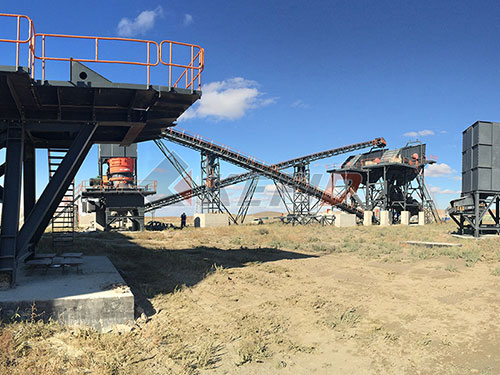
Section 4: Technical Verification of RoHS Compliance
How does a professional buyer verify that a stone crushing plant is genuinely RoHS-compliant? This is a critical due diligence process.
4.1 Material Declarations and Test Reports
The manufacturer must provide a full Material Declaration per IEC 62474. This document lists all substances in each homogeneous material of the product. Additionally, the manufacturer should provide third-party test reports from accredited laboratories (e.g., SGS, TÜV, Bureau Veritas) using analytical methods such as X-ray fluorescence (XRF) spectrometry and ICP-OES (Inductively Coupled Plasma Optical Emission Spectrometry). These reports must cover not just the final assembly but also the sub-components like motors, sensors, and wiring.
4.2 Technical File and Declaration of Conformity
A reputable factory will maintain a Technical File that includes design drawings, component lists, and risk assessments. The Declaration of Conformity (DoC) is a legal document signed by the manufacturer stating that the product meets all applicable directives. For RoHS, this is the EU Declaration of Conformity. The buyer should request a copy of the DoC for the specific model of the crushing plant.
4.3 Traceability of the Supply Chain
RoHS compliance is only as strong as the weakest link in the supply chain. The factory must demonstrate that its suppliers of electrical components are also RoHS-compliant. This is often evidenced by supplier certificates and incoming material inspection records. A professional factory will have a dedicated compliance engineer or a third-party consultant auditing the supply chain annually.
Section 5: Operational and Environmental Benefits of RoHS-Compliant Plants
Beyond legal compliance, there are tangible operational benefits to using a RoHS-compliant crushing plant.
5.1 Improved Reliability of Electronics
Lead-free solder, while challenging to manufacture, is actually more reliable in high-vibration environments when properly formulated (e.g., SAC305). This is because the tin-silver-copper alloy has superior mechanical strength compared to traditional lead-tin solder. In a quarry, where constant vibration is a given, this translates to fewer PCB failures and less downtime.
5.2 Worker Safety and Environmental Stewardship
RoHS compliance ensures that workers who maintain the electrical panels are not exposed to lead dust or mercury vapors during soldering or component replacement. Furthermore, when the plant reaches its end-of-life, the electronic waste is easier to recycle because it does not contain hazardous heavy metals. This aligns with the global push for circular economy principles in the mining and construction sectors.
5.3 Enhanced Thermal Management
RoHS-compliant capacitors and semiconductors often have better thermal stability. In a crushing plant operating in a hot climate, this reduces the risk of thermal runaway in the control cabinets. Many modern RoHS-compliant plants also incorporate advanced cooling fans with RoHS-compliant brushless DC motors, which are more energy-efficient.
Section 6: The Factory Price Structure – A Detailed Breakdown
To understand what constitutes a fair factory price for a RoHS-compliant stone quarry crushing plant, one must analyze the cost structure. A typical 200-250 tons per hour (TPH) stationary crushing plant (jaw + cone + screen) has an ex-factory price range of USD 350,000 to USD 600,000, depending on automation level and brand. The factory price includes:
A factory-direct price eliminates the dealer’s 20% margin, but the buyer must also account for logistics, import duties, and installation. A professional factory will provide a transparent cost breakdown, allowing the buyer to see exactly where the RoHS compliance costs are allocated.
Section 7: Challenges in Manufacturing RoHS-Compliant Quarry Plants
It is important to acknowledge the technical challenges that manufacturers face, as this underscores the value of a genuine factory.
7.1 High-Power Electronics
The main crusher motors can be 200-400 kW. The VFDs used to start these motors are massive. The IGBT (Insulated Gate Bipolar Transistor) modules inside these VFDs contain high-voltage capacitors. Finding RoHS-compliant high-voltage capacitors with the required ripple current rating is difficult. Many manufacturers resort to custom-built capacitor banks.
7.2 Harsh Environment vs. Sensitive Electronics
RoHS-compliant electronics are generally more sensitive to humidity and corrosive dust. In a quarry, dust is ubiquitous. Therefore, the factory must design the electrical enclosures with IP65 or IP66 ratings and use pressurized cabinets with filtered air intake. This adds to the cost but is essential for reliability.
7.3 Global Regulatory Divergence
While the EU enforces RoHS, other markets (e.g., China’s RoHS, Korea’s RoHS) have similar but not identical requirements. A factory that exports globally must maintain multiple compliance files. A professional factory will design its plants to meet the most stringent standard (EU RoHS) to ensure universal marketability.
Section 8: How to Select a Reliable Factory for Direct Purchase
Given the complexity, the selection of a factory is a strategic decision. Here are objective criteria:
Section 9: Future Trends – RoHS and the Green Quarry
The future of quarry machinery is inextricably linked to sustainability. RoHS is just the first step. The next directives will likely address energy efficiency (EcoDesign) and carbon footprint. A RoHS-compliant plant is the foundation for a “green quarry” that uses electric drives instead of diesel, solar-assisted power systems, and fully recyclable structural components. Factories that already embrace RoHS are better positioned to adapt to these future regulations.
Conclusion
A RoHS-compliant stone quarry crushing plant is not a luxury; it is a technical necessity for any operator seeking access to international markets, protecting worker health, and ensuring long-term operational reliability. The “factory price” for such a plant is a reflection of advanced engineering, rigorous supply chain management, and a commitment to environmental stewardship. By purchasing directly from a certified factory, the quarry operator gains not only a cost advantage but also a transparent partnership with the entity that designed and built the machinery. In an industry where downtime costs thousands of dollars per hour, the combination of RoHS compliance and factory-direct procurement represents the highest standard of professional diligence. The investment in such a plant is an investment in operational sovereignty, regulatory security, and sustainable profitability.
If you have any questions about our products, please feel free to contact us. We take all inquiries and suggestions very seriously.