
ROHS Compliant Stone Crusher Plant Manufacturers: Engineering Sustainability and Regulatory Precision
The global construction and mining industries are undergoing a paradigm shift, driven not only by the demand for aggregate materials but also by stringent environmental and safety regulations. Among these, the Restriction of Hazardous Substances (RoHS) directive—originally a European Union regulation (2011/65/EU and its amendments)—has evolved into a de facto international benchmark for electrical and electronic equipment. While RoHS is traditionally associated with consumer electronics, its principles are increasingly being applied to heavy industrial machinery, including stone crusher plants. This article provides a professional, objective, and comprehensive examination of RoHS-compliant stone crusher plant manufacturers, focusing on their compliance strategies, material selection, manufacturing processes, certification challenges, and the broader implications for the aggregate industry.
1. Understanding RoHS in the Context of Heavy Machinery
RoHS restricts the use of ten hazardous substances: lead (Pb), mercury (Hg), cadmium (Cd), hexavalent chromium (Cr VI), polybrominated biphenyls (PBB), polybrominated diphenyl ethers (PBDE), and four phthalates (DEHP, BBP, DBP, DIBP). The maximum allowable concentration is 0.1% by weight in homogeneous materials for most substances, and 0.01% for cadmium.
For a stone crusher plant—which comprises a complex assembly of mechanical components, hydraulic systems, electric motors, control panels, sensors, and wiring—RoHS compliance is not a simple checkbox. The plant’s electrical and electronic subassemblies (e.g., variable frequency drives, PLC controllers, circuit breakers, and cable harnesses) fall squarely within RoHS scope. However, the mechanical parts (e.g., jaw plates, crusher mantles, conveyor frames) are generally exempt unless they contain electronic components or surface coatings with restricted substances.
Thus, a RoHS-compliant stone crusher plant manufacturer must ensure that every electrical and electronic component, from the smallest capacitor to the largest motor, meets the directive’s thresholds. This requires a deep, auditable supply chain.
2. The Compliance Architecture: From Design to Delivery
RoHS compliance is not an after-sale modification; it is a design philosophy. Leading manufacturers integrate compliance at the conceptual stage. The following are the core pillars of their approach:
2.1. Material Declaration and Supply Chain Traceability
A RoHS-compliant manufacturer maintains a comprehensive Bill of Materials (BOM) for every crusher plant. Each component is accompanied by a Material Declaration (MD) from the original supplier, specifying the concentration of restricted substances. For critical components—such as solders in control boards, zinc-nickel plating on fasteners, or PVC insulation on cables—manufacturers demand third-party test reports (e.g., IEC 62321 series) rather than relying solely on supplier self-declarations.
2.2. Homogeneous Material Testing
The challenge lies in the “homogeneous material” definition. A single cable may consist of copper conductor (exempt), PVC insulation (must be tested), and a metal connector (tested separately). Manufacturers employ X-ray fluorescence (XRF) analyzers for rapid screening and, for ambiguous cases, send samples to accredited laboratories for wet chemical analysis (ICP-OES or ICP-MS). This rigorous testing ensures that no restricted substance is hidden in plating, pigments, or stabilizers.
2.3. Substitution Engineering
The most progressive manufacturers do not merely test and comply; they actively substitute hazardous materials. For example:
These substitutions do not compromise mechanical performance. In fact, modern lead-free solders exhibit superior thermal fatigue resistance, and trivalent chromium offers comparable corrosion protection when properly sealed.
3. Mechanical Components: The Grey Area of RoHS
It is critical to clarify that RoHS does not apply to the bulk of a crusher’s wear parts—such as manganese steel jaw plates, high-chrome impact bars, or cast iron frames—unless they are coated or plated with restricted substances. However, two exceptions warrant attention:
Therefore, a truly RoHS-compliant stone crusher plant is one where even the paint on the chassis has been verified.
4. Certification and Documentation: The Objective Proof
Manufacturers cannot self-certify RoHS in a vacuum. They must provide a Declaration of Conformity (DoC) and maintain a Technical File that includes:
Additionally, many manufacturers pursue IECQ QC 080000 certification—the international standard for hazardous substance process management. This certification demonstrates that the manufacturer has a systematic, auditable process for controlling hazardous substances, not just a one-time test result.
For the end user (e.g., a European quarry operator or a Middle Eastern infrastructure contractor), requesting the following documents is standard practice:
5. Leading Manufacturing Practices in RoHS-Compliant Crusher Plants
While no single global manufacturer dominates the RoHS niche, several industry leaders have integrated RoHS into their broader ESG (Environmental, Social, Governance) strategies. Their practices include:
5.1. Modular Electrical Houses
Instead of integrating control systems directly onto the crusher frame, many manufacturers now offer pre-fabricated, climate-controlled electrical houses. These are built in a controlled environment where RoHS compliance is easier to monitor. All internal wiring, busbars, and PLC racks are sourced from RoHS-certified suppliers (e.g., Siemens, Schneider Electric, ABB). This modularity also simplifies future upgrades and end-of-life recycling.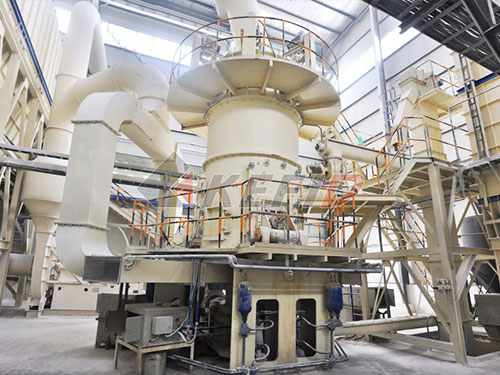
5.2. Smart Monitoring and Predictive Maintenance
RoHS-compliant plants often feature IoT-enabled sensors (vibration, temperature, oil quality) that transmit data to a central dashboard. These sensors are battery-powered or low-voltage, and their PCBs are manufactured with lead-free processes. The benefit is twofold: reduced hazardous waste and enhanced operational efficiency.
5.3. Closed-Loop Recycling of Electronic Waste
A responsible manufacturer offers a take-back program for obsolete control modules. Under the WEEE (Waste Electrical and Electronic Equipment) directive—closely linked to RoHS—manufacturers ensure that end-of-life electronics are dismantled, and restricted substances are extracted or neutralized. This circular approach is a differentiator in tenders for government-funded infrastructure projects.
6. Challenges and Limitations: An Objective View
Despite the clear benefits, RoHS compliance in stone crusher plants is not without challenges:
7. The Future: RoHS 2.0 and Beyond
The European Commission is continuously reviewing the RoHS directive. Future amendments may include:
Proactive manufacturers are already designing for “future-proof” compliance by using material databases that track not only RoHS but also REACH (Registration, Evaluation, Authorisation and Restriction of Chemicals) and Conflict Minerals reporting.
8. Conclusion: Selecting a RoHS-Compliant Manufacturer
For procurement managers, engineers, and project owners, the selection of a RoHS-compliant stone crusher plant manufacturer should be based on objective, verifiable criteria:
In conclusion, RoHS-compliant stone crusher plant manufacturers represent the vanguard of sustainable heavy industry. They do not merely comply with a regulation; they embed a culture of chemical safety, traceability, and environmental stewardship into every weld, every wire, and every circuit board. As global infrastructure spending accelerates—particularly in renewable energy, high-speed rail, and urban development—the demand for such compliant machinery will only intensify. The manufacturers who invest today in rigorous RoHS processes will not only avoid regulatory penalties but will also gain a competitive edge in markets that value transparency and long-term environmental responsibility. For the buyer, the message is clear: demand proof, not promises. RoHS compliance is a technical, documentable achievement—and the best manufacturers are proud to show their work.
If you have any questions about our products, please feel free to contact us. We take all inquiries and suggestions very seriously.