
In the contemporary landscape of heavy industrial manufacturing and metal production, the imperative to balance operational efficiency with stringent environmental and health standards is paramount. At the intersection of this challenge lies a critical piece of equipment: the ROHS Compliant Slag Crusher Plant. An ODM (Original Design Manufacturer) specializing in this niche represents more than just a machinery supplier; it is a strategic partner in enabling sustainable, compliant, and economically viable material recovery processes. This article delves into the technical intricacies, regulatory imperatives, design philosophy, and market significance of partnering with a professional ODM manufacturer for ROHS-compliant slag crushing solutions.
Slag: A by-product of smelting and metal refining processes (e.g., steel, copper, lead), slag is a complex mixture of silicates, metal oxides, and other compounds. Historically treated as waste, modern practices recognize it as a valuable secondary raw material. Processed slag finds applications in road construction aggregates, cement clinker production (slag cement), soil conditioning, and even as raw feed back into metallurgical processes.
Slag Crusher Plant: This is not a single machine but an integrated system designed to reduce large chunks of cooled slag into uniformly sized granules or powder. A typical plant includes:
ROHS Compliance: The Restriction of Hazardous Substances Directive (2002/95/EC) is a European Union regulation that restricts the use of specific hazardous materials in electrical and electronic equipment (EEE). While slag itself is not an electronic product, the crusher plant’s electrical and control systems fall squarely under ROHS purview. Compliance mandates that these systems contain minimal levels of lead (Pb), mercury (Hg), cadmium (Cd), hexavalent chromium (CrVI), polybrominated biphenyls (PBB), polybrominated diphenyl ethers (PBDE), bis(2-ethylhexyl) phthalate (DEHP), butyl benzyl phthalate (BBP), dibutyl phthalate (DBP), and diisobutyl phthalate (DIBP).
An ODM manufacturer goes beyond simple fabrication. It engages in Original Design Manufacturing—designing, engineering, prototyping, testing, and producing complete plants based on the client’s performance requirements and site-specific parameters while owning the intellectual property of the design. For ROHS-compliant slag crusher plants, this model offers distinct advantages:
The design process at a leading ODM manufacturer is governed by dual pillars: mechanical robustness and regulatory adherence.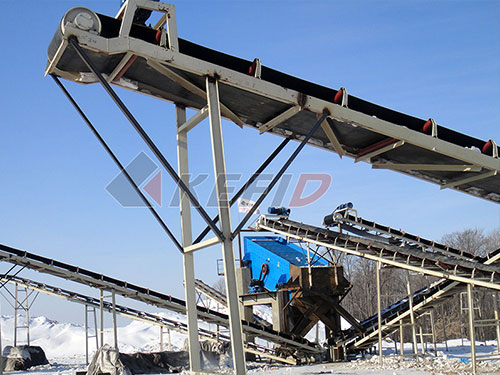
A. Material Selection & Supply Chain Vetting:
The foundation lies in procuring components from certified suppliers All wiring insulation connectors printed circuit boards solders relays transformers and even paints coatings on control panels must be accompanied by full material declarations MDSs certificates of compliance CoC The ODM must establish a verifiable audit trail
B. System Isolation & Contamination Prevention:
Designs often incorporate physical isolation between crushing zones which may contain trace elements of restricted substances from the slag itself and the plant’s clean electrical systems Sealed control rooms positive pressure environments protected cable conduits are standard features to prevent cross-contamination by dust
C. Energy Efficiency & Sustainable Design:
ROHS aligns with broader Eco-Design principles Modern ODM designed plants integrate high efficiency IE3 or IE4 class electric motors variable frequency drives VFDs for optimal power use energy recovery systems on conveyors This reduces overall environmental footprint complementing the hazardous substance restrictions
D. Lifecycle Management & Documentation:
A key output alongside the physical plant is comprehensive technical documentation This includes detailed compliance files test reports risk assessments disassembly instructions for end-of-life recycling ensuring responsible stewardship throughout the product lifecycle
Partnering with such a specialized ODM manufacturer delivers tangible strategic benefits:
ODM manufacturers face continuous challenges:
Innovation addresses these challenges through:
A ROHS Compliant Slag Crusher Plant ODM Manufacturer embodies convergence industrial engineering ecological responsibility regulatory acumen In transforming waste valuable resource plays crucial role circular economy journey does so framework prioritizes human environmental health Through deep integration design meticulous supply chain management forward-thinking customization provides clients not just machine but comprehensive sustainable processing solution As world continues tighten controls hazardous substances demand such specialized technologically advanced partners will only grow making them indispensable enablers greener more responsible industrial future
Lorem ipsum dolor sit amet, consectetur adipisicing elit. Consectetur sequi saepe ut sunt eveniet perferendis excepturi, iste obcaecati. Qui tempore hic sed quia soluta obcaecati vel.