The ROHS Compliant JC5000 Jaw Crusher: A Technical and Commercial Analysis
In the demanding world of mineral processing, aggregate production, and laboratory sample preparation, the jaw crusher remains a cornerstone of size reduction technology. The pursuit of robust performance is now inextricably linked with environmental responsibility and material safety. This is where the ROHS Compliant JC5000 Jaw Crusher distinguishes itself, representing a significant evolution in crusher design that marries heavy-duty comminution with stringent regulatory compliance. This article provides a detailed technical and commercial examination of this equipment, essential for informed procurement decisions.
Understanding ROHS Compliance in Heavy Machinery
The Restriction of Hazardous Substances (ROHS) Directive is a European Union regulation that restricts the use of specific hazardous materials in electrical and electronic equipment (EEE). While traditionally associated with consumer electronics, its principles have permeated industrial machinery, driven by global supply chain demands, end-user safety policies, and environmental stewardship.
For a machine like the JC5000 Jaw Crusher, ROHS compliance signifies that all applicable electrical components—motor windings, switchgear, wiring insulation, control systems, sensors, and painted finishes containing electronic elements—are free from restricted substances above permissible thresholds. These include lead (Pb), mercury (Hg), cadmium (Cd), hexavalent chromium (CrVI), polybrominated biphenyls (PBB), and polybrominated diphenyl ethers (PBDE).
This compliance offers tangible benefits:
- Worker Safety: Reduces exposure risks during installation, maintenance, and recycling.
- End-Product Purity: Critical for applications like high-purity ceramic materials or glass recycling where contamination must be avoided.
- Global Market Access: Facilitates export to regulated markets like the EU without trade barriers.
- Environmental Credentials: Aligns with corporate sustainability goals and reduces hazardous waste streams.
Technical Specifications & Design Philosophy of the JC5000
The JC5000 is engineered as a high-capacity, rugged jaw crusher designed for primary crushing of hard rock, ores, and ferro-alloys. Its ROHS-compliant status is an integrated feature, not an afterthought.
1. Crushing Chamber & Mechanics:
At its heart is a massive jaw chamber with a feed opening typically around 500mm x 300mm (subject to manufacturer specification). It employs an aggressive elliptical crushing motion that delivers high reduction ratios—often up to 10:1 or more—in a single pass. The kinematics are designed to maximize nip angle and throw at the inlet for effective grip on large feed material (~250mm), transitioning to a powerful crushing stroke at the bottom to ensure consistent product sizing.
2. Robust Construction:
The frame is a heavy-duty fabricated steel structure, stress-relieved for durability. The fixed jaw and moving jaw are constructed from high-grade manganese steel castings or equivalent wear-resistant alloys. While these mechanical wear parts themselves are not “electrical” components and fall outside ROHS scope per se, their reliable performance underpins the machine’s efficiency.
3. The ROHS-Compliant Drive & Control System:
This is the core of its compliance.
- Motor: A high-efficiency, three-phase electric motor designed with ROHS-compliant materials in its construction.
- Starter & Protection: The integrated motor starter (often a soft-start or Direct-On-Line configuration) features ROHS-compliant contactors, relays, and circuit breakers.
- Control Panel: All printed circuit boards (PCBs), wiring harnesses with halogen-free insulation, human-machine interface (HMI) displays, and push buttons are manufactured to meet restricted substance limits.
- Lubrication & Hydraulics: Any electrically powered lubrication pumps or hydraulic adjustment systems adhere to the same standards.
4. Key Features for Operational Excellence:
- Hydraulic Toggle System: Allows for quick adjustment of the closed-side setting (CSS) under load for precise product control and clearing of blockages safely.
- Heavy-Duty Roller Bearings: Utilize large-diameter spherical roller bearings in dust-tight housings for reliability under shock loads.
- Safety Mechanisms: Includes non-ROHS mechanical elements like toggle plates designed as sacrificial parts to protect the main frame from uncrushable material but integrated with electrical safety interlocks that are ROHS compliant.
Commercial Considerations & Quotation Breakdown
A quotation for a ROHS Compliant JC5000 Jaw Crusher is more than just a base machine price; it reflects the value of specialized engineering and compliant sourcing.
Typical Quotation Structure:
- Base Machine Price: Includes the ROHS-compliant JC5000 crusher assembly with standard motor and starter.
- Optional Features Cost:
- Different liner profiles (e.g., corrugated vs. smooth).
- Integrated dust extraction ports or enclosures.
- Advanced automation packages (e.g., CSS monitoring via sensors).
- Special skid-mounted or modular designs for easier installation.
- Shipping & Insurance: Significant due to the machine’s weight (often exceeding 15 tonnes).
- Installation & Commissioning Services: Often offered as an optional but recommended line item.
- Spare Parts Package: Initial set of wear parts (jaw plates, toggle plates) which are mechanically consumable but may be paired with compliant spare electrical components.
Cost Drivers:
- Compliance Premium: Sourcing specialized electrical components can incur a 5-15% premium over standard industrial parts.
- Customization Level: Site-specific modifications impact final cost.
- Regional Certification Requirements: Costs for third-party verification or specific national standards add-on certifications.
Target Applications & Market Positioning
The ROHS Compliant JC5000 is not just for environmentally conscious companies; it is technically necessary for specific sectors:
- Advanced Materials Processing: Crushing battery materials (lithium compounds), technical ceramics, or semiconductor feedstock where metallic contamination must be minimized.
- Recycling Facilities: Processing electronic waste (e-waste) or specific metal alloys where preventing additional hazardous substance introduction is crucial for downstream recovery purity.
- Government & Research Labs: Institutions with mandatory green procurement policies requiring all equipment meet strict environmental standards.
- Multinational Mining & Aggregate Firms: Companies operating globally who standardize on equipment that meets the highest regulatory bar across all jurisdictions.
Comparative Advantages & Potential Limitations
Advantages:
- Regulatory Future-Proofing: Ensures long-term operational legality in tightening global markets.
- Enhanced Corporate Social Responsibility (CSR) Profile: A tangible asset in sustainability reporting.
- Reduced Lifecycle Liability: Simplifies end-of-life decommissioning and recycling/disposal processes by minimizing hazardous content.
- Maintains Core Performance: Delivers the same high throughput (>200 tonnes per hour depending on material and CSS) and ruggedness as non-compliant counterparts without performance sacrifice.
Considerations:
- Higher Initial Investment. The compliance premium must be justified by operational needs or policy mandates.
- Component Sourcing Lead Times. In some cases, specialized compliant parts may have longer lead times than standard industrial stock items.
- Potential Misconception: It does not mean every single component in the crusher is free of all heavy metals; it applies specifically to defined substances in electrical/electronic sub-assemblies. Wear parts like manganese jaws contain alloys outside this scope but are handled differently in operational safety protocols.
Conclusion
The ROHS Compliant JC5000 Jaw Crusher represents a sophisticated convergence of brute-force mechanical engineering and precise environmental material science. It answers a growing need in industry where performance cannot be decoupled from responsibility.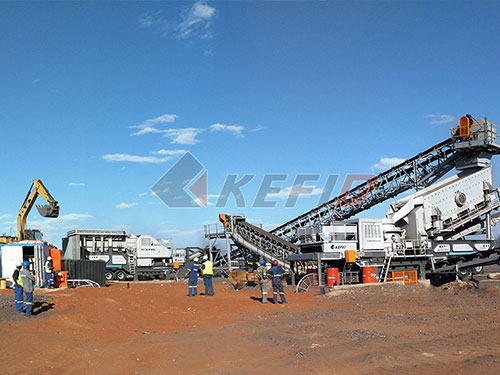
When requesting a quotation for this machine, buyers should engage in detailed technical dialogue with suppliers, explicitly confirming:
1)The scope of compliance certification provided,
2)A detailed bill of materials highlighting compliant components,
3)After-sales support availability for compliant spare parts,
4)And performance guarantees under intended operating conditions。
Ultimately, investing in such equipment transcends mere regulatory checkbox ticking; it signifies an investment in sustainable operations, global market agility,and worker safety—positioning operations at the forefront of modern, responsible mineral processing technology。 For applications where purity, safety,and global standards are paramount,the technical specifications coupled with its compliant design make it not just an option,but often an imperative choice。
