A Comprehensive Guide to Rock Crushers for Sale in Australia
The Australian mining, quarrying, and construction industries are foundational to the nation’s economy, driving infrastructure development and resource export. At the heart of these sectors lies a critical piece of equipment: the rock crusher. The process of selecting and purchasing the right rock crusher is a significant capital decision, requiring a deep understanding of machine types, applications, local conditions, and the market landscape. This article provides a detailed, objective overview for any business or individual considering rock crushers for sale in Australia.
Understanding the Core Function: What is a Rock Crusher?
A rock crusher is a machine designed to break large rocks into smaller pieces, such as gravel, sand, or rock dust. This process, known as comminution, is essential for several reasons:
- Size Reduction: Transforming blasted or naturally large rock into usable aggregate sizes.
- Liberation: In mining, crushing is the first step to liberating valuable minerals from waste rock.
- Material Reclamation: Recycling construction and demolition waste (e.g., concrete and asphalt) for reuse.
- Preparation for Further Processing: Creating a uniformly sized feed for grinding mills or other beneficiation processes.
The choice of crusher is dictated by the material’s properties (hardness, abrasiveness, silica content), the required final product size and shape, and the operational context (stationary vs. mobile).
The Australian Context: Unique Operational Challenges
Australia presents a distinct set of challenges that directly influence crusher selection:
- Vast Distances and Remote Sites: Mobile crushing solutions are often preferred due to their ability to be transported between remote mine sites or regional quarries without major disassembly.
- Diverse Geology: From the hard, abrasive granites of Western Australia to the softer sandstones of the eastern seaboard, crushers must be matched to material characteristics. High-abrasion materials demand different wear parts and crushing technologies than brittle, low-silica rocks.
- Stringent Regulations: Australia has strict workplace health and safety (WHS) and environmental regulations. Dust suppression systems, noise control measures, and guarding are not optional but mandatory considerations.
- High Operating Costs: With high fuel prices and labour costs, efficiency—measured in tonnes per hour (TPH) per litre of fuel—and automation are key economic drivers.
A Detailed Breakdown of Crusher Types Available
The market offers two primary categories: Stationary and Mobile Crushers.
1. Stationary Crushing Plants
These are permanent installations typically used in large-scale quarries or mines with long-life reserves. They are characterized by high capacity and efficiency.
- Jaw Crushers: These are primary crushers that use compressive force. A fixed jaw and a moving jaw create a “V” cavity where rock is crushed. Ideal for hard, abrasive materials. Their simplicity and robustness make them a cornerstone of any primary crushing station.
- Gyratory Crushers: Also primary crushers, these are used for very high-capacity applications (e.g., large iron ore or copper mines). They consist of a concave surface and a conical head; both surfaces are typically lined with manganese steel. They are more expensive than jaw crusers but can handle much larger feed sizes and higher throughputs.
- Cone Crushers: These are secondary or tertiary crushers that provide further reduction after the primary stage. They work by compressing rock between a rotating mantle and a stationary concave liner. Cone crushers are excellent for producing well-shaped cubical products and are essential for producing high-quality aggregate for asphalt and concrete.
- Impact Crushers (Horizontal Shaft Impactor – HSI & Vertical Shaft Impactor – VSI): These crushers use impact rather than compression to break rock. HSIs are great for softer, less abrasive materials like limestone and are highly effective in recycling applications. VSIs specialize in shaping aggregate, producing the highest-quality cubical product ideal for manufactured sand (man-sand) used in high-strength concrete.
2. Mobile Crushing Plants
Mobile units have dominated the Australian market due to their flexibility. They can be track-mounted or wheel-mounted.
- Mobile Jaw Crushers: The mobile counterpart to stationary jaws. Perfect for primary crushing on-site, eliminating the need for dump trucks to haul raw feed to a fixed plant.
- Mobile Cone Crushers: Used after a mobile jaw crusher in a multi-stage process on a single site. They provide the same fine-crushing benefits as their stationary versions.
- Mobile Impact Crushers: Extremely versatile units that can function as both primary and secondary crushers. They are the preferred choice for contractors working on multiple projects involving both virgin rock and recycling CD waste.
- Mobile Screens & Stackers: While not crushers themselves,mobile screening plantsare often sold alongside mobile crushers to create closed-circuit systems that sort crushed material into precise product sizes on the fly.
Key Considerations When Evaluating Rock Crushers for Sale
Before making a purchase decision,a thorough evaluation based on your specific needs is crucial.
-
Material Characteristics: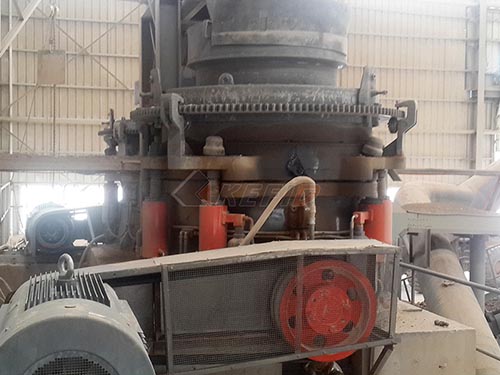
- Hardness & Abrasiveness: Measured by indices like Bond Work Indexand Los Angeles Abrasion Value.Hard, abrasive rocks (e.g., basalt,granite) require robust,jaw or cone crushers with high-wear-resistant materials.Softer rocks (e.g., limestone) can be processed efficiently with impact crushers.
- Feed Size vs.Product Size: The maximum size of rock you need to feed into the crusher versus the final product specifications will determine whether you need single-stage or multi-stage crushing.
-
Production Capacity (TPH): Be realistic about your required output.Undersizing leads to bottlenecks;oversizing leads to unnecessary capital expenditureand higher operating costs per tonne.
-
Mobility & Set-Up Time:
- Do you needto movethe plant weekly,daily.or never?
- Track-mounted plants offer superior mobility on-site but come at ahigher purchase priceand lower fuel efficiency compared towheeled options whichare betterfor road movement between sites.
-
Total Cost of Ownership (TCO): Look beyondthe sticker price.Consider:
- Fuel Consumption: A more efficient engine saves thousands annually.
- Wear Parts Cost & Life: Comparethe costand expected lifespanof mantles,jaws ,liners,and blow bars.Cheaper parts that wear out twice as fastare not economical .
- Maintenance Requirements: Easy accessfor routine maintenance reduces downtimeand labour costs .
- Resale Value: Established brandslike Sandvik , Metso , Terex Finlay,and Striker often holdtheir value betterin the Australian secondary market .
5 . After-Sales Support & Parts Availability:
This cannot be overstated.Ina country as vastas Australia,havinga local dealeror manufacturer’s representativewitha well-stocked parts warehouseis critical.Unplanned downtime waiting fora flywheelor abearing flownin from overseas can cripplea project’s profitability .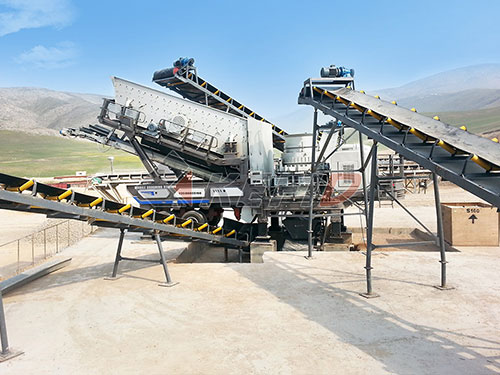
The Marketplace :New vs .Used
New RockCrushers :
Pros: Latest technology ,full warranty ,highest energy efficiency ,customizableto specific needs ,reliability .
Cons: Highest capital outlay ,longer lead timesfor deliveryand manufacturing .
Aussie Note: Local manufacturerslike Striker CMETracked Crushers& Screenshave builta strong reputationfor designingrugged machines suitedto local conditionswith local support .
Used RockCrushers :
Pros: Lower initial investment ,immediate availability .
Cons: Potentialfor hidden wearor damage ,older technology may be less efficientand lack modern safety features ,shorter remaininglifespanof components .
Buyer Beware: Always inspecta usedcrusherin person .Checkfor cracksin the frame,inspectthe conditionof wear parts,and reviewthe service history .Consider engagingan independent mechanicfor an inspection .
Conclusion
The decisionto investina rockcrusherfor Australian operationsis complexand mustbe groundedin operational reality .Thereis no one -size-fits-all solution.The hard-rock minerinthe Pilbara will have vastly different needs froma concrete recyclerin Melbourneor a council-run quarryin regional Queensland .
A successful purchase beginswitha clear understandingof your material ,your production goals,and your operational logistics .By carefully weighingthe factorsof machine type ,mobility,total costof ownership,and—most importantly—local after-sales support,buyerscan navigate this critical investmentwith confidence ,ensuringtheir new asset becomesa reliable profit centreforthe long haul .
