
In the realm of mineral processing, aggregate production, and mining, the efficiency of a crushing circuit is paramount. It dictates energy consumption, product quality, and overall operational economics. At the very heart of this process lies the primary crusher—the workhorse tasked with accepting run-of-mine (ROM) ore or quarry-run rock and executing the first and most substantial size reduction. The single most critical metric for evaluating the performance and selection of this machine is its Reduction Ratio (RR). This article provides a comprehensive examination of the reduction ratio in primary crushing, exploring its definition, calculation, significance, and its specific implications for different types of primary crushers.
At its core, the reduction ratio is a simple quantitative measure of the degree of size reduction accomplished by a crusher. It describes the relationship between the size of the feed material and the size of the product. However, this simplicity belies its importance. In practice, two primary methods are used to define and calculate it.
A) Geometrical or Nominal Reduction Ratio:
This is a theoretical ratio based on the crusher’s physical dimensions and gap settings. It is most applicable to jaw and gyratory crushers.
This ratio provides a quick, design-oriented view of a crusher’s potential but does not account for variations in feed material characteristics or actual performance.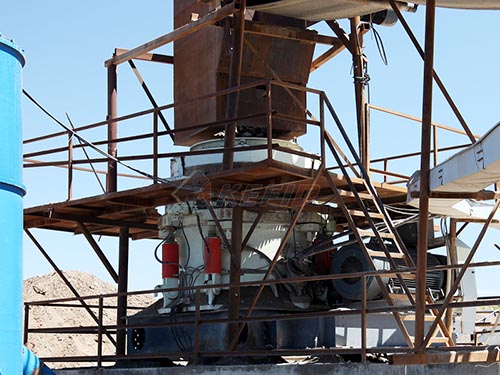
B) Operational or Actual Reduction Ratio:
This is a more practical and performance-focused measurement. It is based on the actual sizes of the feed and product streams, typically defined by their particle size distributions (PSD).
The P80/F80 method is superior because it considers the entire size distribution rather than a single arbitrary point, providing a more accurate representation of the crusher’s work in reducing the entire mass of material.
The selection of an appropriate reduction ratio for a primary crusher is not an arbitrary decision; it is a strategic choice with cascading effects throughout the entire processing plant.
A) Circuit Capacity and Throughput: The reduction ratio directly influences throughput. A higher reduction ratio means that a single primary crusher can produce a finer product, potentially reducing the load on downstream secondary and tertiary crushers. However, pushing for an excessively high ratio in one stage can lead to decreased throughput due to potential choking (blockages) within the crushing chamber and increased power draw per ton. There is always a trade-off between throughput and reduction ratio that must be optimized.
B) Energy Consumption: Comminution is notoriously energy-intensive, accounting for a significant portion of a mine’s or quarry’s operating costs. The relationship between energy and size reduction is governed by comminution theories like those proposed by Bond, Rittinger, and Kick. Generally, achieving finer sizes requires more energy per unit mass. A well-chosen primary reduction ratio ensures that size reduction happens as efficiently as possible across all stages without overloading any single machine with an excessive energy demand.
C) Product Shape and Fines Generation: The reduction mechanism has a direct impact on product shape. A lower reduction ratio often produces a more cubical product with fewer fractures internally generated within each particle. Conversely, an aggressively high reduction ratio can lead to increased inter-particle breakage and attrition within an over-packed chamber, generating more fines (“fines” refer to undersized material that may not be desirable). For applications requiring high-quality aggregate with specific shape properties (e.g., for asphalt or concrete), controlling fines generation at every stage—starting with primary crushing—is critical.
D) Downstream Process Efficiency: The product from tprimary he crusher sets up every subsequent process stage.
Thus,the optimal primary RR creates an ideal feedstock for secondary crushing,milling,and other processes,maximizing overall plant efficiency
Different types Ofprimarycrusherare designedwithdifferentmechanismsandthereforeoperateattypicalrangesofreductionratios
A.JawCrushers
Jawcrushersutilizeacompressiveforcewherebyafixedanda movingjawplate squeeze thematerialuntilitbreaks
TypicalReductionRatio:4:1to6:1
Characteristics:Theyarecapableofhandlinghardabrasivematerialsandlargefeed sizewithhighreliability.Theirrelativelylowreductionratiomeanstheyproduceaproductthatisoftenstillquitelargeandmaycontainslabbymaterial.Theyareconsideredagoodchoiceforoperationswhereasimplerobustmachineisneededandinitialcostisakeyconsideration
B.GyratoryCrushers
Gyratorycrushersaretheworkhorsesforlarge-scalehigh-tonnage miningoperationsLikejawcrusherstheyapplyacompressiveforcebutthroughagyratingmantlewithinaconcavehopper
TypicalReductionRatio:5:1to8:1
Characteristics:Gy ratorycrusherstypicallyhaveahighercapacitythanjawcrusherofsamegapeandcanachieveaslightlyhigherreductionratioTheyaremoreefficientinhigh-throughputapplications(>1000tph)TheircontinuousactionleadstoamoreuniformproductsizedistributioncomparedtothecyclicalactionofajawcrusherHowevertheyaremorecomplexhaveahigherinitialcostandarenot easilyrelocated
C .ImpactCrushers(HorizontalShaftImpactor-HSI )
WhilemorecommoninsecondarytertiarystagesHSIscanbeusedasprimarycrushersparticularlyforsofterlessabrasivematerialssuchaslimestonecoalgypsumorrecycledconcreteasphaltTheyutilizehigh-speedimpactorsorhammersflingingmaterialagainstbreakerplatesforshatteringbreakage
TypicalReductionRatio:10:1to20+ : 1
*Characteristics:ThemoststrikingfeatureistheirabilitytoachieveveryhighreductionratiosinasinglestageThisisduetotheviolentimpactbreakagemechansimwhichgeneratessignificantlymorefinesTheyalsoexcelatproducingacubicalproductwhichishighlyvaluedinaggregateindustriesHoweverthiscomesatthecostofhigherwearpartconsumptionwhenprocessingabrasivematerials making them less suitable for hard igneous rocks like granite orb asalt
The theoretical maximum RR provided by manufacturer specifications must be tempered by real-world operating conditions:
ThereductionratioofaprimarycrusherisfarmorethanjustanumberitisthefundamentallinkbetweenthedepositedgeologyofthemineorquarryandtherequirementsoftheprocessingplantItsoptimalselectionisanengineeringbalancingactweighingthroughputenergyconsumptionwearcostsandfinalproductspecificationsUnderstandingthedistinctcharacteristicsandreductioncapabilitiesofjawgyratoryandimpactcrushersallowsthedesigneroroperatortomakeaninformedchoicethatalignswithproductiongoalsandeconomicrealitiesUltimatelymasteringthisfoundationalmetricisthefirststeptowardbuildinganefficientprofitableandsustainablecrushingoperation
Lorem ipsum dolor sit amet, consectetur adipisicing elit. Consectetur sequi saepe ut sunt eveniet perferendis excepturi, iste obcaecati. Qui tempore hic sed quia soluta obcaecati vel.