An In-Depth Technical Analysis of Raylor Cone Crushers: Specialization in Secondary and Tertiary Crushing
Within the competitive and demanding world of mineral processing and aggregate production, the cone crusher stands as an indispensable tool for achieving precise particle size reduction. While global giants often dominate the conversation, several specialized manufacturers have carved out significant niches by offering robust, reliable, and application-specific solutions. Among these is Raylor, a company whose cone crushers have established a reputation for durability and efficiency in secondary and tertiary crushing stages. This article provides a comprehensive technical examination of Raylor cone crushers, exploring their design philosophy, operational principles, key features, typical applications, and their position within the broader comminution equipment market.
Company Background and Design Philosophy
Raylor, operating primarily from its base in the United States (specifically Colorado), has built its identity around manufacturing heavy-duty industrial equipment for mining, aggregate, and recycling industries. Unlike multinational corporations that produce a vast range of machinery from jaw crushers to massive gyratories, Raylor’s focus has been more concentrated. Their approach to cone crusher design is not necessarily about pioneering radical new technologies but rather about perfecting established principles with an emphasis on mechanical simplicity, structural integrity, and ease of maintenance.
The core philosophy behind a Raylor cone crusher can be summarized as robustness through design. These machines are engineered to withstand the relentless abrasion and high-stress forces encountered in hard rock crushing. They are typically designed with a heavy-duty frame, large-diameter shafts, and substantial bearings, all aimed at maximizing operational uptime—a critical metric in any profitable operation. This makes them particularly well-suited for operations where reliability is paramount, and access to highly specialized service technicians may be limited.
Operational Principles: The Fundamentals of Comminution
A Raylor cone crusher operates on the same fundamental principle as all cone crushers: compressive crushing. The process occurs between a gyrating mantle (a moving element) and a stationary concave (a fixed liner), both of which are lined with wear-resistant manganese steel.
The key stages of operation are as follows:
- Feed Introduction: Feed material from a primary crusher (like a jaw crusher) or upstream process is directed into the top of the crusher through a feed hopper.
- Gyratory Motion: The main shaft, upon which the mantle is affixed, is set in an eccentric gyratory motion. This motion is not a simple rotation but a pendulum-like swing that creates a progressive narrowing of the gap between the mantle and concave as material travels downward.
- Compressive Crushing: As rock particles enter the crushing chamber, they are repeatedly compressed and squeezed between the oscillating mantle and the fixed concave. Each compression event fractures the rock along its natural cleavage lines.
- Inter-Particle Commutation: A significant amount of size reduction also occurs through inter-particle comminution. As the chamber fills with material, rock particles are crushed against each other under immense pressure.
- Discharge: The final product size is determined by the Closed Side Setting (CSS)—the smallest gap between the mantle and concave at the bottom of the stroke. Once particles are crushed to a size smaller than the CSS, they exit the chamber through gravity and fall onto a discharge conveyor.
Raylor crushers implement this principle with careful attention to chamber geometry to optimize throughput and product shape.
Key Technical Features and Components
Several distinct features characterize Raylor cone crushers and contribute to their performance:
- Heavy-Duty Construction: The foundation is a rigid,fabricated or cast steel main frame that provides exceptional resistance to fatigue from cyclic loading. This minimizes frame flexing under load, which is crucial for maintaining consistent CSS and protecting internal components.
- Hydraulic Adjustment: Modern Raylor cone crushers incorporate hydraulic systems for adjusting the CSS. This allows operators to change the product size setting quickly and precisely without stopping the machine—a significant advantage over mechanical adjustment systems that require downtime.
- Hydraulic Clearing & Tramp Release: A critical safety feature is the hydraulic clearing system. If an uncrushable object (tramp metal or “tramp iron”) enters the chamber or if the machine becomes overloaded,the hydraulic system can rapidly lower themain shaftto releasethe foreign objectand then return to its original setting automatically.This protectsthecrusherfrom catastrophic damage.
- Spiral-Bevel Gear & Pinion Drive: The drive system typically consists of a large-diameter spiral-bevel gearand pinion set.This design provides smooth,efficient power transmissionwith high torque capabilities.Itis engineeredfor long lifeandis housedinanoil-bath lubrication systemforcoolingand protectionfromcontaminants.
- Lubrication System: A dedicated,lforced-feed lubrication systemis standard.Itcirculates filtered oilto critical bearing points including theeccentric,the main shaft bearings,andthe gear set.Monitoring devicesfor oil pressure,temperature,and floware essentialfor preventing premature failure dueto inadequate lubrication.
- Manganese Wear Liners: Both themantleandconcavesare manufacturedfrom high-quality manganese steel.This materialhasathe unique propertyof work-hardeningunder impact;as itis subjectedto crushing forces,the surface becomes harderand more wear-resistant,thereby extending service life.Linersare availableinvariousprofiles(coarse,fine,etctera)to suitdifferent feed materialsand desiredproduct specifications.
Applications in Aggregate and Mining Operations
Raylor cone crushers are predominantly deployed in specific roles within a crushing circuit: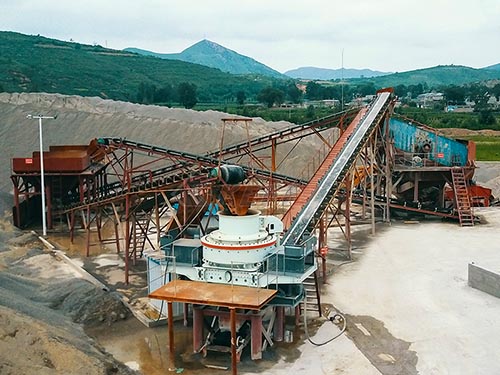
- Secondary Crushing: Following aprimary jawcrusher,aRaylorconecanbeusedto further reduce thematerialsize from perhaps150-200mmdownto40-60mm.The focushereisonhigh throughputandgood shapecharacteristicsforthe productionof basecourseor sub-base materials.
- Tertiary Crushing: Thisisthe most common application.Here,the goalisto produceprecisely shapedaggregatesfor asphaltand concreteproduction(asphalt chips,drainage stone,etctera).Inthisstage,aRaylorcrusherwould befine-tunedwithaspecificlinerprofileanda tightCSS toproducewell-cubicalproductswith minimalflakiness.
- Quartzite,Granite,and Hard RockCrushing: The robustdesignof thesecrushersmakesthemwell-suitedforprocessing highly abrasive materialslike graniteor quartzite.The heavydutycomponents resistwear,andthe reliablelubrication systemensuresbearingssurviveinthis demandingenvironment.
Itis importanttonotethatwhile capable,Raylormachinesare generallynot positionedasprimarycrushersforverylargefeed sizesnorasthe ultra-high-capacitymachinesrequiredformassiveopen-pit mines.Theyexcelinthe mid-rangeof capacityrequirementswhere reliability,easeofmaintenance,andproduct qualityare themost valuedattributes.
Comparative Positioning inThe Market
Inamarket dominatedby brandslike Metso,Sandvik,and FLSmidth,Raylorexistsasavaluednicheplayer.Thecompany’sstrengthliesnotincompetingdirectlyonthe bleedingedgeof automationor offeringthe absolutehighesttonnagefigures,butratherinproviding: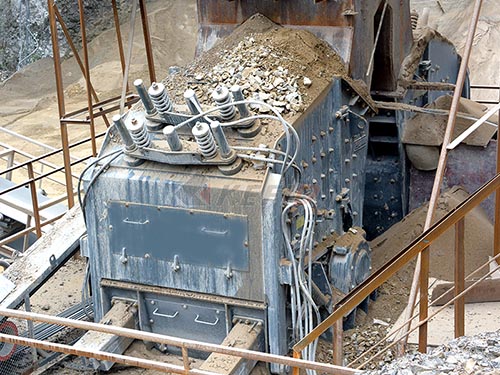
- Accessibility & Support: Asasmaller,U.S.-basedmanufacturer,theyoftenprovide more directaccess toengineering supportand shorterlead timesforparts,makingthemattractive tonationalaggregateproducersandspecialtycontractors.
- Cost-Effectiveness: While not”cheap,”Raylorequipmentoftenrepresentsasolidvalue propositionwithalower total costof ownershipoveritslifespan,fueledby durabilityandeaseofrepair.
- Simplicity & Serviceability: Theirdesignsare oftenpraisedfortheirrelative mechanicalsimplicity,makingfieldservicingandmajor overhaulswithin thereachofa skilledplantmaintenanceteamwithoutalwaysrequiringfactory-trainedspecialists.
Conclusion
The Raylorcone crusherembodiesaprincipledapproachtocomminutionengineering.Itisa machinebuiltwithafocusoncorefunctionality,enduringconstruction,andoperationaldependability.Foroperationsengagedinsecondaryandtertiarycrushingof hardabrasiverocks—particularlythosewithin NorthAmerica—theRayloreoffersacompellingcombinationof performanceandreliability.Itsdesignphilosophyprioritizesuptimeandeaseofmaintenance,makingita valuableassetinanindustrywhere everyhourof unplanneddowntimetranslatesdirectlyintolostrevenue.Asacrucialcomponentincountlessaggregateplants,theRayloreconecontinuestoplayavitalroleintransformingrawmaterialsintothe foundationalproductsrequiredformoderninfrastructure
